Representative John Wiley Edmands
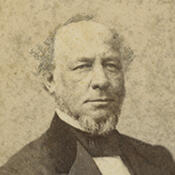
Here you will find contact information for Representative John Wiley Edmands, including email address, phone number, and mailing address.
| Name | John Wiley Edmands |
| Position | Representative |
| State | Massachusetts |
| District | 3 |
| Party | Whig |
| Status | Former Representative |
| Term Start | December 5, 1853 |
| Term End | March 3, 1855 |
| Terms Served | 1 |
| Born | March 1, 1809 |
| Gender | Male |
| Bioguide ID | E000050 |
About Representative John Wiley Edmands
John Wiley Edmands (March 1, 1809 – January 31, 1877) was a Massachusetts industrialist and Whig politician who served one term as a member of the United States House of Representatives. Born in Boston, Massachusetts, on March 1, 1809, he spent his early years in that city and pursued preparatory studies before enrolling at the English High School of Boston. His education at one of the nation’s earliest public high schools prepared him for a career that combined commercial enterprise with public service.
After completing his schooling, Edmands entered the burgeoning textile and woolen manufacturing industry of Massachusetts. He became interested in woolen mills in Dedham and in the Pacific Mills Company in Lawrence, a major textile concern in the Merrimack Valley. By the early 1840s he was associated with Amos & Abbot Lawrence, a prominent Boston mercantile firm that acted as a selling agent for textile mills. Following the death of Benjamin Bussey in 1842, Bussey’s woolen mill on Mother Brook in Dedham was sold in November 1843 to Edmands, then one of the partners in the firm that marketed the mill’s output. The land was purchased for $30,000, while the machinery, stock, and materials were sold for more than $45,000, reflecting the scale of the operation and the capital involved in New England’s industrial expansion.
Edmands renamed the enterprise the Maverick Woolen Mill and continued to develop his interests in textile manufacturing. In 1850 he sold half of the company to Gardner Colby, a fellow industrialist who would become a significant figure in Massachusetts business and philanthropy. Their partnership deepened over time, and in 1863 Edmands and Colby brought in new partners, including Charles L. Harding, to form the Merchant Woolen Company. This new firm acquired the Maverick Woolen Mills and, ultimately, all of the other mills along Mother Brook. By the 1870s the Merchant Woolen Company had effectively monopolized the water power of Mother Brook, and in 1870 it was the largest taxpayer in Dedham, Massachusetts. Later accounts, including an 1887 report in the New York Times, described the company as “one of the largest [industrial operations] in the state,” underscoring the significance of the enterprise that Edmands helped to build.
Parallel to his industrial career, Edmands became active in politics as a member of the Whig Party. Drawing on his experience in manufacturing and commerce, he entered public life at a time when questions of economic development, trade, and the expansion of slavery dominated national debate. He was elected as a Whig to the Thirty-third Congress and served as a Representative from Massachusetts in the United States Congress from March 4, 1853, to March 3, 1855. During his single term in the House of Representatives, he participated in the legislative process at a moment of mounting sectional tension in the United States, representing the interests of his Massachusetts constituents and contributing to the deliberations of the national legislature.
Edmands declined to be a candidate for renomination in 1854 and chose to return to his business pursuits rather than continue in elective office. After leaving Congress, he resumed his association with Pacific Mills and served as its treasurer, playing a central role in the financial management of one of New England’s major textile corporations. His post-congressional career reflected the close ties between industry and politics in mid-nineteenth-century Massachusetts, as he applied his legislative experience to the oversight and expansion of large manufacturing enterprises.
Although his formal service in Congress was limited to a single term, Edmands remained engaged in public affairs. As the Whig Party dissolved in the 1850s and the Republican Party emerged as the principal anti-slavery and pro-Union party in the North, he aligned himself with the new political organization. In 1868 he served as a presidential elector on the Republican ticket, participating in the Electoral College that reflected the political realignments of the Civil War and Reconstruction eras. His role as an elector demonstrated his continued influence and standing within Massachusetts political circles even after he had left the House of Representatives.
John Wiley Edmands spent his later years in the Boston area, maintaining his connections to the industrial and civic life of the Commonwealth. He died in Newton, Massachusetts, on January 31, 1877. He was interred in Mount Auburn Cemetery in Cambridge, a resting place for many of New England’s political, intellectual, and business leaders, symbolizing the prominence he had achieved through his combined careers in manufacturing and public service.