Senator John Fairfield
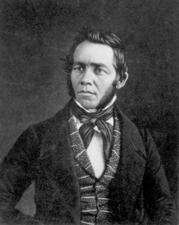
Here you will find contact information for Senator John Fairfield, including email address, phone number, and mailing address.
| Name | John Fairfield |
| Position | Senator |
| State | Maine |
| Party | Democratic |
| Status | Former Representative |
| Term Start | December 7, 1835 |
| Term End | December 31, 1847 |
| Terms Served | 4 |
| Born | January 30, 1797 |
| Gender | Male |
| Bioguide ID | F000006 |
About Senator John Fairfield
John Fairfield (January 30, 1797 – December 24, 1847) was an American attorney and Democratic politician from Maine who served in the United States House of Representatives, as the 13th and 16th governor of Maine, and as a United States senator. Over the course of his public career he held multiple federal and state offices, including service in Congress from 1835 until his death in 1847, and he played a notable role in Maine and national politics during a formative period in American history.
Fairfield was born in Pepperellborough, Massachusetts (now Saco, Maine), where he attended the local schools of York County. As a young man he served in the War of 1812, an experience that introduced him to public service in the early years of the republic. After the war he initially pursued a business career, working in mercantile and related pursuits in the Saco–Biddeford area. Deciding to enter the legal profession, he studied law in the office of an established lawyer and judge and was admitted to the bar in 1826. He then established a practice in Saco and Biddeford, where he built a regional reputation as an attorney and became increasingly active in Democratic Party politics.
Fairfield’s political career at the national level began with his election as a Democrat to the United States House of Representatives in 1834. He was reelected in 1836 and served in the House from March 4, 1835, until 1838. During this period he represented Maine in the Twenty-fourth and Twenty-fifth Congresses, participating in the legislative process at a time marked by debates over banking policy, internal improvements, and the evolving party system of the Jacksonian era. He resigned his House seat in 1838 after winning election as governor of Maine, thus transitioning from federal to state executive leadership.
As governor, Fairfield first served from 1839 to 1841, becoming the 13th governor of Maine. His initial term coincided with the tensions along the Maine–New Brunswick border that culminated in the so‑called Aroostook War, a boundary dispute between the United States and Great Britain. Although largely bloodless, the crisis required careful coordination between state and federal authorities, and Fairfield’s administration was involved in mobilizing the state militia and supporting negotiations that ultimately led to the Webster–Ashburton Treaty of 1842. After leaving office in 1841, he returned to the governorship in 1842 as the 16th governor of Maine. He served in this second gubernatorial tenure until 1843, when he resigned to accept election to the United States Senate.
Fairfield entered the United States Senate in 1843 as a Democrat from Maine, succeeding to a seat that placed him at the center of national debates in the years preceding the Mexican–American War. He served in the Senate from 1843 to 1847, a period that overlapped with his broader congressional service from 1835 to 1847. During his time in the upper chamber he represented the interests of his Maine constituents and contributed to the legislative process on issues including territorial expansion, trade, and maritime affairs, matters of particular importance to a coastal state. He was elected in 1844 to serve the final four years of the senatorial term and remained in office until his death. His Senate service occurred during a significant period in American history, as the nation grappled with sectional tensions and questions of slavery in the territories.
John Fairfield died in office on December 24, 1847, in Washington, D.C., while serving as a United States senator. His death brought to a close more than a decade of continuous federal and state service. He was buried at Laurel Hill Cemetery in Saco, Maine, returning to the community where he had been born, educated, and first established himself as a lawyer and public figure.