Representative John Miller Faison
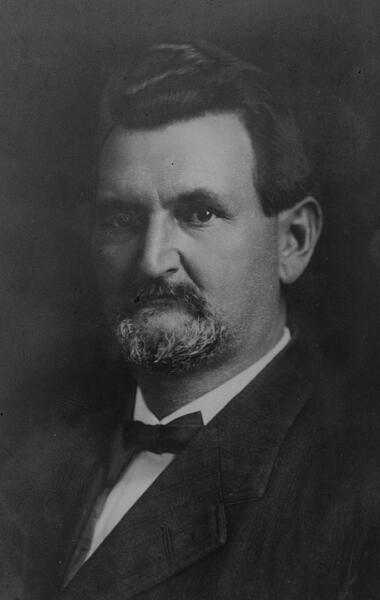
Here you will find contact information for Representative John Miller Faison, including email address, phone number, and mailing address.
| Name | John Miller Faison |
| Position | Representative |
| State | North Carolina |
| District | 3 |
| Party | Democratic |
| Status | Former Representative |
| Term Start | April 4, 1911 |
| Term End | March 3, 1915 |
| Terms Served | 2 |
| Born | April 17, 1862 |
| Gender | Male |
| Bioguide ID | F000008 |
About Representative John Miller Faison
John Miller Faison (April 17, 1862 – April 21, 1915) was a United States Representative from North Carolina who served two terms in Congress from 1911 to 1915 as a member of the Democratic Party. Over the course of his public career, he combined professional work as a physician and farmer with active participation in party politics and national legislative service, representing the interests of his constituents during a significant period in American history.
Faison was born near the town of Faison, Duplin County, North Carolina, on April 17, 1862. He received his early education at Faison Male Academy, a local institution that prepared him for higher studies. Demonstrating academic promise, he enrolled at Davidson College in Davidson, North Carolina, from which he was graduated in 1883. His formative years in rural North Carolina, in a community that bore his family’s name, helped shape his later engagement in both agriculture and public affairs.
Following his graduation from Davidson College, Faison pursued medical training. He studied medicine at the University of Virginia in Charlottesville, one of the South’s leading medical schools of the period. Seeking further specialization, he completed a postgraduate medical course at the New York Polyclinic in 1885. That same year he returned to his native community and commenced the practice of medicine in Faison, North Carolina. Alongside his medical practice, he also engaged in agricultural pursuits, reflecting the dual professional and agrarian character of many Southern leaders of his era.
Faison’s involvement in politics developed out of his standing as a physician and landowner in his community. A committed Democrat, he served as a member of the State and county Democratic executive committee from 1898 to 1906, helping to shape party organization and strategy at both local and state levels. He also served as a member of the North Carolina Jamestown Exposition Commission, which was responsible for the state’s participation in the Jamestown Exposition of 1907, a major national event commemorating the 300th anniversary of the founding of Jamestown, Virginia. These roles increased his visibility in state politics and laid the groundwork for his eventual candidacy for Congress.
In 1910, Faison sought election to the United States House of Representatives as a Democrat from North Carolina. He was one of five candidates for the Democratic nomination, a field that included the incumbent, Charles R. Thomas. The nominating contest was protracted and intensely contested: after 446 ballots in which no candidate secured the necessary majority, Faison finally obtained the nomination on the 447th ballot. He was subsequently elected as a Democrat to the Sixty-second Congress and was reelected to the Sixty-third Congress, serving from March 4, 1911, to March 3, 1915. During his tenure in the House of Representatives, he participated in the legislative process and represented the interests of his North Carolina constituents during a period marked by progressive-era reforms and significant national debates. He chose not to be a candidate for reelection in 1914, thereby concluding his congressional service after two terms.
After leaving Congress in March 1915, Faison returned to his home community in Faison, North Carolina. His post-congressional life was brief. On April 21, 1915, he died in Faison from a gunshot wound under mysterious circumstances. He was interred in Faison Cemetery. His career reflected the trajectory of a Southern professional who combined medicine, agriculture, party leadership, and national legislative service during the early twentieth century.