Representative John Franklin Farnsworth
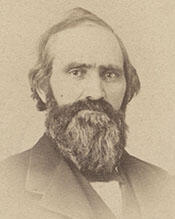
Here you will find contact information for Representative John Franklin Farnsworth, including email address, phone number, and mailing address.
| Name | John Franklin Farnsworth |
| Position | Representative |
| State | Illinois |
| District | 2 |
| Party | Republican |
| Status | Former Representative |
| Term Start | December 7, 1857 |
| Term End | March 3, 1873 |
| Terms Served | 7 |
| Born | March 27, 1820 |
| Gender | Male |
| Bioguide ID | F000024 |
About Representative John Franklin Farnsworth
John Franklin Farnsworth (March 27, 1820 – July 14, 1897) was a seven-term U.S. Representative from Illinois and a colonel in the Union Army during the American Civil War. He served in the United States House of Representatives as a Republican from 1857 to 1861 and again from 1863 to 1873, contributing to the legislative process during seven terms in office and representing the interests of his Illinois constituents during a period of profound national crisis and reconstruction.
Farnsworth was born in Eaton, Quebec, now Cookshire-Eaton, Quebec, Canada, on March 27, 1820. He was a descendant of Matthias Farnsworth (1612–1688), who immigrated to America from Eccles, Lancashire, England, prior to 1650 and settled in Lynn, Massachusetts, establishing a family line that would become well rooted in New England and the American Midwest. In 1834, Farnsworth moved with his family to Ann Arbor, Michigan, then a growing frontier community. There he pursued his education and studied law, including legal studies associated with the early University of Michigan environment, preparing himself for a professional career on the expanding western frontier.
According to the Biographical Directory of the United States Congress, Farnsworth was admitted to the bar in 1841. He soon afterward moved to Illinois and began practicing law in St. Charles, Kane County, where he became a prominent attorney and local figure. In 1846 he married Mary Ann Clark (1820–1900) of New York. The couple had six children: Sarah, Frances, John, William, Adeline, and Navy Ensign John Franklin Farnsworth Jr. As his legal practice and local standing grew, Farnsworth became increasingly involved in public affairs and aligned himself with the emerging Republican Party in the 1850s.
Farnsworth was elected as a Republican to the Thirty-fifth and Thirty-sixth Congresses, serving from March 4, 1857, to March 3, 1861. During these first two terms in the House of Representatives, he represented Illinois in the lead-up to the Civil War, participating in the national debate over slavery, sectionalism, and the preservation of the Union. He was not a candidate for renomination in 1860, stepping away from Congress as the secession crisis unfolded. In St. Charles he built a substantial limestone mansion in 1860, reflecting his growing prominence in Illinois public life.
With the outbreak of the Civil War, Farnsworth turned to military service. At President Abraham Lincoln’s direction, he organized the 8th Illinois Cavalry and was commissioned its first colonel. He also was instrumental in raising the 17th Illinois, further supporting the Union war effort. Farnsworth helped secure a lieutenant’s commission in the 8th Illinois Cavalry for his 24-year-old nephew, Elon John Farnsworth, who later rose to the rank of brigadier general and was killed in action at the Battle of Gettysburg. As colonel, John F. Farnsworth led the 8th Illinois Cavalry during the Peninsula Campaign in 1862, seeing action at the Battle of Williamsburg and in the Seven Days Battles. In September 1862 he commanded a cavalry brigade in the Army of the Potomac’s Cavalry Corps during the Maryland Campaign, engaging Confederate cavalry under J. E. B. Stuart and Wade Hampton in a series of minor actions near South Mountain and Middletown, Maryland.
Farnsworth’s battlefield service brought him to the attention of national leaders. President Abraham Lincoln nominated him for appointment to the grade of brigadier general of volunteers on November 29, 1862. The United States Senate, however, did not confirm the nomination, and on February 12, 1863, it ordered the nomination returned to the President. Farnsworth resigned his commission in the Union Army on March 4, 1863, the same day he began his third term in Congress, thus formally ending his active military career as he resumed his legislative duties in Washington.
Returning to political life, Farnsworth was elected to the Thirty-eighth and the four succeeding Congresses, serving from March 4, 1863, to March 3, 1873. During this decade in the House of Representatives, he served as chairman of the Committee on Post Office and Post Roads, playing a significant role in the development and oversight of the nation’s postal infrastructure at a time of rapid expansion westward and postwar reconstruction. A loyal Republican and an ally of President Lincoln, Farnsworth was a personal friend of the President and was among those present in the room at the Petersen House in Washington, D.C., when Lincoln died from an assassin’s bullet on April 15, 1865. In the postwar years, Farnsworth supported Reconstruction policies aimed at securing civil and political rights for formerly enslaved people and voted in favor of the impeachment of President Andrew Johnson in 1868, aligning himself with the more radical elements of the Republican Party who sought a stringent approach to Reconstruction in the former Confederate states.
Farnsworth’s long congressional career came to an end when he was defeated for renomination in 1872. After leaving Congress on March 3, 1873, he resumed the practice of law, this time in Chicago, Illinois, where he continued to be active in legal and civic affairs. In 1880 he moved to Washington, D.C., where he again engaged in the practice of law, drawing on his extensive legislative and legal experience in the nation’s capital. His former home in St. Charles, Illinois, the mansion he had built in 1860, later served as a school from 1907 to 1991. In 1997 a developer purchased the property with plans to redevelop the site, and in October 1999 the City of St. Charles acquired the mansion’s limestone blocks. Local residents formed the Farnsworth Mansion Foundation with the intention of reconstructing the house on the former site of Camp Kane, Farnsworth’s Civil War training ground for the 8th Illinois Cavalry.
John Franklin Farnsworth continued to live in Washington, D.C., until his death on July 14, 1897. He was interred in North Cemetery in St. Charles, Illinois, returning in death to the community where he had launched his legal career, built his family home, and begun the public life that would carry him to the halls of Congress and the battlefields of the Civil War.