Representative John Richard Farr
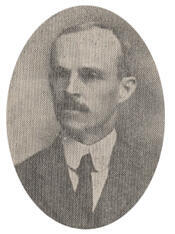
Here you will find contact information for Representative John Richard Farr, including email address, phone number, and mailing address.
| Name | John Richard Farr |
| Position | Representative |
| State | Pennsylvania |
| District | 10 |
| Party | Republican |
| Status | Former Representative |
| Term Start | April 4, 1911 |
| Term End | March 3, 1921 |
| Terms Served | 5 |
| Born | July 18, 1857 |
| Gender | Male |
| Bioguide ID | F000029 |
About Representative John Richard Farr
John Richard Farr (July 18, 1857 – December 11, 1933) was a Republican member of the U.S. House of Representatives from Pennsylvania who served in Congress from 1911 to 1921. He was born in Scranton, Pennsylvania, where he spent much of his life and developed early ties to the community he would later represent. As a young man, he attended Scranton’s School of the Lackawanna before continuing his education at Phillips Academy in Andover, Massachusetts, an institution known for preparing students for higher education and public life.
Farr pursued collegiate studies at Lafayette College in Easton, Pennsylvania, from which he graduated before embarking on a varied early career. He worked as a newsboy, printer, and publisher, gaining experience in communications and business that would inform his later public service. In addition to his work in the printing and publishing trades, he became active in the real estate business in Scranton, establishing himself as a local businessman with a growing interest in civic affairs.
His first significant public role came at the local level, where he served four years on the Scranton School Board. This experience with public education helped shape his legislative priorities and provided a foundation for his later work in state government. Building on his local service, Farr was elected to the Pennsylvania House of Representatives in 1891, 1893, 1895, 1897, and 1899. During the 1899 session he served as Speaker of the Pennsylvania House of Representatives, a position that placed him at the center of state legislative activity.
As a state legislator, Farr became particularly associated with education reform. He introduced and helped secure passage of legislation to make public education compulsory in Pennsylvania, reflecting a broader national movement toward universal schooling at the turn of the twentieth century. He also sponsored and saw enacted a measure to provide free textbooks to public schools, reducing barriers to education for children from families of limited means. These initiatives marked him as a leading advocate of public education within the state legislature.
Farr sought to extend his public service to the national level and was an unsuccessful candidate for election to Congress in 1908. He persisted, however, and was elected as a Republican to the Sixty-second Congress and to the three succeeding Congresses, serving as a Representative from Pennsylvania in the United States Congress from March 4, 1911, to March 3, 1919. During these five terms in office, he contributed to the legislative process and participated in the democratic governance of the country during a significant period in American history that included the Progressive Era and World War I. As a member of the House of Representatives, he represented the interests of his Pennsylvania constituents while aligning with the broader priorities of the Republican Party.
Farr’s congressional service extended into a fifth decade of public life when he became involved in a contested election. In the race for the Sixty-sixth Congress, he successfully contested the election of Patrick McLane, ultimately being seated in McLane’s place. His success in this contest, however, came almost at the end of McLane’s term, limiting the practical duration of this final period of service. Following this episode, Farr was an unsuccessful candidate for renomination in 1920, and he later made additional unsuccessful attempts to return to Congress in 1930 and 1932.
After leaving Congress, Farr resumed his real estate business in Scranton, returning to the private sector while remaining a figure of local prominence due to his long record in public office. He continued to reside in the Scranton area for the remainder of his life. John Richard Farr died in Scranton on December 11, 1933, at the age of 76, after suffering a heart attack. He was interred in Shady Lane Cemetery in Chinchilla, Pennsylvania, closing a career that had encompassed local school governance, state legislative leadership, and a decade of service in the U.S. House of Representatives.