Representative John J. Faso
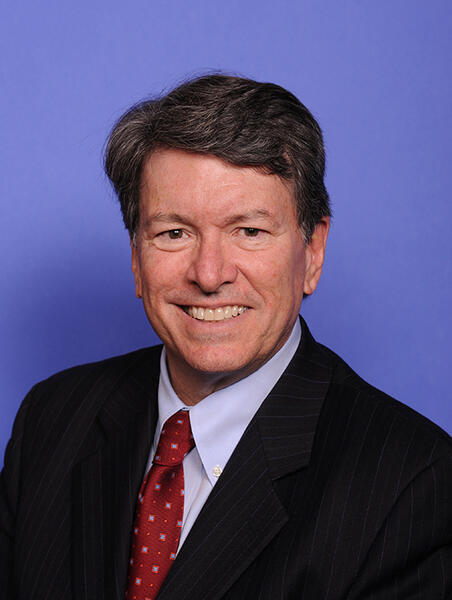
Here you will find contact information for Representative John J. Faso, including email address, phone number, and mailing address.
| Name | John J. Faso |
| Position | Representative |
| State | New York |
| District | 19 |
| Party | Republican |
| Status | Former Representative |
| Term Start | January 3, 2017 |
| Term End | January 3, 2019 |
| Terms Served | 1 |
| Born | August 25, 1952 |
| Gender | Male |
| Bioguide ID | F000464 |
About Representative John J. Faso
John James Faso Jr. (born August 25, 1952) is an American attorney and politician who served as the U.S. Representative for New York’s 19th congressional district from January 3, 2017, to January 3, 2019. A member of the Republican Party, he was first elected to Congress in 2016 and served one term, representing a moderate Hudson Valley district that stretched from Dutchess County into the Albany area and the Southern Tier. Earlier in his career, Faso represented the 102nd district in the New York State Assembly from 1987 to 2002 and served as Assembly Minority Leader from 1998 to 2002. He later ran unsuccessfully for New York State Comptroller in 2002 and for Governor of New York in 2006. In November 2018 he was defeated for re-election to Congress by Democrat Antonio Delgado.
Faso is of Italian and Irish descent and is the eldest of five siblings. He grew up in New York City and attended Archbishop Molloy High School in Queens, New York. He went on to study at the State University of New York at Brockport (SUNY Brockport). After college, he worked as a grants officer for Nassau County, New York, gaining early experience in public administration and government finance. He then enrolled at Georgetown University Law Center in Washington, D.C., where he earned his law degree in 1979. Following law school, Faso remained in Washington and took political and policy-related positions, including work as a lobbyist, while considering a future run for elective office in New York.
From 1979 to 1981, Faso served as a staff member on the United States House Committee on Government Operations, where he was involved in oversight and legislative work at the federal level. Returning to New York State government, he worked from 1983 to 1986 at the New York State Legislative Bill Drafting Commission, an office responsible for preparing and reviewing legislation for the state legislature. In 1983, he moved to upstate New York, deliberately choosing to live in a district where an Assembly seat was expected to become open so that he could seek elected office. He was first elected to the New York State Assembly in 1986 and took office in January 1987, beginning a legislative career in Albany that would span fifteen years.
Faso served in the New York State Assembly from 1987 to 2002, representing the 102nd district. Over the course of his tenure, he developed a reputation for his work on budget and fiscal issues. In 1995 he became the ranking member of the Assembly Ways and Means Committee, a key post in shaping state budget policy. He was the original sponsor of charter school legislation in New York and played an important role in the passage of Governor George Pataki’s proposal to create charter schools in the state in 1998, later supporting efforts to expand the cap on the number of such schools. In 1987, he publicly criticized the U.S. Supreme Court’s decision in Roe v. Wade, calling it a “black mark upon this country,” reflecting his socially conservative stance on abortion. In late 1994, Faso served on Governor-elect Pataki’s transition team, chairing the budget committee and then heading the team that wrote Pataki’s first state budget. In recognition of his public service, he received the 1997 Rockefeller College of Public Affairs & Policy Award for distinguished public service. He was elected Assembly Minority Leader in 1998 and led the Republican minority in the Assembly until he left the legislature in 2002.
Faso’s prominence in state budget and fiscal debates led him to seek statewide office. In 2002 he ran for New York State Comptroller as the Republican nominee. Initially trailing Democratic nominee Alan Hevesi, then the New York City Comptroller, by a margin of about 20 percentage points in early polling, Faso narrowed the gap but ultimately lost the general election by a vote of 50 percent to 47 percent. During the campaign, he accused Hevesi of mismanaging the city’s pension funds; several years later, Hevesi resigned from office and was jailed in connection with a pay-to-play scheme involving New York’s state pension fund. In 2005, Faso announced his candidacy for governor of New York. For the Republican nomination he faced former Massachusetts Governor William Weld, former New York Secretary of State Randy Daniels, and Assemblyman Patrick Manning. Weld reportedly offered Faso the opportunity to join his ticket as a candidate for lieutenant governor, but Faso continued his own bid. Faso secured the endorsement of the Conservative Party, while Weld received the Libertarian Party’s nomination, ensuring both would appear on the ballot if they remained in the race. After the Republican State Convention voted to endorse Faso, Weld withdrew. Faso’s running mate for lieutenant governor was former Rockland County Executive C. Scott Vanderhoef. In the November 7, 2006 general election, Faso was defeated by Democratic nominee Eliot Spitzer by a margin of 3,086,709 votes to 1,274,335. Spitzer later resigned from office in 2008 amid a prostitution scandal.
On September 14, 2015, Faso announced that he would run for New York’s 19th congressional district in the 2016 election. The retiring Republican incumbent, Representative Chris Gibson, endorsed him as his preferred successor. Faso won the Republican primary against Andrew Heaney, taking 67.5 percent of the vote to Heaney’s 32.5 percent. In the general election he faced Zephyr Teachout, an academic and political activist. On November 8, 2016, Faso defeated Teachout with 54.3 percent of the vote and entered the 115th Congress on January 3, 2017. During his single term in the U.S. House of Representatives, he was appointed to the House Budget Committee, the House Agriculture Committee, and the House Transportation and Infrastructure Committee, where he served one term as vice chairman of the Subcommittee on Railroads, Pipelines, and Hazardous Materials. His tenure coincided with a period of intense national debate over health care, tax policy, and the federal response to the opioid crisis.
As a member of Congress, Faso participated actively in the legislative process and aligned frequently with his party’s positions. As of August 2018, he had voted with the Republican Party in 87.7 percent of recorded votes in the 115th Congress and supported President Donald Trump’s stated position in approximately 90 percent of votes. At the same time, he was associated with several bipartisan efforts and centrist Republican groups. He belonged to the Republican Main Street Partnership, a coalition of more moderate Republicans, and joined the bipartisan Climate Solutions Caucus. In February 2018, he and Representative Dan Lipinski of Illinois introduced the bipartisan Challenges and Prizes for Climate Act of 2018, designed to encourage innovation in combating climate change through prize-based competitions. On April 26, 2018, he announced that he had joined the bipartisan Heroin Task Force, focusing on heroin and opioid abuse. He co-sponsored, along with more than 100 lawmakers, the Synthetics Trafficking and Overdose Prevention (STOP) Act, aimed at curbing the shipment of synthetic drugs such as fentanyl into the United States. The Lugar Center and Georgetown University’s McCourt School of Public Policy ranked him the 18th most bipartisan member of the House of Representatives in the 115th Congress using their Bipartisan Index.
Faso’s record in Congress reflected both his fiscal conservatism and his attention to the particular concerns of New York State. In November 2017 he announced that he would oppose the Republican tax overhaul legislation, citing the proposed limitation on the state and local tax (SALT) deduction as a primary concern for his constituents. When the Tax Cuts and Jobs Act of 2017 came to a vote, he voted against it, explaining that he had sought a tax reform plan that would increase economic growth, raise worker paychecks, incentivize small business investment, and ensure that New York families were better off, but that the $10,000 cap on the SALT deduction would deeply affect New York residents across income levels. On health care, he played a visible role in internal Republican debates over Planned Parenthood and the Affordable Care Act (ACA). In January 2017, The Washington Post reported that in a closed-door meeting he said he had “no problem” with defunding Planned Parenthood but urged colleagues not to do so as part of ACA repeal legislation, calling that approach a “gigantic political trap,” a “political minefield,” and a “grave mistake.” He later clarified publicly that he did not favor defunding Planned Parenthood and that he would support maintaining its funding if there were a separate up-or-down vote. In February 2017, he voted against a resolution reversing an Obama Administration rule that barred states from defunding Planned Parenthood, and in March 2017 he voted to amend an Obamacare repeal bill to remove language that would have defunded Planned Parenthood for one year. On May 4, 2017, however, he voted in favor of the American Health Care Act (AHCA), the House Republican bill to repeal and replace the ACA. He faced protests in his district over this vote. During his 2018 re-election campaign, he maintained that he supported protections for individuals with preexisting conditions and argued that the AHCA would have preserved such protections, although independent analyses, including reporting by The New York Times, noted that the bill would have allowed states to waive certain protections for individuals with preexisting conditions.
In 2018, Faso sought a second term in Congress and was challenged by Democrat Antonio Delgado, an attorney and former hip-hop artist. The race drew national attention and was described by the Poughkeepsie Journal as one of the more closely watched contests in the country, given the district’s competitive political balance. During the campaign, the National Republican Congressional Committee aired an advertisement criticizing Delgado for lyrics from his earlier career as a rapper. Faso characterized some of Delgado’s lyrics as “very troubling and offensive” and said they painted “an ugly and false picture of America.” Delgado, who was seeking to become the first nonwhite representative of New York’s 19th district, responded that the criticism of his rap career was an attempt to “otherize” him. The advertisement and related rhetoric drew criticism, including from The New York Times editorial board, which accused Faso of engaging in a “cynical campaign of race-baiting.” On November 6, 2018, Delgado defeated Faso by a vote of 147,873 to 132,873, ending Faso’s service in the House of Representatives at the conclusion of his first term in January 2019.
Following his departure from Congress, Faso returned to private life and to the practice of law and public affairs work. Throughout his career, from his early service on Capitol Hill and in New York’s legislative institutions to his years in the State Assembly and his term in Congress, he has been identified with fiscal conservatism, support for charter schools, and an interest in bipartisan approaches on selected issues such as climate policy and the opioid crisis, while maintaining generally conservative positions on social issues.