Representative John Joseph Feely
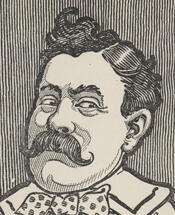
Here you will find contact information for Representative John Joseph Feely, including email address, phone number, and mailing address.
| Name | John Joseph Feely |
| Position | Representative |
| State | Illinois |
| District | 2 |
| Party | Democratic |
| Status | Former Representative |
| Term Start | December 2, 1901 |
| Term End | March 3, 1903 |
| Terms Served | 1 |
| Born | August 1, 1875 |
| Gender | Male |
| Bioguide ID | F000058 |
About Representative John Joseph Feely
John Joseph Feely was an American politician who represented the State of Illinois in the United States House of Representatives at the dawn of the twentieth century. A member of the Democratic Party, he served one term in Congress from 1901 to 1903, a period marked nationally by rapid industrial expansion, the aftermath of the Spanish–American War, and the early stirrings of the Progressive Era. Although details of his early life, including his birth date, family background, and formative years, are not provided in the available record, his later public career indicates that he rose to a position of trust among his constituents and within his party sufficient to secure election to federal office.
Information about Feely’s formal education is likewise sparse in the surviving documentation. The historical record as reflected here does not specify the schools or universities he attended, nor does it detail any professional training he may have received prior to entering public life. Nonetheless, his eventual role as a United States Representative suggests that he possessed the educational grounding and civic engagement typical of congressional officeholders of his era, who were often trained in law, business, or related professions and active in local or state politics before seeking national office.
Feely’s career prior to his election to Congress is not described in the present sources, but by 1900 he had established himself sufficiently within Illinois political circles to stand as a Democratic candidate for the U.S. House of Representatives. Illinois at that time was a politically competitive state, with shifting balances of power between Republicans and Democrats amid debates over tariffs, monetary policy, labor rights, and America’s emerging role on the world stage. Within this context, Feely’s successful campaign reflected both his personal political standing and the confidence of voters in his ability to represent their interests in Washington.
John Joseph Feely served in the United States Congress from 1901 to 1903 as a Democratic Representative from Illinois. During this single term in the House of Representatives, he participated in the legislative process at a time when Congress was grappling with issues related to economic modernization, regulation of interstate commerce, and the country’s expanding international commitments. As a member of the House, Feely took part in debates, committee work, and roll-call votes that shaped federal policy, and he bore responsibility for conveying the concerns and priorities of his Illinois constituents to the national legislature. His service placed him among those lawmakers who helped guide the United States through a pivotal transitional period between the Gilded Age and the Progressive Era.
Following the conclusion of his term in 1903, Feely did not return to Congress, and no additional information is provided here regarding any subsequent public offices, professional pursuits, or personal activities. The available record does not specify whether he resumed a prior career, remained active in party politics, or retired from public life. Likewise, details of his later years, including the date and circumstances of his death, are not contained in the present sources. What is preserved, however, is the record of his tenure as a Democratic Representative from Illinois, during which he contributed to the work of the national legislature and participated in the representative institutions of American democracy at a consequential moment in the nation’s history.