Representative John Harold Flannery
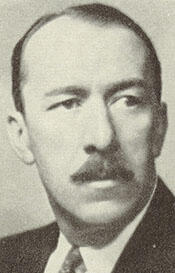
Here you will find contact information for Representative John Harold Flannery, including email address, phone number, and mailing address.
| Name | John Harold Flannery |
| Position | Representative |
| State | Pennsylvania |
| District | 12 |
| Party | Democratic |
| Status | Former Representative |
| Term Start | January 5, 1937 |
| Term End | January 3, 1943 |
| Terms Served | 3 |
| Born | April 19, 1898 |
| Gender | Male |
| Bioguide ID | F000192 |
About Representative John Harold Flannery
John Harold Flannery (April 19, 1898 – June 3, 1961) was an American attorney, jurist, and Democratic politician who served as a member of the U.S. House of Representatives from Pennsylvania. A member of the Democratic Party, he represented Pennsylvania’s 12th congressional district in the Seventy-fifth, Seventy-sixth, and Seventy-seventh Congresses, serving in the United States Congress from 1937 to 1943 and participating actively in the legislative process during three terms in office. His congressional service took place during a pivotal era in American history, spanning the later years of the New Deal and the early period of U.S. involvement in World War II.
Flannery was born on April 19, 1898, in Pittston, Luzerne County, Pennsylvania. He was educated in local schools and went on to attend Wyoming Seminary in Kingston, Pennsylvania, from which he graduated in 1917. Pursuing a legal career, he enrolled at what is now Penn State Dickinson Law in Carlisle, Pennsylvania, and completed his legal studies there in 1920. His early education in northeastern Pennsylvania and formal legal training provided the foundation for his subsequent work as an attorney, local official, and national legislator.
During World War I, Flannery served in the United States Army as a private. He entered military service during the nation’s mobilization for the conflict and was honorably discharged in 1918. Although his period of service was relatively brief, it coincided with the final phase of the war and reflected the broader participation of his generation in the armed forces during that global conflict.
After the war, Flannery was admitted to the bar and began practicing law in Pennsylvania. He established himself professionally in his native region and soon entered public service at the local level. From 1926 to 1930, he served as solicitor for the city of Pittston, advising the municipal government on legal matters and representing the city in official proceedings. Building on this experience, he became assistant district attorney of Luzerne County, Pennsylvania, a post he held from 1932 to 1936. In that capacity he participated in the prosecution of criminal cases and gained further prominence in county legal and political circles.
Flannery’s growing reputation as an attorney and Democratic Party figure led to his election to Congress. He was elected as a Democrat to the Seventy-fifth, Seventy-sixth, and Seventy-seventh Congresses, representing Pennsylvania’s 12th congressional district. He served in the U.S. House of Representatives from January 3, 1937, until his resignation on January 3, 1942. Throughout his tenure, he contributed to the legislative process during a significant period in American history, as Congress addressed the continuing effects of the Great Depression, implemented New Deal programs, and confronted mounting international tensions that culminated in World War II. As a member of the House of Representatives, he participated in the democratic process and represented the interests of his constituents from northeastern Pennsylvania.
On January 3, 1942, Flannery resigned his seat in Congress to accept a judicial appointment. He became a judge of the Court of Common Pleas of Luzerne County, Pennsylvania, assuming a role that shifted his public service from the legislative to the judicial branch. He was subsequently reelected to the court in 1951 for a ten-year term, reflecting continued public confidence in his judicial performance. As a common pleas judge, he presided over a wide range of civil and criminal matters, helping to shape the administration of justice in Luzerne County during the postwar period.
In addition to his legislative and judicial responsibilities, Flannery remained active in national party affairs. He served as a delegate to the Democratic National Convention in 1944, held during the final year of World War II and President Franklin D. Roosevelt’s bid for a fourth term, and again in 1960, when the party nominated John F. Kennedy for the presidency. His participation in these conventions underscored his continuing influence and engagement within the Democratic Party at both the state and national levels.
John Harold Flannery continued to serve on the Luzerne County Court of Common Pleas until his death. He died in Bethesda, Maryland, on June 3, 1961, at the age of 63, while still in office as a judge. He was interred at Mt. Olivet Catholic Cemetery in his hometown of Pittston, Pennsylvania, closing a career that spanned military service, local legal practice, municipal and county office, three terms in the U.S. House of Representatives, and nearly two decades on the bench of the Luzerne County Court of Common Pleas.