Representative John J. Flynt Jr.
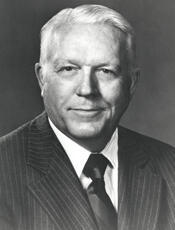
Here you will find contact information for Representative John J. Flynt Jr., including email address, phone number, and mailing address.
| Name | John J. Flynt Jr. |
| Position | Representative |
| State | Georgia |
| District | 6 |
| Party | Democratic |
| Status | Former Representative |
| Term Start | January 3, 1953 |
| Term End | January 3, 1979 |
| Terms Served | 13 |
| Born | November 8, 1914 |
| Gender | Male |
| Bioguide ID | F000229 |
About Representative John J. Flynt Jr.
John James Flynt Jr. (November 8, 1914 – June 24, 2007) was an American Democratic Party politician who served as a Representative from Georgia in the United States House of Representatives from 1953 to 1979, holding office for 13 terms. Over the course of his congressional career, he represented two congressional districts in Georgia and became a prominent figure in mid‑20th‑century Southern politics. A member of the Democratic Party throughout his public life, he contributed to the legislative process during a period of significant political and social change in the United States.
Flynt was born in Griffin, Spalding County, Georgia, where he was raised in a community that would remain central to his identity and political base. Growing up in the early twentieth century in rural Georgia, he was shaped by the economic and social conditions of the South between the World Wars. His early years in Griffin and the surrounding area exposed him to agricultural and small‑town concerns that later informed his approach to constituent service and legislative priorities.
Flynt pursued higher education in Georgia and the broader region, preparing for a career in law and public service. He attended Emory University in Atlanta and later studied at the University of Georgia, where he completed legal training that qualified him for admission to the bar. This legal education equipped him with the skills and professional grounding that would support his subsequent work as an attorney, local official, and ultimately a member of Congress. His academic and professional formation reflected the traditional path of many Southern politicians of his era, moving from legal practice into elective office.
Before entering Congress, Flynt established himself in legal and public affairs in Georgia. He practiced law and became involved in local and state Democratic politics, building a reputation as a reliable representative of his community’s interests. His work as an attorney and his engagement with civic and political organizations in and around Griffin helped him cultivate a network of supporters and a detailed understanding of the needs of his prospective constituents. This foundation in local service and legal practice provided the platform from which he successfully sought election to the U.S. House of Representatives.
Flynt’s congressional service began in the early 1950s, a time marked by the Cold War abroad and the emerging civil rights movement at home. Elected as a Democrat from Georgia, he entered the House of Representatives in 1953 and went on to serve continuously until 1979. During these 13 terms, he represented two different congressional districts in Georgia, reflecting changes in district boundaries and population over time. As a member of the House, he participated in the democratic process by debating legislation, voting on national policy, and working on behalf of his constituents’ interests in areas such as agriculture, infrastructure, and regional economic development.
Throughout his tenure, Flynt’s service in Congress coincided with some of the most consequential developments in modern American history, including desegregation, the Great Society programs, the Vietnam War, and shifting party alignments in the South. As a Southern Democrat, he was part of a congressional delegation that often balanced traditional regional perspectives with the evolving priorities of the national party. He was known for his attentiveness to constituent concerns and his emphasis on representing the views and needs of his Georgia districts in Washington, D.C., reinforcing his reputation as a steady and experienced legislator.
Flynt’s final years in Congress were marked by increasingly competitive elections as political currents in Georgia and the broader South began to favor Republican candidates. In the 1970s he faced strong challenges from Republican Newt Gingrich, then a young college professor. Flynt narrowly defeated Gingrich in two consecutive elections, underscoring both his enduring local support and the growing strength of the Republican Party in the region. When Flynt chose to retire from the House at the end of his term in 1979, Gingrich won the open seat and later rose to national prominence as Speaker of the House, highlighting the historical significance of Flynt’s district in the broader transformation of Southern politics.
After leaving Congress, Flynt returned to private life in Georgia, remaining closely associated with the Griffin community and the state he had long represented. He lived to see the far‑reaching political changes that followed his retirement, including the continued realignment of the South and the national prominence of his successor. John James Flynt Jr. died on June 24, 2007, closing a life that spanned much of the twentieth century and a public career that reflected the evolution of Georgia and the nation during his 26 years in the United States House of Representatives.