Representative John Fox
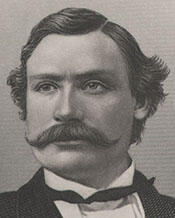
Here you will find contact information for Representative John Fox, including email address, phone number, and mailing address.
| Name | John Fox |
| Position | Representative |
| State | New York |
| District | 4 |
| Party | Democratic |
| Status | Former Representative |
| Term Start | March 4, 1867 |
| Term End | March 3, 1871 |
| Terms Served | 2 |
| Born | June 30, 1835 |
| Gender | Male |
| Bioguide ID | F000331 |
About Representative John Fox
John Fox was born on June 30, 1835, in New York City, New York. Little is recorded about his early family life, but his birth and upbringing in New York City placed him at the center of one of the nation’s most important commercial and political hubs in the decades leading up to the Civil War. Growing up in a rapidly expanding urban environment, he would have been exposed to the city’s vigorous political culture, its diverse immigrant communities, and the economic transformations that were reshaping both New York and the United States as a whole.
Details of Fox’s formal education are not extensively documented in surviving records. However, as a New Yorker who later entered public life and rose to serve in the United States House of Representatives, it is likely that he received at least a solid basic education, whether through the city’s public or private schools, or through practical training in business or the professions. His subsequent political career suggests that he developed the literacy, oratorical ability, and familiarity with public affairs that were expected of mid‑19th‑century officeholders.
Before his election to Congress, Fox established himself sufficiently in New York public and political life to become a viable candidate for national office. He was affiliated with the Democratic Party, which in New York during the mid‑19th century was deeply involved in debates over Reconstruction, economic policy, and the role of the federal government. His political activity and connections within the party’s New York organization positioned him to seek and win a seat in the U.S. House of Representatives at a time when the nation was emerging from the Civil War and confronting the complex challenges of reunification.
Fox was elected as a Democrat to the Fortieth and Forty‑first Congresses, serving as a Representative from New York from March 4, 1867, to March 3, 1871. His two consecutive terms in the House of Representatives coincided with a significant and turbulent period in American history, during which Congress grappled with Reconstruction policies, the reintegration of the former Confederate states, civil rights for newly freed African Americans, and the broader redefinition of federal and state powers. As a member of the House, Fox participated in the legislative process and the democratic deliberations of the era, representing the interests of his New York constituents and contributing to the formulation and consideration of national policy during these critical Reconstruction years.
During his congressional service, Fox took part in the ordinary and extraordinary work of the House, including debate, committee activity, and voting on measures that shaped the postwar nation. While detailed records of his specific committee assignments or individual legislative initiatives are limited, his presence in the Fortieth and Forty‑first Congresses placed him among the federal lawmakers responsible for addressing the political, economic, and social aftermath of the Civil War. His service reflected both the priorities of the Democratic Party in New York and the concerns of a state that was central to the country’s financial and commercial life.
After leaving Congress at the conclusion of his second term on March 3, 1871, Fox did not return to the House of Representatives. Information about his later professional activities is sparse, but like many former members of Congress of his era, he likely resumed private pursuits in New York, whether in business, law, or local political affairs, drawing on the experience and connections gained during his time in national office. He remained a figure associated with New York’s mid‑19th‑century Democratic politics and with the broader generation of legislators who served during Reconstruction.
John Fox died on January 17, 1914, in New York City, New York, the city of his birth. His long life spanned from the Jacksonian era through the Civil War and Reconstruction and into the early 20th century, a period of profound transformation in American political and social life. Remembered in the historical record as a Democratic U.S. Representative from New York who served from 1867 to 1871, he occupies a place among those legislators who helped guide the United States through the difficult process of rebuilding and redefining the Union after the Civil War.