Representative John Strickland Gibson
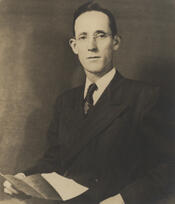
Here you will find contact information for Representative John Strickland Gibson, including email address, phone number, and mailing address.
| Name | John Strickland Gibson |
| Position | Representative |
| State | Georgia |
| District | 8 |
| Party | Democratic |
| Status | Former Representative |
| Term Start | January 3, 1941 |
| Term End | January 3, 1947 |
| Terms Served | 3 |
| Born | January 3, 1893 |
| Gender | Male |
| Bioguide ID | G000163 |
About Representative John Strickland Gibson
John Strickland Gibson (January 3, 1893 – October 19, 1960) was a Democratic U.S. Representative from Georgia who served in the United States Congress from 1941 to 1947. Over the course of three terms in the House of Representatives, he contributed to the legislative process during a significant period in American history, including World War II, and represented the interests of his constituents in Georgia’s Eighth Congressional District.
Gibson was born near Folkston, in Charlton County, Georgia, on January 3, 1893, to William Owen Gibson and Julia Ann Vickery Gibson. He attended the common schools of Charlton County and spent his early years in rural southeast Georgia. After completing his basic education, he moved to Douglas, Georgia, a community that would remain central to his professional and political life. Seeking further training, he enrolled at Georgia State Normal College, where he prepared for a career that would eventually lead him into the law and public service.
Upon graduation from Georgia State Normal College, Gibson married Bessie Thomas in April 1917. Determined to enter the legal profession, he pursued his legal studies in a nontraditional manner. He read law in the office of George Mingledorff while simultaneously completing a correspondence course through LaSalle Extension University of Chicago, Illinois, in preparation for the Georgia bar examination. He was admitted to the bar in 1922 and commenced the practice of law in Douglas in 1923. Gibson quickly developed a reputation as an aggressive courtroom lawyer who specialized in cross-examination. He was widely known for his innate ability to sense the mood of a jury and for his colorful and frequently caustic methods of argument, earning recognition as one of Georgia’s most feared and admired trial attorneys.
Gibson’s success in private practice led naturally to public legal service. From 1928 to 1934 he served as solicitor of the city court of Douglas, where he honed his skills as a prosecutor. In 1934 he was elected solicitor general of the Waycross judicial circuit, a position equivalent to a modern district attorney. He retained that office until 1940, overseeing prosecutions across the circuit and further enhancing his public profile. His performance in these roles, coupled with his courtroom reputation, helped build the political base that would support his later election to Congress.
Gibson entered national politics in 1940, when incumbent Representative W. Ben Gibbs of Georgia’s Eighth District died in office. Running as a Democrat, Gibson was elected to fill the vacancy and took his seat in the 77th United States Congress. He was subsequently re-elected twice, serving continuously from January 3, 1941, to January 3, 1947. His tenure in Congress coincided with the United States’ involvement in World War II and the immediate postwar transition, a period in which the federal government undertook major initiatives affecting the military, veterans, and the national economy. As a member of the House of Representatives, John Strickland Gibson participated actively in the democratic process and represented the interests of his Georgia constituents during these transformative years.
During his congressional service, Gibson became particularly noted for his role in the passage of the Servicemen’s Readjustment Act of 1944, commonly known as the G.I. Bill. In the week of the D-Day invasion of Normandy in June 1944, a House–Senate conference committee became deadlocked over the bill, which was designed to provide housing, education, and job benefits to returning veterans. While at home in Douglas, Georgia, recovering from an illness, Gibson received word that the legislation was in jeopardy. In a dramatic overnight journey to Washington, he returned to the Capitol to participate in the crucial deliberations and to urge his colleagues to support the measure. His timely presence and advocacy are credited with helping to break the deadlock and secure passage of the G.I. Bill, a landmark law that profoundly shaped the postwar United States.
Gibson’s congressional career came to an end when he was unable to secure renomination in 1946. After leaving office on January 3, 1947, he returned to Douglas and resumed the practice of law, reestablishing himself in the profession that had first brought him public prominence. He continued to live and work in Douglas until his death there on October 19, 1960. John Strickland Gibson was interred in the City Cemetery in Douglas, Georgia, leaving a legacy as a skilled trial lawyer, local prosecutor, and wartime congressman whose efforts contributed to one of the most significant pieces of veterans’ legislation in American history.