Representative John Gill
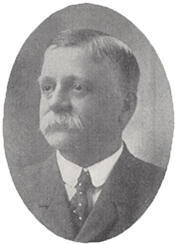
Here you will find contact information for Representative John Gill, including email address, phone number, and mailing address.
| Name | John Gill |
| Position | Representative |
| State | Maryland |
| District | 4 |
| Party | Democratic |
| Status | Former Representative |
| Term Start | December 4, 1905 |
| Term End | March 3, 1911 |
| Terms Served | 3 |
| Born | June 9, 1850 |
| Gender | Male |
| Bioguide ID | G000188 |
About Representative John Gill
John Gill Jr. was born on June 9, 1850, in Baltimore, Maryland. He was the son of John Gill Sr., a prominent figure in Baltimore’s legal and civic circles, and grew up in a city that was a major commercial and cultural center of the mid-Atlantic region. Raised in a period marked by the tensions leading up to and following the American Civil War, Gill’s early life was shaped by the political and social transformations occurring in Maryland, a border state with divided loyalties. His family’s standing in the community afforded him access to education and professional opportunities that would later support his entry into law and politics.
Gill received his early education in the public schools of Baltimore, reflecting the city’s growing commitment to organized public instruction in the mid-nineteenth century. Demonstrating an aptitude for the law and public affairs, he pursued legal studies after completing his preliminary schooling. He studied law in Baltimore, following the then-common practice of reading law under the guidance of established attorneys rather than attending a formal law school. After completing his legal training, he was admitted to the bar in 1871 and commenced the practice of law in Baltimore, beginning a professional career that would intertwine with the civic and political life of his native city.
As a young attorney, Gill built a legal practice in Baltimore and became increasingly involved in Democratic Party politics. His work as a lawyer brought him into contact with business leaders, local officials, and party organizers, and he developed a reputation as a capable advocate and a reliable party man. Over time, he rose within the ranks of the Maryland Democratic Party, aligning himself with the interests of his constituents in Baltimore and the broader concerns of a state navigating post–Civil War economic and social change. His growing prominence in legal and political circles positioned him as a viable candidate for higher office at the turn of the twentieth century.
Gill’s national political career began when he was elected as a Democrat to the United States House of Representatives. He was chosen to represent Maryland in the Fifty-ninth Congress and took office on March 4, 1905. He was subsequently reelected, serving continuously through the Sixtieth and Sixty-first Congresses, and remained in the House until March 3, 1911. During these three consecutive terms, he served as a Representative from Maryland at a time when the nation was experiencing rapid industrialization, expanding international influence, and significant domestic reform movements. As a member of the Democratic Party in the House of Representatives, John Gill contributed to the legislative process and participated in the democratic governance of the country, representing the interests of his Maryland constituents in debates and votes on national policy.
Gill’s service in Congress occurred during a significant period in American history, spanning the later years of the Theodore Roosevelt administration and the presidency of William Howard Taft. In this era, Congress addressed issues such as regulation of interstate commerce, labor conditions, and the evolving role of the federal government in economic affairs. As a member of the House of Representatives, Gill took part in this legislative environment, engaging in the deliberations that shaped federal policy in the early twentieth century. He represented Maryland’s concerns within the broader national dialogue, ensuring that the perspectives of his district were reflected in the decisions of the House. His three terms in office marked the pinnacle of his public career at the federal level.
After leaving Congress at the conclusion of his third term on March 3, 1911, Gill returned to private life in Baltimore. He resumed the practice of law, drawing on his extensive experience in both legal matters and public service. In his later years, he remained a respected figure in Maryland’s legal and political communities, his congressional tenure adding to his stature as a seasoned public servant. John Gill Jr. died on January 27, 1918, in Baltimore, Maryland. He was interred in Green Mount Cemetery in Baltimore, a resting place for many of the city’s notable figures, thus closing a life that had been closely tied to the civic and political history of his native state.