Representative John Goode
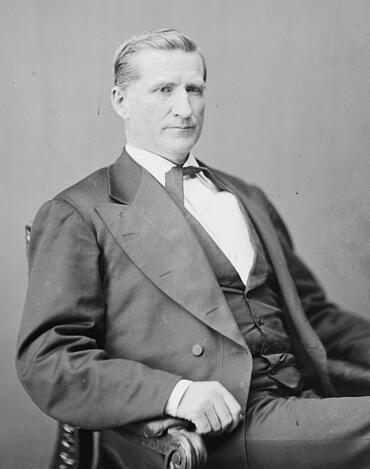
Here you will find contact information for Representative John Goode, including email address, phone number, and mailing address.
| Name | John Goode |
| Position | Representative |
| State | Virginia |
| District | 2 |
| Party | Democratic |
| Status | Former Representative |
| Term Start | December 6, 1875 |
| Term End | March 3, 1881 |
| Terms Served | 3 |
| Born | May 27, 1829 |
| Gender | Male |
| Bioguide ID | G000277 |
About Representative John Goode
John Goode was a nineteenth-century Virginia lawyer and Democratic politician who served as a Representative from Virginia in the United States Congress from 1875 to 1881 and later as acting Solicitor General of the United States. Born on May 27, 1829, near Bedford Court House (now the town of Bedford) in Bedford County, Virginia, he came of age in the antebellum South. His early life was shaped by the agrarian society and political culture of Virginia in the decades before the Civil War, an environment that would strongly influence his later legal and political career.
Goode pursued a formal education in Virginia, attending common schools before enrolling at Emory and Henry College in Washington County, Virginia. After completing his studies there, he read law and was admitted to the bar, beginning the practice of law in Bedford County. His legal training and growing reputation as an advocate quickly drew him into public life. By the 1850s he had become active in Democratic Party politics, aligning himself with the dominant political currents of Virginia and the broader South in the years leading up to secession.
With the outbreak of the Civil War and Virginia’s decision to leave the Union, Goode entered Confederate public service. He was elected as a member of the Confederate House of Representatives, serving in the Confederate Congress as a politician from Virginia. In that capacity he participated in the legislative affairs of the Confederate government during the conflict, representing the interests and perspectives of his constituents in Virginia. His experience in the Confederate Congress solidified his standing as a prominent public figure in the postwar South.
After the collapse of the Confederacy, Goode resumed the practice of law in Virginia and reengaged in state and local politics during Reconstruction. As federal authority and Reconstruction policies reshaped political life in the South, he emerged as a leading Democratic voice in Virginia, advocating for the restoration of local control and the political rehabilitation of former Confederates. His legal expertise and prior legislative experience made him a natural candidate for higher office as the state moved through the turbulent postwar years.
Goode was elected as a Democrat to the United States House of Representatives and served three consecutive terms from March 4, 1875, to March 3, 1881, representing Virginia during a significant period in American history. As a member of the House of Representatives, he participated in the democratic process and contributed to the legislative work of the Forty-fourth, Forty-fifth, and Forty-sixth Congresses. During these years, Congress grappled with the end of Reconstruction, the readjustment of relations between the federal government and the former Confederate states, and emerging issues of economic development and national reconciliation. Goode represented the interests of his Virginia constituents in these debates, reflecting the priorities of a Southern Democratic district in the postwar era.
Following his service in Congress, Goode continued to play a role in national affairs. He was appointed acting Solicitor General of the United States, serving in that capacity during the administration of President Grover Cleveland. As acting Solicitor General, he represented the federal government before the Supreme Court of the United States and helped shape the government’s legal positions in important cases of the period. This appointment marked the culmination of his long legal and political career, extending his influence beyond Virginia to the national stage.
In his later years, Goode remained a respected figure in Virginia’s legal and political circles, continuing his law practice and maintaining his involvement in public affairs. He lived to see the turn of the twentieth century and the transformation of the South in the decades after the Civil War. John Goode died on July 14, 1909, in Norfolk, Virginia. His career encompassed service in the Confederate Congress, three terms as a U.S. congressman from Virginia from 1875 to 1881, and a tenure as acting Solicitor General of the United States, reflecting a life deeply intertwined with the legal and political history of Virginia and the nation in the nineteenth century.