Senator John Brown Gordon
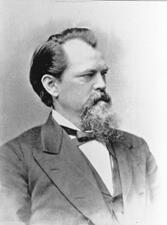
Here you will find contact information for Senator John Brown Gordon, including email address, phone number, and mailing address.
| Name | John Brown Gordon |
| Position | Senator |
| State | Georgia |
| Party | Democratic |
| Status | Former Representative |
| Term Start | December 1, 1873 |
| Term End | March 3, 1897 |
| Terms Served | 3 |
| Born | February 6, 1832 |
| Gender | Male |
| Bioguide ID | G000313 |
About Senator John Brown Gordon
John Brown Gordon (February 6, 1832 – January 9, 1904) was an American politician, Confederate States Army general, attorney, slaveowner, planter, and prominent Democratic officeholder from Georgia who served three terms in the United States Senate between 1873 and 1897 and two terms as governor of Georgia from 1886 to 1890. Widely regarded by contemporaries and later historians as one of Robert E. Lee’s most trusted generals by the end of the Civil War, he became a leading opponent of Reconstruction and a central figure in efforts to restore and preserve white Democratic control in the postwar South.
Gordon was born on February 6, 1832, in Upson County, Georgia, into a family of planters. Raised in the plantation economy of the antebellum South, he became a slaveholder and was shaped by the social and political culture of the region. He studied at the University of Georgia in Athens but left before graduating to read law and enter business. Admitted to the bar, he established himself as an attorney and also engaged in planting and related commercial ventures, building a regional reputation as a capable lawyer and businessman by the late 1850s.
With the outbreak of the American Civil War, Gordon, who had no formal military education or prior military experience, entered Confederate service and was elected captain of a company in the 6th Alabama Infantry Regiment. He was present with his regiment at the First Battle of Manassas (First Bull Run) in July 1861, though his unit did not see combat there. During a reorganization of the Confederate Army in May 1862, the 6th Alabama’s original colonel, John Siebels, resigned, and Gordon was elected colonel of the regiment. His first major combat came at the Battle of Seven Pines (Fair Oaks) on May 31–June 1, 1862, where the 6th Alabama was heavily engaged. During the fighting, Gordon found his younger brother, Augustus Gordon, severely wounded with what appeared to be a mortal lung injury; Augustus survived that engagement but was killed a year later at the Battle of Chancellorsville. Late in the Battle of Seven Pines, Gordon temporarily assumed command of the brigade from Brigadier General Robert Rodes after Rodes was wounded. Shortly afterward, as part of a broader army reorganization, the 26th Alabama Infantry was transferred to Rodes’s Brigade; because its commander, Colonel Edward O’Neal, outranked Gordon, O’Neal took brigade command until Rodes returned just before the Seven Days Battles. Gordon fought at Gaines’ Mill and was wounded in the eyes during the assault on Malvern Hill. During the Northern Virginia Campaign that followed, he and his regiment were retained near Richmond rather than sent north with the main field army.
Gordon’s most famous combat experience occurred at the Battle of Antietam (Sharpsburg) on September 17, 1862, where General Lee assigned him to hold the vital sunken road later known as “Bloody Lane.” There he suffered a series of severe wounds: a Minié ball passed through his calf; a second struck higher in the same leg; a third passed through his left arm, mangling muscles and tendons and severing a small artery; and a fourth hit his shoulder. Refusing to leave the line despite pleas from his men, he continued to command until a fifth bullet struck his face, entering his left cheek and exiting his jaw. He fell forward with his face in his cap and might have drowned in his own blood had it not drained through a bullet hole in the cap. A Confederate surgeon believed he would not survive, but he was taken back to Virginia and nursed back to health by his wife, Fanny. Impressed by his conduct, Lee requested his promotion to brigadier general on November 1, 1862, but the Confederate Congress did not confirm it at that time because of his wounds. After months of recuperation, Gordon returned to duty and was given command of a brigade of Georgia troops in Jubal A. Early’s division. Lee again requested his promotion, which the Confederate Congress approved with rank from May 7, 1863, making Gordon a brigadier general.
During the Gettysburg Campaign, Gordon’s brigade advanced into Pennsylvania and occupied Wrightsville on the Susquehanna River, the easternmost point reached by any organized Confederate force. Union militia under Colonel Jacob G. Frick burned a mile-and-a-quarter-long covered bridge to prevent Gordon from crossing, and the fire spread into Wrightsville; Gordon’s men organized a bucket brigade that limited the destruction in the town. At the Battle of Gettysburg on July 1, 1863, his brigade helped drive the Union XI Corps from Barlow’s Knoll. There Gordon encountered the severely wounded Union division commander, Brigadier General Francis C. Barlow, and rendered aid. Both men later recounted a postwar meeting in Washington, D.C., in which each expressed surprise that the other had survived, a story that became widely circulated in newspapers and in Gordon’s postwar memoirs. Barlow returned to service in April 1865 and later pursued Gordon’s forces at the Battle of High Bridge in Virginia.
In the 1864 Overland Campaign, Gordon emerged as one of Lee’s most aggressive subordinates. At the Battle of the Wilderness in May 1864, he proposed a flanking attack on the Union right that he believed might have been decisive had he been allowed to launch it earlier in the day. Lee praised him in a letter to Confederate President Jefferson Davis as one of his best brigadiers, “characterized by splendid audacity.” On May 8, 1864, Gordon was given command of Early’s division in Lieutenant General Richard S. Ewell’s (later Early’s) corps and was promoted to major general on May 14. At the Battle of Spotsylvania Court House, he played a central role in turning back a massive Union assault at the “Bloody Angle,” helping to prevent a Confederate rout. His division was held in reserve at the Battle of North Anna and was positioned in the Magnolia Swamp north of the main fighting at Cold Harbor. Later that year he accompanied Early to the Shenandoah Valley for the Valley Campaigns of 1864, taking part in the Battle of Lynchburg and Early’s invasion of Maryland, including the Battle of Monocacy. He was wounded again on August 25, 1864, at Shepherdstown, West Virginia; after having a head wound over his right eye dressed, he returned to the field, prompting Confederate cartographer Jedediah Hotchkiss to note that Gordon “gallantly dashed on, the blood streaming over him.” At the Third Battle of Winchester, his wife Fanny, who was accompanying him as some generals’ wives did, famously appeared in the street to rally his retreating troops under fire, an act that horrified Gordon when he discovered her exposed to shells and bullets. He continued to command a division in Early’s Army of the Valley, fighting at Fisher’s Hill and Cedar Creek, where he personally devised and led a daring night flanking march around the northern base of Massanutten Mountain, followed by a surprise dawn assault that initially shattered the Federal line near Belle Grove Plantation before a “fatal halt” allowed Union forces to recover and reverse his gains.
After Early’s defeat in the Valley, Gordon and his command returned to Lee’s Army of Northern Virginia defending Richmond and Petersburg. There he was given command of the Second Corps and remained in that role until the end of the war. He directed the Confederate assault on Fort Stedman on March 25, 1865, in a final attempt to break the Union siege lines, and was wounded again in the leg during the fighting. In early April 1865, as Lee attempted to retreat westward, Gordon’s forces were pursued by Union troops including those under Francis Barlow at the Battle of High Bridge. At Appomattox Court House on April 9, 1865, Gordon led his corps in what is often described as the last charge of the Army of Northern Virginia, briefly capturing Union entrenchments and several pieces of artillery before discovering that Lee’s army was surrounded on three sides by superior Union forces. Recognizing the hopelessness of further resistance, Lee resolved to surrender to Ulysses S. Grant that day. On April 12, 1865, Gordon’s troops took part in the formal stacking of arms before Union forces. A later, widely repeated account by Union General Joshua L. Chamberlain described an exchange of salutes between Chamberlain’s and Gordon’s commands as an act of mutual honor and reconciliation, but modern historians, including S. C. Gwynne, have questioned the accuracy of this narrative, noting the lack of corroborating evidence and Chamberlain’s tendency to embellish his wartime reminiscences. Gordon himself often claimed after the war that he had been promoted to lieutenant general, but no official Confederate record confirms such a promotion.
Following the war, Gordon returned to Georgia, where he resumed his legal and business activities and became a leading figure in the state’s Democratic Party. A former planter, slaveholder, and Confederate general, he held white supremacist views on race throughout his life and strongly opposed Republican-led Reconstruction. He endorsed measures designed to preserve a white-dominated social and political order, including restrictions on the rights of freedmen and the use or toleration of violence and intimidation against them. During congressional hearings in 1871 investigating the Ku Klux Klan, Gordon denied being a member of the Klan but admitted involvement with a secret “peace police” organization, which he described as devoted to the “preservation of peace.” Historian Ralph Lowell Eckert and others have concluded, based on Gordon’s evasive testimony and other evidence, that he was likely a leading figure in the Klan in Georgia, possibly its titular head, though the clandestine nature of the organization has prevented conclusive proof. At the same time, Gordon occasionally took steps he characterized as conciliatory toward Black communities. In 1866 he made substantial financial and material contributions to help build churches and schools for Black residents of Brunswick, Georgia, urging them to educate themselves and their children, be industrious, save money, purchase homes, and cultivate “courtesy and confidence toward the whites” in order to become “an important element in the community.” Yet his support was explicitly conditioned on Black acceptance of a subordinate social and political status. In an 1868 speech in Charleston, South Carolina, a majority-Black city, he told Black listeners that if they sought peaceful relations, whites would extend “the hand of friendship,” but warned that if they attempted a “war of races” they would be “exterminated,” declaring that “the Saxon race was never created by Almighty God to be ruled by the African.”
Gordon’s prominence in postwar Georgia politics led to his election to the United States Senate by the Georgia state legislature, as was then the practice. A member of the Democratic Party, he was first elected in 1872 and served as a senator from Georgia from March 4, 1873, until his resignation on May 26, 1880. His service in Congress occurred during a critical period of Reconstruction and its aftermath, when the federal government debated civil rights enforcement, the withdrawal of federal troops from the South, and economic policy in the wake of the Panic of 1873. As a senator, Gordon participated in the legislative process and represented the interests of his Georgia constituents, aligning himself with Democratic efforts to curtail Reconstruction measures and restore state control over racial and political affairs in the South. After leaving the Senate in 1880, he returned to private business and political organizing in Georgia, remaining a central figure in the state’s Democratic leadership.
In 1886, Gordon was elected governor of Georgia and took office as the state’s 53rd governor. He served two consecutive two-year terms from 1886 to 1890, during which he presided over a period of economic adjustment and continued political consolidation by white Democrats. His administration was associated with the broader “New South” movement, which promoted industrial development and railroad expansion while maintaining strict racial hierarchies and limiting Black political participation. At the conclusion of his gubernatorial service in 1890, Gordon returned to national politics. That year the Georgia legislature again elected him to the United States Senate, and he served a second period in that body from March 4, 1891, to March 3, 1897. Over the course of his three Senate terms, from 1873 to 1880 and from 1891 to 1897, Gordon remained a loyal Democrat and influential Southern voice in debates over federal economic policy, veterans’ issues, and the reconciliation of North and South, even as he opposed federal interventions aimed at protecting Black civil and voting rights.
In his later years, Gordon became one of the most prominent public exponents of the Lost Cause interpretation of the Civil War and a national symbol of Confederate veterans’ organizations. In 1890 he was chosen as the first Commander-in-Chief of the United Confederate Veterans (UCV) at the time of its organization, a position he held until his death. He traveled widely across the country delivering popular lectures, notably a series titled “The Last Days of the Confederacy,” which were well received in both the North and the South. These addresses, along with his memoir, “Reminiscences of the Civil War,” emphasized personal anecdotes and incidents that humanized soldiers on both sides and promoted a narrative of sectional reconciliation, while downplaying or omitting the central role of slavery and the experiences of formerly enslaved people. His prominence in the UCV and on the lecture circuit helped shape public memory of the war and the Confederacy at the turn of the twentieth century.
John Brown Gordon died on January 9, 1904, at the age of 71 while visiting his son in Miami, Florida. His body was returned to Georgia, where he was buried in Oakland Cemetery in Atlanta. His funeral and memorial ceremonies drew an enormous public response, with upwards of 75,000 people attending or participating, reflecting his enduring popularity among white Georgians and Confederate veterans. Gordon’s life and career—spanning planter society, Confederate high command, Reconstruction-era resistance, and long service as a Democratic senator and governor—made him one of the most influential and controversial Southern leaders of the nineteenth century, remembered both for his military reputation and for his central role in opposing Reconstruction and upholding white supremacy in the postwar South.