Representative John Keller Griffith
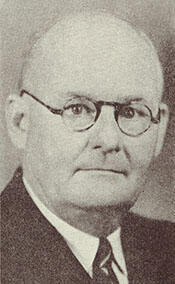
Here you will find contact information for Representative John Keller Griffith, including email address, phone number, and mailing address.
| Name | John Keller Griffith |
| Position | Representative |
| State | Louisiana |
| District | 6 |
| Party | Democratic |
| Status | Former Representative |
| Term Start | January 5, 1937 |
| Term End | January 3, 1941 |
| Terms Served | 2 |
| Born | October 16, 1882 |
| Gender | Male |
| Bioguide ID | G000469 |
About Representative John Keller Griffith
John Keller Griffith (October 16, 1882 – September 25, 1942) was a physician, World War I veteran, and Democratic member of the United States House of Representatives from Louisiana’s 6th congressional district. He served two terms in Congress from 1937 to 1941, representing his constituents during a significant period in American history marked by the Great Depression and the prelude to World War II.
Griffith was born in Baton Rouge, Louisiana, where he spent his early years in the state capital. He pursued higher education at Louisiana State University, from which he earned a college degree, reflecting an early commitment to academic and professional advancement. Seeking specialized training in medicine, he continued his studies at Tulane University in New Orleans, one of the South’s leading medical institutions, where he obtained his Doctor of Medicine degree. His medical education prepared him for a career that combined clinical practice with public service.
Following the completion of his medical training, Griffith entered the medical profession in Louisiana. He worked for a physician at the state insane asylum in Jackson, Louisiana, gaining experience in the treatment and care of individuals with mental illness at a time when institutional care was the primary mode of psychiatric treatment. This work placed him at the intersection of medicine and public welfare and provided him with insight into the challenges facing vulnerable populations in his state.
During World War I, Griffith served in the United States Army Medical Corps, applying his medical expertise to the care of soldiers during a global conflict that demanded extensive medical and logistical support. His service in the Medical Corps reflected both his professional skills and his commitment to national duty, and it linked his medical career to broader national and international events of the early twentieth century.
Griffith’s entry into electoral politics came in the mid-1930s, during the era of the New Deal and significant political realignment. In 1936, he was elected as a Democrat to the United States House of Representatives from Louisiana’s 6th congressional district, having unseated incumbent Jared Y. Sanders, Jr., of Baton Rouge in the Democratic primary. He took office on January 3, 1937, and served in the Seventy-fifth and Seventy-sixth Congresses. As a member of the House of Representatives, Griffith participated in the legislative process and represented the interests of his constituents during a period of ongoing economic recovery and expanding federal programs. A member of the Democratic Party, he contributed to the deliberations and enactment of legislation that shaped national policy in the late 1930s.
Griffith sought to continue his congressional career in 1940 but faced a renewed challenge from Jared Y. Sanders, Jr. In the Democratic primary that year, he was defeated by Sanders in his bid for renomination to a third term, bringing his service in Congress to a close on January 3, 1941. His defeat reflected the competitive and often personal nature of intraparty politics in Louisiana during this period, when Democratic primaries were effectively decisive elections in the state.
In the final years of his life, Griffith remained a figure associated with the shifting political landscape of Louisiana’s 6th district. He died on September 25, 1942, shortly after Sanders himself was unseated in the district by James H. Morrison of Hammond, Louisiana, who would go on to serve as a long-term representative. Griffith’s career thus spanned medicine, military service, and elective office, and his life intersected with a transformative era in both Louisiana and national political history.