Representative John Augustus Griswold
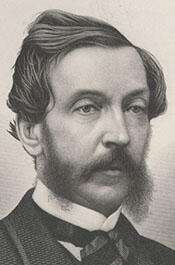
Here you will find contact information for Representative John Augustus Griswold, including email address, phone number, and mailing address.
| Name | John Augustus Griswold |
| Position | Representative |
| State | New York |
| District | 15 |
| Party | Republican |
| Status | Former Representative |
| Term Start | December 7, 1863 |
| Term End | March 3, 1869 |
| Terms Served | 3 |
| Born | November 11, 1822 |
| Gender | Male |
| Bioguide ID | G000486 |
About Representative John Augustus Griswold
John Augustus Griswold (November 11, 1818 – October 31, 1872) was an American businessman, industrialist, and politician from New York who emerged as a significant figure in both the economic and political life of his state during the mid-nineteenth century. A member of the Republican Party during his later political career, he served three terms as a Representative from New York in the United States Congress from 1863 to 1869, contributing to the legislative process during a critical period that encompassed the Civil War and the beginning of Reconstruction.
Griswold was born on November 11, 1818, in Nassau, Rensselaer County, New York. He was the only son of Chester Griswold and had one sister, who married Isaac B. Hart, Esq., of the Troy firm of Hart, Lesley & Warren. He belonged to the prominent Griswold political family. His father, the Hon. Chester Griswold, held several positions of public trust, serving for a number of years as supervisor of Nassau and as a member of the New York State Assembly representing Rensselaer County in 1823, 1831, and 1835. His grandfather, Simeon Griswold, served five terms in the Massachusetts House of Representatives. Raised in this environment of public service and commercial activity, Griswold was educated for a career in business rather than in the traditional learned professions.
At the age of seventeen, Griswold entered the iron and hardware house of Messrs. Hart, Lesley & Warren in Troy, New York, where he received his early training in commerce and industry. During this period he lived in the household of his uncle, Major General John E. Wool, a distinguished officer in the United States Army, which further connected him with influential circles in both military and civic life. After spending several years with the firm, he left to engage in business on his own account, entering banking and iron manufacturing. He ultimately helped create one of the largest and most successful iron and steel enterprises in the United States, known as the Albany and Rensselaer Iron and Steel Works, located in Troy. By 1857, Griswold had become a major owner of the Troy iron mills, and he secured the United States patents for the Bessemer steel process, a technological innovation that was important in expanding the capacity and influence of the Rensselaer Iron and Steel Works.
Griswold’s industrial activities assumed national importance during the Civil War. In the early part of the conflict, he personally financed and oversaw the construction of the first ironclad Ericsson warship, the USS Monitor, built to counter the Confederate ironclad converted from the frigate Merrimack (CSS Virginia). The Monitor’s historic engagement with the Merrimack in 1862 marked a turning point in naval warfare and brought Griswold considerable recognition for his role in its creation. He later participated in the production of additional “Monitor”-type vessels, including the Dictator, Kaatskill, Lehigh, Montauk, Passaic, Patapsco, Puritan, and Sangamon. Beyond shipbuilding, he was active in supporting the Union war effort on land, assisting in raising the 30th New York Volunteer Infantry Regiment, the 125th New York Volunteer Infantry Regiment, and the 169th New York Volunteer Infantry. He also personally raised the 21st New York Cavalry Regiment, known as the “Griswold Light Cavalry.”
In addition to his industrial and wartime activities, Griswold was deeply involved in local and regional affairs. He was elected mayor of Troy, New York, in 1855, reflecting his prominence in the civic life of the city. He also held significant positions in railroad development, serving as president of the Troy and Lansingburgh Railroad, the Troy and Cohoes Railroad, and the New Orleans, Mobile and Texas Railroad, thereby contributing to the expansion of transportation networks that were crucial to the economic growth of Troy, Rensselaer County, and the broader region.
Griswold’s national political career developed alongside his business and civic leadership. Initially aligned with the Democratic Party, he received the Democratic nomination for Congress in 1857 but was defeated by Abram B. Olin. He later shifted his political affiliation and was elected as a Democrat to the 38th Congress and as a Republican to the 39th and 40th Congresses, serving in the U.S. House of Representatives from March 4, 1863, to March 3, 1869. His three terms in Congress coincided with the Civil War and the early Reconstruction era, a significant period in American history. As a member of the House of Representatives, he participated in the democratic process and represented the interests of his New York constituents. During his congressional service, he served on the Committee on Naval Affairs, where his experience with ironclads and naval construction was particularly relevant, and on the powerful House Committee on Ways and Means, which oversaw taxation and fiscal policy. In 1868, he was the Republican candidate for Governor of New York, but he was defeated by Democrat John Thompson Hoffman.
Beyond politics and industry, Griswold was an advocate for education, particularly in science and technology. He served as a trustee of Rensselaer Polytechnic Institute (RPI) in Troy and played a leading role in the institution’s reconstruction after the Great Troy Fire of 1862, which devastated parts of the city and damaged RPI facilities. His commitment to higher education was further recognized when he was elected a Regent of the University of the State of New York on April 29, 1869, giving him a role in overseeing educational policy and institutions across the state. In 1871, President Ulysses S. Grant offered him the influential post of Collector of the Port of New York, which he declined. Grant then offered the position to William Orton, who also declined, and on the recommendation of both Griswold and Orton, the appointment went to Chester A. Arthur, who later became President of the United States and served as Collector until 1878.
On September 14, 1843, Griswold married Elizabeth Hart (1822–1891), daughter of Richard P. Hart, Esq., in Troy. The marriage further linked him to prominent mercantile and industrial families in the region. The couple had six children, three sons and three daughters. Among them was Harriette Hart Griswold (1854–1938), who in 1881 married Joseph Warren Burden (1852–1903), a grandson of industrialist Henry Burden and first cousin of James A. Burden Jr. and Arthur Scott Burden. Another son, Francis Baylis Griswold (d. 1923), survived into the early twentieth century. Their son Chester Griswold II (1844–1902) became a partner in John A. Griswold & Co. with Erastus Corning and served as fleet captain of the New York Yacht Club, continuing the family’s involvement in both business and public life.
John Augustus Griswold died on October 31, 1872, shortly after being diagnosed with liver disease. He was buried in Oakwood Cemetery in Troy, New York. His career as a businessman, industrial innovator, civic leader, and member of Congress left a lasting imprint on Troy, on the development of American iron and steel manufacturing, and on the Union war effort during the Civil War.