Representative John Edward Halsell
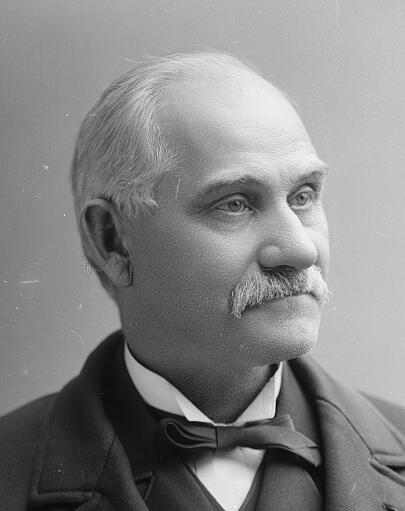
Here you will find contact information for Representative John Edward Halsell, including email address, phone number, and mailing address.
| Name | John Edward Halsell |
| Position | Representative |
| State | Kentucky |
| District | 3 |
| Party | Democratic |
| Status | Former Representative |
| Term Start | December 3, 1883 |
| Term End | March 3, 1887 |
| Terms Served | 2 |
| Born | September 11, 1826 |
| Gender | Male |
| Bioguide ID | H000086 |
About Representative John Edward Halsell
John Edward Halsell (September 11, 1826 – December 26, 1899) was a Democratic U.S. Representative from Kentucky who served two terms in the United States House of Representatives from 1883 to 1887. Born near Bowling Green, Warren County, Kentucky, he spent his early years in the surrounding rural community. He attended the common schools at Rich Pond, Kentucky, receiving a basic education typical of mid-nineteenth-century rural schooling, and later pursued further studies at Cumberland University in Lebanon, Tennessee, an institution then noted for its legal and classical curriculum.
After completing his studies, Halsell read law and prepared for a legal career. He was admitted to the bar in 1856 and commenced the practice of law in Bowling Green, Kentucky. Establishing himself as a practicing attorney, he soon entered public service in the local judicial system. He served as prosecuting attorney of Warren County for four years, a role in which he was responsible for representing the Commonwealth in criminal matters and helping to administer justice at the county level.
Halsell’s growing reputation in the legal community led to his election as circuit judge of the fourth judicial district of Kentucky in 1870. As a circuit judge, he presided over a broad range of civil and criminal cases during a period of reconstruction and adjustment in the post–Civil War South, contributing to the development and enforcement of state law in his region. His judicial service further solidified his standing as a public figure in Kentucky and provided a foundation for his subsequent entry into national politics.
In 1882, Halsell was elected as a Democrat to the Forty-eighth Congress and was reelected to the Forty-ninth Congress, serving from March 4, 1883, to March 3, 1887, as a Representative from Kentucky. His service in Congress occurred during a significant period in American history marked by debates over economic policy, federal land issues, and the evolving role of the federal government in the post-Reconstruction era. As a member of the House of Representatives, John Edward Halsell participated in the legislative process, represented the interests of his Kentucky constituents, and contributed to the broader democratic process at the national level.
During the Forty-ninth Congress, Halsell served as chairman of the Committee on Private Land Claims, a position that placed him at the center of legislative consideration of disputes and claims involving land titles, particularly in territories and states where historical grants and changing federal policies created complex legal questions. His chairmanship reflected both his legal background and the confidence of his colleagues in his ability to manage intricate property and jurisdictional issues. Despite his committee leadership and two terms of service, he was an unsuccessful candidate for renomination at the close of his second term.
Following his departure from Congress in 1887, Halsell resumed the practice of law, returning to his professional roots in Bowling Green. He remained active in public life and local affairs, and on December 5, 1888, he assumed office as mayor of Bowling Green. He served a one-year term as mayor, from December 5, 1888, to December 5, 1889, overseeing municipal governance and local improvements during a period of continued growth and modernization in the city.
After completing his term as mayor, Halsell moved to Fort Worth, Texas, where he continued the practice of law. His relocation reflected the broader late-nineteenth-century movement of professionals and entrepreneurs to the rapidly developing cities of the Southwest. He lived and worked in Fort Worth until his death there on December 26, 1899. Following his death, his remains were returned to his native Kentucky, and he was interred in Fair View Cemetery in Bowling Green, underscoring his enduring connection to the community where his legal and political career had first taken shape.