Representative John Hancock
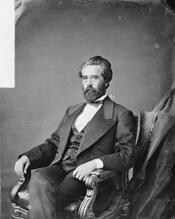
Here you will find contact information for Representative John Hancock, including email address, phone number, and mailing address.
| Name | John Hancock |
| Position | Representative |
| State | Texas |
| District | 10 |
| Party | Democratic |
| Status | Former Representative |
| Term Start | March 4, 1871 |
| Term End | March 3, 1885 |
| Terms Served | 4 |
| Born | October 24, 1824 |
| Gender | Male |
| Bioguide ID | H000150 |
About Representative John Hancock
John Hancock served as a Representative from Texas in the United States Congress from 1871 to 1885. A member of the Democratic Party, John Hancock contributed to the legislative process during 4 terms in office.
John Hancock’s service in Congress occurred during a significant period in American history. As a member of the House of Representatives, John Hancock participated in the democratic process and represented the interests of constituents.
John Hancock (January 23, 1737 [O.S. January 12, 1736] – October 8, 1793) was an American Founding Father, merchant, statesman, and prominent Patriot of the American Revolution. He was the longest-serving president of the Continental Congress, having served as the second president of the Second Continental Congress and the seventh president of the Congress of the Confederation. He was the first and third governor of the Commonwealth of Massachusetts. His large and stylish signature on the United States Declaration of Independence led to John Hancock or Hancock becoming a colloquialism for a person’s signature. He also signed the Articles of Confederation, and used his influence to ensure that Massachusetts ratified the United States Constitution in 1788. Before the American Revolution, Hancock was one of the wealthiest men in the Thirteen Colonies, having inherited a profitable mercantile business from his uncle. He began his political career in Boston as a protégé of Samuel Adams, an influential local politician, though the two men later became estranged. Hancock used his wealth to support the colonial cause as tensions increased between colonists and Great Britain in the 1760s. He became very popular in Massachusetts, especially after Boston customs officials seized his sloop Liberty in 1768 and charged him with smuggling. Those charges were eventually dropped; he has often been described as a smuggler in historical accounts, but the accuracy of this characterization has been questioned.