Senator John Netherland Heiskell
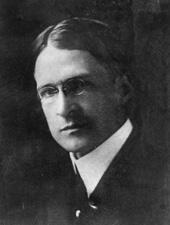
Here you will find contact information for Senator John Netherland Heiskell, including email address, phone number, and mailing address.
| Name | John Netherland Heiskell |
| Position | Senator |
| State | Arkansas |
| Party | Democratic |
| Status | Former Representative |
| Term Start | January 6, 1913 |
| Term End | January 29, 1913 |
| Terms Served | 1 |
| Born | November 2, 1872 |
| Gender | Male |
| Bioguide ID | H000457 |
About Senator John Netherland Heiskell
John Netherland Heiskell (November 2, 1872 – December 28, 1972) was an American newspaper editor and publisher who became a United States Senator from Arkansas in 1913, serving a brief appointed term. A lifelong Democrat, he was editor of the Arkansas Gazette from 1902 until his death and, as a result of his long life, attained several Senate longevity records, becoming the second U.S. Senator to reach the age of 100 and the oldest living former Senator from 1966 until his death. His service in Congress, though short, occurred during a significant period in American history, and he participated in the democratic process and represented the interests of his Arkansas constituents during his 1913 term in office.
Heiskell was born in Rogersville, Tennessee, on November 2, 1872, the son of Carrick White Heiskell and Eliza (Netherland) Heiskell. He was a grandson of two prominent Tennessee politicians, John Netherland and Frederick Heiskell, and grew up in a family deeply involved in public affairs and newspaper publishing. He was educated in public and private schools in the Knoxville, Tennessee, area and graduated from the University of Tennessee in 1893. This early exposure to both politics and journalism shaped his subsequent career in the press and his brief foray into elective office.
Following his graduation, Heiskell pursued journalism, continuing a family tradition that had extended over several generations. He worked as a reporter for newspapers in Knoxville and Memphis, Tennessee, and later reported for the Associated Press in Chicago, Illinois, and Louisville, Kentucky. In 1902, the Heiskell family acquired a controlling interest in the Arkansas Gazette, a leading newspaper in Little Rock, Arkansas. John N. Heiskell became editor, while his brother Fred Heiskell assumed the role of managing editor. Under their leadership, the Gazette’s circulation nearly doubled in four years, and the paper became known for issues‑oriented reporting and for its strong editorial voice on civic and political questions.
As editor, Heiskell used the Arkansas Gazette as a platform to advocate for civic improvement and charitable causes. In 1907, he wrote a series of editorials urging the construction of a public library in Little Rock. His campaign succeeded; when the library opened, Heiskell received its first library card and was appointed to the board of directors, on which he served until his death. He also served on the Arkansas state Civil Service Commission and Planning Board and on the Pulaski County Planning Board, reflecting his broader interest in public administration and city planning. Politically, the Gazette under the Heiskell brothers generally remained neutral in Democratic primary contests—then tantamount to election in much of the South—while supporting Democratic candidates over Republicans in general elections. An exception to this posture was Heiskell’s long-running editorial feud with Governor Jeff Davis, in which Heiskell criticized Davis’s record in office, and Davis in turn accused Heiskell of operating a newspaper financed by and beholden to outside interests.
On January 3, 1913, Senator Jeff Davis, who had been elected to the United States Senate from Arkansas in 1907, died in office. On January 6, 1913, Governor George Washington Donaghey appointed John Netherland Heiskell, a member of the Democratic Party, to temporarily fill the vacancy. Heiskell thus entered the United States Senate during a period of significant political change, including the transition from the Taft to the Wilson administration. On January 29, 1913, the Arkansas General Assembly elected William Marmaduke Kavanaugh to complete Davis’s term, which was scheduled to end on March 3, 1913, and chose Governor Joseph Taylor Robinson for the full six‑year Senate term beginning March 4, 1913. As a result of this political maneuvering, Heiskell’s service in Congress lasted only 23 days in January 1913, one of the shortest tenures in Senate history. Nonetheless, during his brief term he participated in the legislative process and formally represented Arkansas in the upper chamber.
After leaving the Senate, Heiskell returned full time to the Arkansas Gazette, where he continued as editor and remained deeply involved in its management for the rest of his life. His editorials addressed a wide range of issues, including municipal reform, city planning, and the commission form of city government. During World War I he opposed the Little Rock School Board’s decision to discontinue German language instruction, and he consistently spoke out against anti‑Semitism, though he also favored limits on immigration on the grounds that newcomers should be assimilated more easily. He supported Prohibition and women’s suffrage while advocating what he regarded as traditional cultural morality. On race relations, his editorials endorsed segregation and the “separate but equal” doctrine as a means of avoiding conflict, reflecting the paternalistic racial views common among many white Southern leaders of his era. At the same time, he opposed lynching and called for a grand jury investigation into the 1927 mob violence in Little Rock that culminated in the lynching of John Carter.
Heiskell was an avid student of Arkansas history and a collector of historical mementos and ephemera. He built an extensive archive and library housed in the Gazette offices, and the newspaper was believed to be the only one in the country employing a full‑time staff historian. In 1947, he selected Harry S. Ashmore to serve as executive editor, while Heiskell retained the title of editor and remained actively engaged in editorial policy. During the 1957 desegregation crisis at Little Rock Central High School, Heiskell supported Ashmore’s insistence on obedience to federal court orders. The Gazette’s coverage and Ashmore’s editorials during the crisis earned the newspaper two Pulitzer Prizes, underscoring the national influence of the paper Heiskell had led for decades.
On June 28, 1910, Heiskell married Wilhelmina Mann, daughter of nationally prominent architect George R. Mann. The couple had four children: Elizabeth (1912–1974), Louise (1921–1990), John Jr. (born 1914), and Carrick (1917–1943). Elizabeth Heiskell married screenwriter Whitfield Cook. Louise Heiskell married Hugh B. Patterson, who became the longtime business manager and later publisher of the Arkansas Gazette. Their son Carrick Patterson later served as editor of the Gazette until the paper was sold to Gannett. John Jr. died after reaching adulthood, and Carrick Heiskell was killed in an airplane crash while serving in World War II. Through these family connections, the Heiskell and Patterson families remained closely associated with the Gazette’s operations for much of the twentieth century.
In recognition of his contributions to journalism and public life, Heiskell received numerous honors. In 1958, he was awarded the Elijah Parish Lovejoy Award and an honorary LL.D. degree from Colby College. He also received honorary degrees from Syracuse University, Columbia University, the University of Missouri, and the University of Arizona, and was a recipient of the John Peter Zenger Award for press freedom. Despite his very short time in the Senate, his extraordinary longevity made him a notable figure in congressional history: he was the last living Senator to have served in the 1910s and during the presidencies of William Howard Taft and Woodrow Wilson.
John Netherland Heiskell died in Little Rock, Arkansas, on December 28, 1972, at the age of 100. He was buried in Mount Holly Cemetery in Little Rock. At the time of his death, he had been editor of the Arkansas Gazette for seventy years and remained a symbolic link between the Progressive Era, in which he began his journalistic and brief senatorial career, and the modern civil rights era in which his newspaper played a nationally recognized role.