Representative John Henry Hoffecker
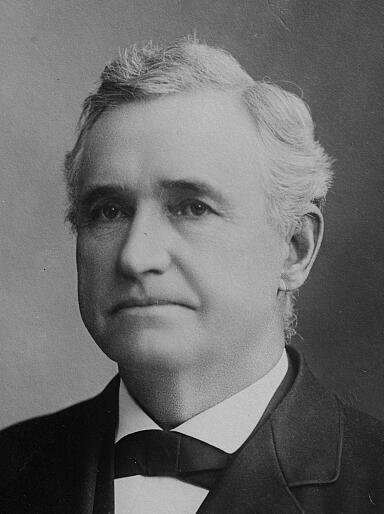
Here you will find contact information for Representative John Henry Hoffecker, including email address, phone number, and mailing address.
| Name | John Henry Hoffecker |
| Position | Representative |
| State | Delaware |
| District | At-Large |
| Party | Republican |
| Status | Former Representative |
| Term Start | December 4, 1899 |
| Term End | March 3, 1901 |
| Terms Served | 1 |
| Born | September 12, 1827 |
| Gender | Male |
| Bioguide ID | H000680 |
About Representative John Henry Hoffecker
John Henry Hoffecker (September 12, 1827 – June 16, 1900) was an American engineer and politician from Smyrna in Kent County, Delaware. A member of the Republican Party, he served as U.S. Representative from Delaware in the 56th Congress from March 4, 1899, until his death on June 16, 1900, contributing to the legislative process during one term in office. His service in Congress occurred during a significant period in American history, under the administration of President William McKinley, when the nation was grappling with issues of industrial expansion, imperial policy, and party realignment.
Hoffecker was born in Kent County, near Smyrna, Delaware, the son of Joseph and Rachel Van Gasken Hoffecker. Raised in a rural area of central Delaware, he came of age in the antebellum period, when the state’s economy and politics were in transition. Details of his early schooling are not extensively documented, but his subsequent professional training indicates that he received sufficient education to pursue technical studies in a demanding field at a time when formal engineering education was still relatively uncommon in the United States.
Pursuing a technical vocation, Hoffecker studied civil engineering and entered that profession in 1853. As a civil engineer, he would have been engaged in the kinds of infrastructure and development projects—such as roads, bridges, and local improvements—that were increasingly important in mid-nineteenth-century Delaware. His professional background in engineering provided him with practical experience in planning and public works that later informed his approach to local governance and legislative responsibilities.
In his personal life, Hoffecker married twice. His first marriage was to Annie E. Appleton, with whom he had four children: Walter O. Hoffecker, John A. Hoffecker, James Edwin Hoffecker, and Annie Hoffecker. After the death of his first wife, he married Charlotte Jerman, the widow of Joseph H. Hoffecker. Charlotte had previously served as a missionary in China from 1875 to 1878, an experience that reflected the broader late-nineteenth-century American engagement with overseas missions and international religious work. Through these family connections, Hoffecker was linked both to local Delaware society and to broader global currents of his time.
Politically, Hoffecker began his public life as a member of the Whig Party, aligning with a tradition that emphasized economic development and legislative activism. Like many former Whigs after the party’s collapse, he became a Republican in 1856, joining the new party as it emerged as the principal national opponent of the Democratic Party. Over the following decades, he became a significant figure in Delaware Republican politics. He served as a delegate to the Republican National Convention in 1876 and again in 1884, participating in the selection of the party’s presidential nominees during an era of closely contested national elections.
Hoffecker’s most sustained period of public service prior to Congress was at the local and state levels. He was president of the Smyrna town council from 1878 until 1898, a twenty-year tenure that made him a central figure in the municipal governance of his hometown. In this role, he oversaw local administration during a period of gradual modernization and growth. He was elected to the Delaware House of Representatives in 1888 and served in the 1889–1890 session, during which he was chosen Speaker of the House. Under Delaware law, members of the General Assembly took office on the second Tuesday of January and served two-year terms, and his speakership placed him at the center of legislative deliberations in Dover.
In 1896, Hoffecker sought statewide office as a candidate for governor of Delaware. He ran as the nominee of both the Union Republicans, a faction controlled by industrialist J. Edward Addicks, and the National Party, which was a rival to the Prohibition Party. The election was sharply divided among multiple tickets. Although Hoffecker drew significant support, enough votes went to the regular (Anti-Addicks) Republican candidate, John C. Higgins, that the Democratic nominee, Ebe W. Tunnell, was elected governor. This contest highlighted the intense factionalism within Delaware Republican politics at the close of the nineteenth century.
Hoffecker was elected to the U.S. House of Representatives in the general election of 1898, held on the first Tuesday after November 1, as was customary. He defeated the incumbent Democratic U.S. Representative L. Irving Handy and took office on March 4, 1899, the standard start date for congressional terms at the time. Serving in the Republican majority in the 56th Congress, he represented Delaware’s at-large district and participated in the national legislative process during a period marked by debates over the aftermath of the Spanish-American War, economic policy, and the role of the federal government. As a member of the House of Representatives, he represented the interests of his constituents from Delaware and took part in the broader democratic process of lawmaking at the federal level.
During the 1900 presidential election year, Hoffecker remained active in national party affairs. While attending the 1900 Republican National Convention in Philadelphia, he returned home for a visit and, on June 16, 1900, suffered a stroke and died in Smyrna. His death in office placed him among the members of the United States Congress who died while serving between 1900 and 1949. He was interred in Glenwood Cemetery in Smyrna, Delaware. Following his death, his son, Walter O. Hoffecker, was elected to finish his unexpired term in the U.S. House of Representatives, continuing the family’s representation of Delaware in Congress. Hoffecker’s longtime residence, Ivy Dale Farm, was later recognized for its historical significance and was listed on the National Register of Historic Places in 1973.