Senator John Holmes
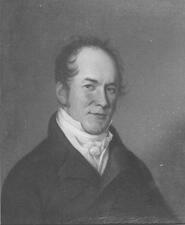
Here you will find contact information for Senator John Holmes, including email address, phone number, and mailing address.
| Name | John Holmes |
| Position | Senator |
| State | Maine |
| Party | Adams |
| Status | Former Representative |
| Term Start | December 1, 1817 |
| Term End | March 3, 1833 |
| Terms Served | 5 |
| Born | March 14, 1773 |
| Gender | Male |
| Bioguide ID | H000739 |
About Senator John Holmes
John Holmes served as a Senator from Maine in the United States Congress from 1817 to 1833. A member of the Adams Party, John Holmes contributed to the legislative process during 5 terms in office.
John Holmes’s service in Congress occurred during a significant period in American history. As a member of the Senate, John Holmes participated in the democratic process and represented the interests of constituents.
John Holmes Jackson (March 21, 1871 – December 15, 1944) was an American dentist and politician who served as the 24th and 26th mayor of Burlington, Vermont. He represented Burlington in the Vermont House of Representatives from 1921 to 1923. Jackson was born in Montreal, Canada, and educated in Kingston, Ontario, before graduating from the Pennsylvania College of Dental Surgery. His family was active in politics with his brother Samuel Hollister Jackson being elected lieutenant governor and his father-in-law being Bradley Smalley. He moved to Burlington in 1896, and became active in politics in the 1910s with an unsuccessful campaign for school commissioner as a Progressive. The Democratic Party gave its mayoral nomination to Jackson in 1917, and he defeated incumbent Albert S. Drew. Jackson never lost a mayoral election and sometimes received both the Republican and Democratic nominations. He oversaw Burlington’s response to the Spanish flu and Great Depression while also reforming its garbage collection system, motorizing the fire department, hiring its first female police officer, and replacing its trolley system with busses. Jackson and James Edmund Burke opposed each other in the 1929 and 1931 elections, but Jackson endorsed Burke to be his successor. Jackson was a delegate to multiple state and national conventions, serving as the chair of the Democratic delegation to the 1920 national convention and receiving a vote during the presidential balloting of the 1924 convention. He unsuccessfully ran for governor in 1922, and lieutenant governor in 1930.