Senator John Eager Howard
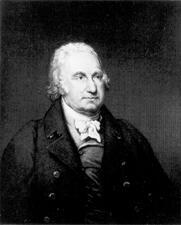
Here you will find contact information for Senator John Eager Howard, including email address, phone number, and mailing address.
| Name | John Eager Howard |
| Position | Senator |
| State | Maryland |
| Party | Federalist |
| Status | Former Representative |
| Term Start | December 5, 1796 |
| Term End | March 3, 1803 |
| Terms Served | 2 |
| Born | June 4, 1752 |
| Gender | Male |
| Bioguide ID | H000841 |
About Senator John Eager Howard
John Eager Howard (June 4, 1752 – October 12, 1827) was an American soldier, planter, and Federalist politician from Maryland who served as a United States Senator from 1796 to 1803 and as governor of Maryland from 1788 to 1791. He was born at his family’s plantation, “The Forest,” in Baltimore County, Maryland, the son of Cornelius Howard and Ruth (Eager) Howard, members of the Maryland planter elite. Howard grew up in an Anglican slaveholding household, a background that shaped both his social standing and his later role as a prominent landowner in and around Baltimore. As a young man he joined a Baltimore lodge of Freemasons, reflecting his early integration into the colony’s political and social networks.
Howard’s public career began with the American Revolutionary War. Commissioned a captain at the outset of the conflict, he rose to the rank of colonel in the Maryland Line of the Continental Army by 1777. He saw action in several major engagements, including the Battle of White Plains in 1776 and the Battle of Monmouth in 1778. His most celebrated service came at the Battle of Cowpens in January 1781, where, as commander of the 2nd Maryland Regiment, he led a decisive counterattack that helped secure a crucial American victory in the Southern campaign. For his leadership at Cowpens, the Confederation Congress awarded him a silver medal, one of the highest military honors of the era. Later that year, in September 1781, he was wounded in a bayonet charge at the Battle of Eutaw Springs. Major General Nathanael Greene praised him as “as good an officer as the world affords,” declaring that Howard “deserves a statue of gold.” At the conclusion of the war, Colonel Howard was admitted as an original member of the Society of the Cincinnati of Maryland, later serving as its vice president from 1795 to 1804 and as president from 1804 until his death in 1827.
Following his military service, Howard quickly moved into political life under the Articles of Confederation and the new federal Constitution. He was elected to the Confederation Congress in 1788 and that same year became the fifth governor of Maryland. Serving three consecutive one-year terms as governor from 1788 through 1791, he presided over the state during the critical period of constitutional ratification and early implementation of the new federal system. After leaving the governorship, he served as a member of the Maryland Senate from 1791 through 1795 and acted as a presidential elector in the election of 1792. In 1795, President George Washington offered Howard the post of Secretary of War, which he declined. During these years he aligned himself with the emerging Federalist Party, supporting a strong national government and close ties to the Washington and Adams administrations.
Howard entered the United States Senate during the Fourth Congress as a Federalist from Maryland. Elected by the Maryland General Assembly to fill the unexpired term of Senator Richard Potts, who had resigned, he took his seat in 1796 and was subsequently elected to a full term in 1797. He served in the Senate from 1796 until March 3, 1803, completing two terms in office. His service in Congress occurred during a formative period in American history, encompassing the final years of the Washington administration, the entirety of John Adams’s presidency, and the beginning of Thomas Jefferson’s administration. As a member of the Senate, John Eager Howard participated in the legislative process, represented the interests of his Maryland constituents, and contributed to debates over foreign policy, internal security, and the scope of federal power. Notably, while a loyal Federalist, he was the sole Federalist senator to vote against the Sedition Act of 1798, reflecting an independent streak on questions of civil liberties. For seven days in November 1800, he served as president pro tempore of the Senate, briefly presiding over the chamber during the transition between the Adams and Jefferson administrations. In 1798, amid rising tensions with France during the Quasi-War, he declined a commission as brigadier general in the United States Army.
At the conclusion of his Senate service in 1803, Howard returned to Baltimore and largely withdrew from elective office, though he remained active in public life and philanthropy. He developed extensive property holdings in and around the growing city and played a significant role in its physical and civic development. His residence was constructed north of the then-built-up area of Baltimore, on land that later became the Mount Vernon neighborhood, where he continued to own and employ enslaved labor. He was elected a member of the American Antiquarian Society in 1815, reflecting his standing in the intellectual and historical circles of the early republic. In the presidential election of 1816, Howard received 22 electoral votes for vice president as the running mate of Federalist presidential candidate Rufus King. The King–Howard ticket, representing the waning Federalist Party, lost in a landslide to Democratic-Republicans James Monroe and Daniel D. Tompkins. No formal Federalist nomination for vice president had been made, and Howard was one of several Federalists to receive electoral votes; it is unclear whether he actively sought the office.
Howard’s personal life was closely tied to other prominent families of the early United States. In 1787 he married Margaret “Peggy” Chew, daughter of Benjamin Chew, chief justice of the Supreme Court of Pennsylvania and a leading figure in mid-Atlantic legal and political circles. John and Margaret Howard had nine children: John Eager Howard Jr. (1788–1822), who served as a Maryland state senator; George Howard, who later became governor of Maryland; Benjamin Chew Howard (1791–1872), who served as a U.S. Representative and as Reporter of Decisions of the Supreme Court of the United States; Dr. William Howard (1793–1834), a civil engineer for the War Department; Juliana Howard McHenry (1796–1821); James Howard (1797–1870); Sophia Howard Read (1800–1880); Charles Howard (1802–1869), later the father of Frank Key Howard; and Mary (February–May 1806), who died in infancy. Through these connections and descendants, Howard’s family remained influential in Maryland and national affairs well into the nineteenth century.
John Eager Howard died on October 12, 1827, and was buried at Old Saint Paul’s Cemetery in Baltimore. His legacy was commemorated in multiple ways throughout Maryland. Howard County, Maryland, was named in his honor, as were three Baltimore streets: John Street, Eager Street, and Howard Street. In 1904, the city of Baltimore commissioned an equestrian statue of Howard by French sculptor Emmanuel Frémiet, installed at Washington Place in the Mount Vernon neighborhood that had grown up around his former estate. The former Maryland state song, “Maryland, My Maryland,” includes a reference to “Howard’s war-like thrust,” a poetic allusion to his Revolutionary War exploits, particularly at Cowpens. His long career as soldier, governor, senator, and civic leader made him one of the most prominent Marylanders of the Revolutionary and early national eras.