Representative John Albert Tiffin Hull
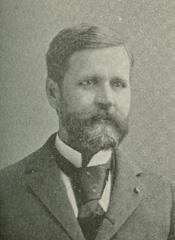
Here you will find contact information for Representative John Albert Tiffin Hull, including email address, phone number, and mailing address.
| Name | John Albert Tiffin Hull |
| Position | Representative |
| State | Iowa |
| District | 7 |
| Party | Republican |
| Status | Former Representative |
| Term Start | December 7, 1891 |
| Term End | March 3, 1911 |
| Terms Served | 10 |
| Born | May 1, 1841 |
| Gender | Male |
| Bioguide ID | H000942 |
About Representative John Albert Tiffin Hull
John Albert Tiffin Hull (May 1, 1841 – September 26, 1928) was a ten-term Republican U.S. Representative from Iowa’s 7th congressional district who served in the United States Congress from 1891 to 1911. A prominent figure in Iowa and national politics, he had earlier served two terms as Lieutenant Governor of Iowa and three terms as Iowa Secretary of State, and he played a significant role in the legislative process during a transformative period in American history.
Hull was born in Sabina, Ohio, on May 1, 1841. In 1849 he moved with his parents to Iowa, where he was raised and educated. He attended the public schools and pursued higher education at Indiana Asbury University (now DePauw University) in Greencastle, Indiana, and at Iowa Wesleyan College in Mount Pleasant, Iowa. He then studied law at the Cincinnati Law School, from which he graduated in the spring of 1862. That same year he was admitted to the bar and commenced the practice of law in Des Moines, Iowa.
With the outbreak of the Civil War, Hull entered military service. In July 1862 he enlisted in the Twenty-third Regiment of the Iowa Volunteer Infantry. He rose to the ranks of first lieutenant and captain and saw active combat. He was wounded in the charge on the intrenchments at Black River, Mississippi, on May 17, 1863, during the Vicksburg Campaign. Owing to the severity of his wounds, he resigned his commission in October 1863. After the war, Hull returned to Iowa, where he engaged in agricultural pursuits and banking in addition to his legal work, establishing himself in the civic and economic life of Des Moines.
Hull’s political career began in the Iowa Senate’s administrative offices. He was elected Secretary of the Iowa Senate in 1872 and was reelected in 1874, 1876, and 1878, gaining extensive experience in legislative procedure. In 1878 he was elected Iowa Secretary of State, a position to which he was reelected in 1880 and 1882, serving three terms in that office. His statewide prominence increased further when he was elected Lieutenant Governor of Iowa in 1885; he was reelected in 1887, thus serving two terms as lieutenant governor. These positions established him as a leading Republican figure in Iowa in the late nineteenth century.
In 1890, Hull was elected as a Republican to the U.S. House of Representatives from Iowa’s 7th congressional district, which included Des Moines, the state’s largest city. He entered Congress on March 4, 1891, at the opening of the Fifty-second Congress. That Congress was notable in Iowa’s political history because, for the first time since the Civil War, Iowans had elected more Democrats than Republicans to the U.S. House. Two years later, however, a Republican resurgence in the state began a two-decade era in which Republicans held at least ten of Iowa’s eleven House seats. Within this context, Hull was repeatedly returned to office, ultimately serving ten consecutive terms and remaining in the House until March 3, 1911. During his tenure, he participated actively in the democratic process and represented the interests of his constituents through a period marked by industrial expansion, overseas conflict, and the rise of the Progressive movement.
Hull became a significant figure in House leadership. From the Fifty-fourth through the Sixty-first Congresses he served as chairman of the House Committee on Military Affairs, a key post during a time that encompassed the Spanish-American War, the Philippine-American War, and the early development of the modern U.S. Army. In this role he helped shape legislation concerning the organization, funding, and oversight of the nation’s military establishment. Within the internal politics of the House, he was regarded as a “standpatter,” aligned with the conservative wing of the Republican Party, and was known as a lieutenant of the powerful and controversial Speaker Joseph G. “Uncle Joe” Cannon.
The rise of Republican progressivism in Iowa eventually led to Hull’s defeat. In 1910, U.S. Senator Albert B. Cummins, leader of the state’s progressive Republicans, targeted Hull for removal by giving an early endorsement to Solomon F. Prouty, a progressive challenger whom Hull had previously defeated three times for the Republican renomination. In the 1910 primary, Prouty defeated Hull decisively, carrying every county in the district. Although two voters wrote in Hull’s name for the Prohibition Party nomination—sufficient under the law to secure him that party’s nomination—Prouty went on to win the general election. Hull’s congressional service thus concluded on March 3, 1911, after ten terms in office.
After leaving Congress, Hull resumed the practice of law, this time in Washington, D.C., where his long experience in federal affairs informed his legal and advisory work. He retired from active professional life in 1916. In his later years he resided in the Washington area, and he died in Clarendon, Virginia, on September 26, 1928. He was interred in Arlington National Cemetery, reflecting both his Civil War service and his long tenure in national office. His family’s public service continued into the next generation: his son, Major General John A. Hull, served as Judge Advocate General of the United States Army from 1924 to 1928 and later as an Associate Justice of the Supreme Court of the Philippines from 1932 to 1936.