Senator John James Ingalls
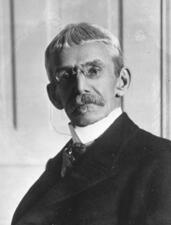
Here you will find contact information for Senator John James Ingalls, including email address, phone number, and mailing address.
| Name | John James Ingalls |
| Position | Senator |
| State | Kansas |
| Party | Republican |
| Status | Former Representative |
| Term Start | December 1, 1873 |
| Term End | March 3, 1891 |
| Terms Served | 3 |
| Born | December 29, 1833 |
| Gender | Male |
| Bioguide ID | I000012 |
About Senator John James Ingalls
John James Ingalls (December 29, 1833 – August 16, 1900) was an American Republican politician who served as a United States senator from Kansas from 1873 to 1891. Over the course of three terms in office, he contributed to the legislative process during a significant period in American history, representing the interests of his Kansas constituents in the Senate. Ingalls is credited with suggesting the Kansas state motto, “Ad Astra per Aspera,” and with designing the state seal, achievements that linked his name permanently to the identity of the state he helped to shape.
Ingalls was born in Middleton, Massachusetts, on December 29, 1833, to Elias T. Ingalls and Eliza C. Ingalls. Through his father’s line he was related to Edmund Ingalls, one of the founders of Lynn, Massachusetts, and a first cousin of his father, Mehitabel Ingalls, was the grandmother of future President James A. Garfield, giving him a distant familial connection to the presidency. He attended Williams College in Williamstown, Massachusetts, graduating in 1855. At his commencement he delivered an oration titled “Mummy Life,” a satire of college life that foreshadowed his later reputation as a sharp wit and skilled writer. After college he studied law and was admitted to the bar in 1857, preparing for a career that would combine legal practice, politics, and journalism.
In 1860 Ingalls moved west to the Kansas Territory, settling in Atchison. Even before statehood he became active in the struggle over slavery in the territory, joining the anti-slavery forces and working to ensure that Kansas would enter the Union as a free state. He was a member of the Wyandotte Constitutional Convention in 1859, which drafted the constitution under which Kansas was admitted to the Union, and he is widely reputed to have coined the state motto “Ad Astra per Aspera” (“To the stars through difficulties”). When Kansas was admitted as a state in 1861, Ingalls became secretary of the first state Senate and then served as a state senator in 1862. During the Civil War he held the position of judge advocate in the Kansas militia, contributing to the administration of military justice in the Union cause.
Alongside his legal and political work, Ingalls developed a parallel career in journalism and letters. In Atchison he served for three years as editor of the newspaper Freedom’s Champion, where his editorials and essays helped build his national reputation. He also wrote a series of magazine articles that were widely noticed and further established him as a man of letters as well as a politician. His literary skill and oratorical flair became hallmarks of his public life and enhanced his influence in Kansas politics during the Reconstruction era.
Ingalls entered national office when he was elected to the United States Senate in 1873, succeeding Samuel C. Pomeroy. A member of the Republican Party, he served in the Senate for 18 years, from 1873 to 1891, encompassing three full terms. During this period he participated actively in the democratic process and legislative debates at a time of rapid industrialization, westward expansion, and growing conflict over economic policy. He supported labor and agriculture in their struggles against monopolies and large corporate interests, aligning himself with many of the concerns of farmers and working people in his largely agrarian state. He favored major reform measures such as the Interstate Commerce Act, which sought to regulate railroad rates and curb abuses by common carriers, and the Pendleton Civil Service Act, which began the process of replacing the spoils system with merit-based federal employment. In 1887 his standing among his colleagues was recognized when he was elected president pro tempore of the Senate, placing him high in the line of presidential succession and giving him a prominent role in the chamber’s proceedings.
Ingalls’s Senate career was not without controversy. In 1886 he rejected the nomination of James Campbell Matthews to the post of recorder of deeds for the District of Columbia. Ingalls publicly stated that his opposition was based on Matthews’s lack of residency in Washington, D.C., but contemporary journalists and observers argued that the rejection was racially motivated, as Matthews was African American. The episode reflected the racial tensions and political conflicts of the post-Reconstruction era and became one of the more debated aspects of Ingalls’s record. Nonetheless, throughout his tenure he remained a notable figure in Republican politics, known for his eloquence, sharp tongue, and sometimes caustic commentary on public life.
In his personal life, John James Ingalls married Anna Louise Chesebrough in 1865. The couple had eleven children, including Sheffield Ingalls, who would later become a prominent Kansas politician in his own right. At the time of Ingalls’s death, six of his children were still living. Ingalls was also a second cousin of Charles Ingalls, the father of author Laura Ingalls Wilder, whose “Little House on the Prairie” books would later popularize another branch of the Ingalls family in American culture. These family connections, together with his own public career, placed him within a broader network of notable American figures of the nineteenth century.
In his later years, after leaving the Senate in 1891, Ingalls remained a respected elder statesman and man of letters, though he no longer held public office. He died from bronchitis at the Montezuma Hotel in Las Vegas, New Mexico, on August 16, 1900, with his wife and son at his side. His body was returned to Kansas, and he was buried at Mount Vernon Cemetery in Atchison, underscoring his long association with the state he had helped to bring into the Union and then represented in the nation’s capital. In 1905 the state of Kansas honored his memory by donating a marble statue of Ingalls to the National Statuary Hall Collection in the United States Capitol. After an effort that began in 2011, Kansas replaced the Ingalls statue with one of aviator Amelia Earhart in 2022, marking a shift in the state’s choices for commemoration while underscoring the enduring historical significance of Ingalls’s role in Kansas and national political life.