Representative John James Jenkins
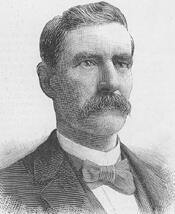
Here you will find contact information for Representative John James Jenkins, including email address, phone number, and mailing address.
| Name | John James Jenkins |
| Position | Representative |
| State | Wisconsin |
| District | 11 |
| Party | Republican |
| Status | Former Representative |
| Term Start | December 2, 1895 |
| Term End | March 3, 1909 |
| Terms Served | 7 |
| Born | August 24, 1843 |
| Gender | Male |
| Bioguide ID | J000084 |
About Representative John James Jenkins
John James Jenkins (August 24, 1843 – June 10, 1911) was an English American immigrant, lawyer, judge, and Republican politician who served seven terms as a member of the United States House of Representatives from Wisconsin and later as United States district judge for the District of Puerto Rico. A member of the Republican Party, he represented northwest Wisconsin in Congress from 1895 to 1909 and contributed to the legislative process during seven consecutive terms in office.
Jenkins was born in Weymouth, Dorsetshire, England, on August 24, 1843. He emigrated with his parents to the United States at the age of eight, initially settling in Sauk County, Wisconsin. In 1852 the family relocated to Baraboo, Wisconsin, where he spent the remainder of his youth. Growing up in a frontier environment, he received a common-school education while helping to support his family in a developing region of the upper Midwest.
At the outbreak of the American Civil War, Jenkins, then seventeen years old, volunteered for service in the Union Army against the wishes of his parents. He was enrolled as a private in Company A of the 6th Wisconsin Infantry Regiment, a unit that became part of the famed Iron Brigade of the Army of the Potomac. He participated in nearly all of the regiment’s major marches and engagements, including the battles of Gainesville, Antietam, and Gettysburg, as well as Ulysses S. Grant’s Overland Campaign in 1864. Although his original three-year enlistment was due to expire in May 1864, he re-enlisted as a veteran in January of that year. His military service ended when he was discharged for disability on February 27, 1865.
Following the war, Jenkins returned to Baraboo and worked as a raftsman on the Wisconsin River, running timber from Germantown and Grand Rapids downriver to St. Louis. In 1867 he entered public service when he was elected Sauk County court clerk for the Wisconsin circuit court, a position to which he was re-elected in 1869. During this period he read law in his spare time, without the assistance of a formal instructor, and was admitted to the State Bar of Wisconsin in July 1870. He resigned as court clerk in October 1870 and moved to Chippewa Falls, Wisconsin, where he became the junior partner in the law firm of Bingham & Jenkins with James M. Bingham. In 1871 he was elected city attorney of Chippewa Falls, marking the beginning of his long association with public legal and political office.
Later in 1871, Jenkins was nominated by the Republican Party as its candidate for the Wisconsin State Assembly from the newly created Chippewa County district, which had previously been combined with Dunn County. He won the fall election with approximately 56 percent of the vote and, during the 1872 legislative session, served on the Assembly committee on incorporations. After the session ended in March 1872, Governor Cadwallader C. Washburn appointed him county judge of Chippewa County. Jenkins was elected to a full term as county judge in 1873, but he resigned in 1876 when President Ulysses S. Grant appointed him United States Attorney for the Wyoming Territory. He served a four-year term as U.S. Attorney, from 1876 until 1880, then returned to Chippewa Falls and resumed his law practice.
In 1894, when four-term Republican congressman Nils P. Haugen declined to seek re-election in Wisconsin’s 10th congressional district, the Republican district convention nominated Jenkins on the first ballot as the party’s candidate. He won the fall general election with about 58 percent of the vote and entered the U.S. House of Representatives on March 4, 1895, for the 54th Congress. He served as a Representative from that district through the 57th Congresses. Following the 1900 United States census, Wisconsin gained an additional congressional seat, and in the ensuing redistricting Jenkins’s home area was placed in the newly created 11th congressional district. He was elected from the 11th district to three more consecutive terms, serving in the 58th, 59th, and 60th Congresses, and remained in office until March 3, 1909. During these later terms he held a prominent leadership role as chairman of the House Judiciary Committee, where he participated in shaping federal legal and judicial policy during a significant period in American history. Throughout his fourteen years in the House, he represented the interests of his northwest Wisconsin constituents and took part in the broader national legislative process.
Jenkins’s congressional career ended amid growing tensions within the Republican Party between conservative and progressive factions. In 1908 he was defeated in the Republican primary by Irvine Lenroot, a progressive Republican and close ally of Senator Robert M. La Follette, a leading figure in the Progressive movement in Wisconsin and an unsuccessful candidate for the Republican presidential nomination that year. Lenroot portrayed Jenkins as aligned with the reactionary old-guard Republicans, emphasizing his close association with House Speaker Joseph Gurney Cannon. Lenroot’s campaign was further strengthened by an alliance with the Prohibition Party. In the primary election, Lenroot defeated Jenkins by a margin of about 6,000 votes and subsequently won the general election, succeeding Jenkins in Congress.
After leaving the House, Jenkins returned to private life in Wisconsin but was soon called back to federal service. In 1910 President William Howard Taft appointed him to a four-year term as United States district judge for the District of Puerto Rico. He assumed the judgeship in May 1910; however, his health quickly declined, and he was unable to perform extensive judicial work. In April 1911 he requested a two-month leave of absence to return to Wisconsin to recuperate. John James Jenkins died shortly thereafter, on June 10, 1911, at his home in Chippewa Falls, Wisconsin. He was succeeded on the federal bench in Puerto Rico by Judge Paul Charlton.