Representative John W. Jenrette Jr.
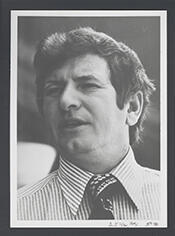
Here you will find contact information for Representative John W. Jenrette Jr., including email address, phone number, and mailing address.
| Name | John W. Jenrette Jr. |
| Position | Representative |
| State | South Carolina |
| District | 6 |
| Party | Democratic |
| Status | Former Representative |
| Term Start | January 14, 1975 |
| Term End | January 3, 1981 |
| Terms Served | 3 |
| Born | May 19, 1936 |
| Gender | Male |
| Bioguide ID | J000099 |
About Representative John W. Jenrette Jr.
John Wilson Jenrette Jr. (May 19, 1936 – March 17, 2023) was an American lawyer, businessman, and Democratic politician from South Carolina who served as a Representative from South Carolina in the United States Congress from 1975 to 1981. He was in the United States House of Representatives as a Democrat from January 1975 until December 1980, during which time he contributed to the legislative process over three terms in office and participated in the democratic process representing the interests of his constituents. His congressional career ended after his conviction for accepting a bribe in the FBI’s Abscam sting operation, for which he served more than a year in prison.
Jenrette was born in Conway, South Carolina, on May 19, 1936, the son of Mary Herring and John Wilson Jenrette, and he grew up in nearby Loris, South Carolina. He was a descendant of French Huguenot refugees who settled in northeastern South Carolina in the 1700s, a heritage he later referenced in naming one of his businesses. He graduated from Loris High School in 1954, where he was a three-sport athletic star. He then attended Wofford College in Spartanburg, South Carolina, earning a Bachelor of Arts degree in 1958. Following college, he served on active duty as a U.S. Army officer and subsequently spent several years in the South Carolina National Guard, combining military service with the beginning of his professional training.
After his military service, Jenrette pursued legal studies at the University of South Carolina School of Law, from which he graduated in 1962. Soon after admission to the bar, he founded a law firm in Ocean Drive, a coastal community that later became part of the newly formed City of North Myrtle Beach. The firm became locally influential and provided the base from which he entered public life. His early legal and business activities along the Grand Strand region helped establish his reputation as an advocate for coastal development and tourism, themes that would recur throughout his political career.
Jenrette was elected to the South Carolina House of Representatives as a Democrat in 1964, representing Horry County, which includes Myrtle Beach. During his tenure in the state legislature, he played a notable role in higher education and infrastructure development. He spearheaded the transformation of a small two-year University of South Carolina branch campus into a full-service four-year institution that later became Coastal Carolina University. He also initiated the effort to convert the old post office building in Columbia into a facility for the South Carolina Supreme Court. In addition, he persuaded the U.S. Air Force to permit commercial air traffic at the Myrtle Beach Air Force Base, a step that marked the beginning of what would become Myrtle Beach International Airport. He retired from the state House to run for a seat in the U.S. House of Representatives in 1972.
In the 1972 congressional race, Jenrette challenged and defeated seventeen-term incumbent Congressman John L. McMillan in the Democratic primary, a major upset in South Carolina politics, but he lost the general election to Republican Edward Lunn Young. Undeterred, he ran again in 1974 for the same northeastern South Carolina district. In that election he defeated Young, benefiting in part from the national political climate shaped by the Watergate scandal and the unpopularity of Republican President Richard Nixon. Although fairly liberal by South Carolina standards of the time and representing a largely conservative, mostly rural district, Jenrette was well known locally and drew strong support from African American voters at a time when the Republican Party organization in that region of the state was still relatively weak. He performed well in his first term and easily defeated Young again in 1976. In 1978 he faced only token opposition in the Democratic primary and no major-party opponent in the general election, securing a third term.
During his service in Congress from January 1975 until his resignation in December 1980, Jenrette quickly moved into positions of influence within the Democratic caucus. Shortly after his arrival in Washington, he was selected to join the House majority leadership team as a Deputy Whip, and he remained on the Democratic leadership team in that capacity for all six years he served in Congress. He initially served on the House Committee on Agriculture and later won a seat on the powerful House Committee on Appropriations. Reflecting his long-standing interest in tourism and coastal development, he founded and served as the first chairman of the Congressional Travel and Tourism Caucus. Jenrette placed strong emphasis on constituent service, and his office developed a reputation as one of the most responsive the Sixth District had experienced. Among his notable district projects was securing federal funding for a high-span bridge over the Sampit River in Georgetown, South Carolina, which allowed sea‑going vessels to travel farther upstream. Nationally, he was the first Member of Congress to endorse Jimmy Carter for president. Jenrette campaigned for Carter in South Carolina and elsewhere, and he worked to persuade numerous congressional colleagues to support Carter during the 1976 Democratic nominating process. His years in Congress also attracted public attention for his personal life, including widely reported allegations by his then-wife, actress and model Rita Jenrette, that the couple had engaged in sexual activity on the steps of the U.S. Capitol during a late-night session, an episode later referenced in popular culture and in her memoir and Playboy appearance.
Jenrette’s congressional career came to an end as a result of the FBI’s Abscam investigation, a high-profile undercover sting operation targeting political corruption. In 1980 he was charged with and later convicted of accepting a bribe from undercover agents posing as Arab businessmen. He was recorded describing the payment as a cash loan from an associate. Convicted in federal court, he was sentenced to two years in prison and served approximately 13 months. In the 1980 election, amid the fallout from the scandal, he was defeated for re-election. He resigned his seat on December 10, 1980, just days before the end of his term. His wife Rita separated from him in January 1981, and the couple divorced later that year.
Following his departure from Congress and his release from prison, Jenrette pursued a variety of business ventures, many of them international in scope. He established a public relations firm in Myrtle Beach named Lehuguenot, Ltd., a nod to his Huguenot ancestry, and engaged in property development in nearby Cherry Grove and later as a developer of major coastal property in North Myrtle Beach. Over the years he described his post-congressional activities as including marketing an experimental balloon-operated flotation device; running, and eventually folding, a national chain of timeshares; breeding horses in Bulgaria; and selling Philip Morris cigarettes in Eastern Europe in the period immediately following the fall of the Soviet Union. He also imported wine from Hungary and antique furniture from Eastern Europe. In his later years he lived in a beachfront home in Myrtle Beach with his third wife, Rosemary. His life and career became the subject of the 2017 book “Capitol Steps and Missteps: The Wild, Improbable Ride of Congressman John Jenrette,” written by two of his former aides, John F. Clark and Cookie Miller VanSice.
After several years of declining health, Jenrette died in Conway, South Carolina, on March 17, 2023, at the age of 86. His passing prompted public reflections on his complex legacy, including a statement of tribute from South Carolina Congressman James Clyburn.