Bios     John Alexander Key

Representative John Alexander Key
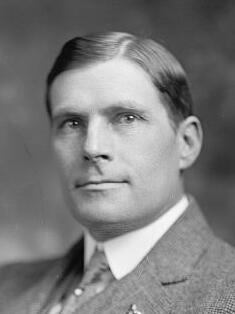
Democratic | Ohio

Representative John Alexander Key - Ohio Democratic

Here you will find contact information for Representative John Alexander Key, including email address, phone number, and mailing address.

NameJohn Alexander Key
PositionRepresentative
StateOhio
District8
PartyDemocratic
StatusFormer Representative
Term StartApril 7, 1913
Term EndMarch 3, 1919
Terms Served3
BornDecember 30, 1871
GenderMale
Bioguide IDK000157
Representative John Alexander Key
John Alexander Key served as a representative for Ohio (1913-1919).

About Representative John Alexander Key


John Alexander Key was an American politician who served as a Democratic Representative from Ohio in the United States Congress from 1913 to 1919, while John Alexander Ferguson was a New Zealand-born Australian lawyer, judge, book collector, and author whose life spanned from 15 December 1881 to 7 May 1969. Together, their careers illustrate distinct strands of public service in the early twentieth century: Key through elected office in the U.S. House of Representatives during a transformative era in American political history, and Ferguson through legal practice, judicial office, and major contributions to Australian bibliography and historical scholarship.

John A. Ferguson was born on 15 December 1881 in Invercargill, New Zealand, to Rev. John Ferguson and Isabella Ferguson (née Adie, 1854–1929). In 1894, when he was still a boy, the family moved from New Zealand to Sydney, New South Wales, Australia, where his father accepted a call as pastor at St Stephen’s Church. Growing up in a minister’s household in Sydney exposed Ferguson to a milieu of learning, public discourse, and civic engagement that would later shape his interests in law, history, and the printed record of Australia and the Pacific.

Ferguson pursued higher education at the University of Sydney, where he received a Bachelor of Arts degree in 1902 and a Bachelor of Laws (LL.B.) in 1905. He joined the New South Wales Bar on 27 May 1905, quickly establishing himself as a specialist in labor law. Over the ensuing decades, he appeared before the High Court of Australia and the Judicial Committee of the Privy Council, participating in significant litigation that reflected the growing complexity of industrial relations in the early twentieth century. Alongside his legal practice, Ferguson began to publish scholarly work, including “A Defect in our Commercial Law and a Federal Responsibility” (Commonwealth Law Review, 1905), “Some Doubtful Points Incident to the Relation of Parent and Child” (1906), and “Some Modern Applications of the Writ of Prohibition” (1908), which demonstrated his command of both doctrinal and procedural issues.

While Ferguson’s legal and scholarly career developed in Australia, John Alexander Key’s public life unfolded in the United States. A member of the Democratic Party, Key was elected to the U.S. House of Representatives from Ohio and served three consecutive terms, from 1913 to 1919. His tenure in Congress coincided with a significant period in American history, encompassing the Progressive Era and the First World War. As a Representative, Key participated in the legislative process and the broader democratic deliberations of the House, contributing to debates and decisions that affected both his Ohio constituents and the nation at large. During these six years, he represented local interests in the national forum, helping to shape federal policy at a time of rapid social and economic change.

Ferguson’s own public service took a judicial form. In 1938, after more than three decades at the bar, he was appointed a judge of the Industrial Commission of New South Wales, the precursor to today’s Industrial Relations Commission of New South Wales. In this capacity he adjudicated disputes arising from labor and industrial relations, applying his long experience in labor law to questions central to the welfare of workers and employers alike. He remained active with the Industrial Commission until 1951 and formally retired in 1952, marking the close of a distinguished judicial career that paralleled, in the Australian context, the kind of public responsibility Key had exercised in the U.S. Congress.

Beyond the courtroom, Ferguson became one of Australia’s most important bibliographers and collectors. Over many years he assembled extensive collections of books and printed materials, with particular strengths in Australia and the Pacific Islands. His major works included A Bibliography of the New Hebrides and a History of the Mission Press (privately published in three volumes between 1917 and 1943) and “Studies in Australian Bibliography III: The Literature Relating to ‘The Scottish Martyrs’” (Journal of the Royal Australian Historical Society, 1927). His magnum opus, the seven-volume Bibliography of Australia, published by Angus & Robertson between 1941 and 1969, became the standard guide to books published prior to 1901 in and on the topic of Australia. These efforts were recognized institutionally: he was made a fellow of the Royal Australian Historical Society in 1927, received an honorary doctorate from the University of Sydney on 29 April 1955, was appointed an Officer of the Order of the British Empire (OBE) in 1957, and was knighted in 1961. His personal papers and collections, now held in the National Library of Australia as the Ferguson Collection, remain a foundational resource for historians and bibliographers.

Ferguson’s later life was also marked by a rich family history. He married Bessie Robertson (1882–1937) in 1907, and they had four children: George Adie Ferguson (1910–1998), Margaret Douglas Ferguson (1912–2000), lawyer John Bruce Ferguson (1914–1989), and Colin Scott Ferguson (born 1919), who died in 1943 in a Bristol Beaufort bomber accident while training with the Royal Australian Air Force during the Second World War. After Bessie’s death, Ferguson married Dorothy Johnston (1916–1995) in 1945. They had two children, Diana Ferguson (1947–2022) and Alexander Stuart Ferguson (born 1948). His grandson John Ferguson (1937–2023) became an Australian publisher associated with Angus & Robertson, the Halstead Press, and John Ferguson Pty. Ltd., thereby extending the family’s engagement with books and publishing into another generation. Sir John Alexander Ferguson died on 7 May 1969; at the time of his death he and Dorothy were residing at 81 Clanville Road, Roseville, New South Wales.