Representative John Roland Kinzer
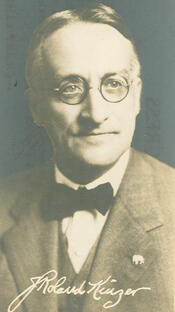
Here you will find contact information for Representative John Roland Kinzer, including email address, phone number, and mailing address.
| Name | John Roland Kinzer |
| Position | Representative |
| State | Pennsylvania |
| District | 9 |
| Party | Republican |
| Status | Former Representative |
| Term Start | April 15, 1929 |
| Term End | January 3, 1947 |
| Terms Served | 9 |
| Born | March 28, 1874 |
| Gender | Male |
| Bioguide ID | K000231 |
About Representative John Roland Kinzer
John Roland Kinzer (March 28, 1874 – July 25, 1955) was a Republican member of the U.S. House of Representatives from Pennsylvania who served nine consecutive terms in Congress between 1929 and 1947. Known formally in public life as J. Roland Kinzer, he represented a Lancaster County–based district during a period that spanned the late 1920s, the Great Depression, the New Deal era, World War II, and the immediate postwar years. Over the course of his long tenure, he contributed to the legislative process and participated actively in the democratic governance of the nation while representing the interests of his Pennsylvania constituents.
Kinzer was born on March 28, 1874, on a farm near Terre Hill in East Earl Township, Lancaster County, Pennsylvania. Raised in a rural community, he was shaped by the agricultural and small-town environment of southeastern Pennsylvania, an area with deep German-American roots and a strong tradition of civic engagement. His early life on the family farm provided him with firsthand familiarity with the concerns of farmers and local businesses, experience that would later inform his public service at the county and national levels.
Pursuing higher education, Kinzer attended Franklin & Marshall College in Lancaster, Pennsylvania, a prominent liberal arts institution in his home county. He graduated in 1896, joining a long line of Franklin & Marshall alumni who would go on to careers in law, public service, and politics. His college education equipped him with the training and connections that facilitated his entry into legal and governmental work in Lancaster County.
Before entering national politics, Kinzer built a substantial career in local public service. He served as county solicitor of Lancaster County from 1912 to 1923, a role in which he acted as the chief legal adviser to the county government. In that capacity, he handled legal matters affecting county administration and policy, gaining a detailed understanding of public law and local governance. His prominence within the Republican Party grew during these years, culminating in his selection as a delegate to the 1928 Republican National Convention, where he participated in the party’s national deliberations and the nomination process for the presidency.
Kinzer entered Congress during a moment of transition for his district and the nation. He was elected as a Republican to the Seventy-first Congress to fill the vacancy caused by the death of Representative William W. Griest, taking office in 1929. He was subsequently reelected to the Seventy-second Congress and to the seven succeeding Congresses, serving continuously from 1929 to 1947. Over these nine terms in office, he took part in debates and votes on major issues arising from the economic crisis of the Great Depression, the implementation and modification of New Deal programs, and the mobilization and conduct of World War II. As a member of the House of Representatives, John Roland Kinzer participated in the democratic process and represented the interests of his Lancaster County constituents, aligning with the Republican Party’s positions while addressing the practical concerns of his largely agricultural and small-town district.
Kinzer’s congressional service extended through the Seventy-first to the Seventy-ninth Congresses, giving him seniority and experience during a period of profound national change. His long tenure allowed him to contribute to legislative deliberations on domestic recovery, wartime policy, and the early postwar transition. Although specific committee assignments and sponsored measures are less prominently recorded, his repeated reelection reflected sustained support from voters who entrusted him with advancing their economic and social interests in Washington. After nearly two decades in the House, he chose not to be a candidate for renomination in 1946, bringing his congressional career to a close at the end of his ninth term in 1947.
Following his departure from Congress, Kinzer retired from elective office. Having spent many years in public life at both the county and national levels, he withdrew from the political arena and returned to private life in Pennsylvania. He lived out his later years in the community that had long supported his career and to which he had devoted his public service.
John Roland Kinzer died on July 25, 1955. His life spanned from the post–Civil War era into the mid-twentieth century, and his career reflected the evolution of American politics from the Progressive Era through World War II. Remembered as a steadfast Republican representative from Pennsylvania, he left a record of sustained legislative service during some of the most consequential decades in modern American history.