Representative John H. Krebs
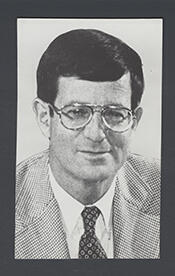
Here you will find contact information for Representative John H. Krebs, including email address, phone number, and mailing address.
| Name | John H. Krebs |
| Position | Representative |
| State | California |
| District | 17 |
| Party | Democratic |
| Status | Former Representative |
| Term Start | January 14, 1975 |
| Term End | January 3, 1979 |
| Terms Served | 2 |
| Born | December 17, 1926 |
| Gender | Male |
| Bioguide ID | K000325 |
About Representative John H. Krebs
John Hans Krebs (December 17, 1926 – November 10, 2014) was an Israeli-American politician, attorney, and member of the Democratic Party who served two terms as a U.S. Representative for California’s 17th congressional district from 1975 to 1979. During his tenure in the United States House of Representatives, he contributed to the legislative process in a period of significant political and social change, representing the interests of his Central Valley constituents and participating actively in the democratic process.
Krebs was born on December 17, 1926, in Berlin, then part of the Weimar Republic (now Germany). In 1933, as the Nazi regime consolidated power, his family moved to the British-administered League of Nations Mandate of Palestine (Mandatory Palestine). He attended Balfour School (elementary) beginning in 1937 and later graduated from Ben Yehuda College in 1945. As a young man in Palestine, he volunteered for the Haganah, a Jewish paramilitary organization that supported the creation of a Jewish state. His early life in Europe and the Middle East, including his experience under the British Mandate and his involvement in the Haganah, shaped his understanding of democracy, national self-determination, and minority rights.
In 1946, Krebs immigrated to the United States, beginning a new chapter that would ultimately lead to his career in law and public service. He pursued higher education at the University of California, Berkeley, where he earned an A.B. degree in 1950. He later studied law at the University of California, Hastings College of the Law, receiving an LL.B. in 1957. He became a naturalized citizen of the United States in 1954, formalizing his transition from immigrant to American citizen and laying the groundwork for his future political career.
Krebs served in the United States Army from 1952 to 1954, during the post–World War II era and the early years of the Cold War. Stationed in Germany, he worked as a translator and served as a corporal in the infantry. Following his military service, he was admitted to the California bar in 1957 and commenced the practice of law in Fresno in 1958. Establishing himself as an attorney in the San Joaquin Valley, he became increasingly involved in local civic affairs and Democratic Party politics, reflecting his interest in land use, development, and community planning.
Krebs’s formal political career began at the local level. He served as a member of the Fresno County Planning Commission from 1965 to 1969, where he dealt with issues of growth, zoning, and regional development. He was a delegate to the California State Democratic Convention in 1966, further integrating himself into state-level party activities. In 1970, he was elected to the Fresno County Board of Supervisors, serving from 1970 to 1974. In that role, he gained a reputation for his attention to agricultural, environmental, and land-use concerns, experience that would inform his later work in Congress.
In 1974, Krebs was elected as a Democrat to the Ninety-fourth Congress from California’s 17th congressional district, a largely agricultural district in the Central Valley. He defeated four-term Republican incumbent and former Olympic decathlon champion Bob Mathias by a margin of 52 percent to 48 percent. Krebs served in the Ninety-fourth and Ninety-fifth Congresses from January 3, 1975, to January 3, 1979, completing two terms in office. His service in Congress occurred during a significant period in American history marked by the aftermath of the Watergate scandal, debates over energy policy, environmental protection, and evolving U.S. foreign policy. As a member of the House of Representatives, he participated in the legislative process, represented the interests of his constituents, and contributed to national policy discussions. Because he grew up in Mandatory Palestine and held a passport from the British Mandate before emigrating to the United States, The Jewish Press has considered him the first Palestinian American to serve in Congress, though other sources, including Haaretz, identify John E. Sununu as the first Palestinian American member of Congress. Krebs was also part of the broader tradition of Jewish members serving in the United States Congress.
Krebs sought reelection in 1978 but was an unsuccessful candidate for the Ninety-sixth Congress, losing to Republican Charles Pashayan Jr. After leaving Congress on January 3, 1979, he remained a resident of Fresno, California, and continued his involvement in legal practice and public affairs. His post-congressional years reflected an ongoing interest in environmental and conservation issues, consistent with his earlier focus on land use and natural resources.
John Hans Krebs died on November 10, 2014, in Fresno, California. His legacy in public service, particularly in relation to conservation, was recognized in 2009 when the John Krebs Wilderness in Sequoia National Park was named in his honor. This designation commemorated his contributions to environmental protection and his role as a Central Valley representative who helped shape federal policy affecting California’s natural landscapes.