Representative John Kronmiller
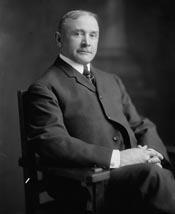
Here you will find contact information for Representative John Kronmiller, including email address, phone number, and mailing address.
| Name | John Kronmiller |
| Position | Representative |
| State | Maryland |
| District | 3 |
| Party | Republican |
| Status | Former Representative |
| Term Start | March 15, 1909 |
| Term End | March 3, 1911 |
| Terms Served | 1 |
| Born | December 6, 1858 |
| Gender | Male |
| Bioguide ID | K000331 |
About Representative John Kronmiller
John Kronmiller (December 6, 1858 – June 19, 1928) was an American politician, businessman, and Republican Congressman from Maryland who served one term in the United States House of Representatives from 1909 to 1911. A lifelong resident of Baltimore, he was active in municipal affairs, state and local institutions, and the civic life of his native city during a period of significant political and social change in the early twentieth century.
Kronmiller was born in Baltimore, Maryland, where he attended both private and public schools. After completing his schooling, he entered the mercantile field and became engaged in the manufacturing of ivory goods, a specialized line of business that reflected Baltimore’s broader commercial and industrial development in the post–Civil War era. His experience as a manufacturer and businessman helped establish his standing in the community and provided the foundation for his later involvement in public service and local politics.
Kronmiller’s formal political career began at the municipal level. He served on the Baltimore city council from 1905 to 1907, participating in the governance of a rapidly growing urban center. His work on the council coincided with a time when American cities were grappling with issues of infrastructure, public health, and political reform, and his service there helped to elevate his profile within the Republican Party in Maryland. Even before and during his rise to higher office, he remained closely identified with the interests and concerns of Baltimore’s citizens.
In 1908, while still active in local affairs, Kronmiller began service as a voluntary member of the board of visitors to the Baltimore City Jail, a position he held from 1908 to 1912. In this role, he contributed to oversight of the city’s penal institution, reflecting a broader Progressive Era interest in prison conditions, administration, and reform. His work with the jail’s board of visitors overlapped with his later congressional service and demonstrated his ongoing engagement with public institutions beyond strictly legislative duties.
Kronmiller was elected as a Republican to the Sixty-first Congress and served as a Representative from Maryland from March 4, 1909, to March 3, 1911. During his single term in the House of Representatives, he participated in the legislative process at the federal level and represented the interests of his Maryland constituents at a time when national debates addressed tariffs, business regulation, and other issues central to the Republican agenda of the period. He was not a candidate for renomination in 1910, thereby concluding his congressional service after one term.
After leaving Congress, Kronmiller resumed his former manufacturing pursuits in Baltimore, returning to the ivory goods business that had anchored his early career. He continued to be active in civic and institutional leadership, serving as director of the Maryland General Hospital in 1913 and 1914, where he contributed to the oversight of one of the state’s key medical institutions. His involvement in hospital administration reflected his broader interest in public welfare and community institutions.
Kronmiller also played a role in the administration of elections in Baltimore. He served as a member of the board of supervisors of election for the city of Baltimore from December 29, 1914, to May 1, 1916, participating in the supervision and regulation of the electoral process at the local level. This position underscored his continued commitment to public service and to the integrity of democratic procedures in his home city.
John Kronmiller spent his entire life closely tied to Baltimore’s commercial, political, and civic spheres. He died in Baltimore on June 19, 1928, and was interred in Loudon Park Cemetery. His career encompassed business, municipal government, federal legislative service, and leadership roles in local institutions, marking him as a significant, if brief, congressional figure in Maryland’s early twentieth-century political history.