Representative John R. "Randy" Kuhl Jr.
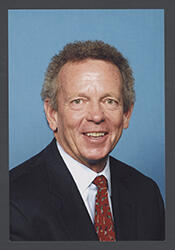
Here you will find contact information for Representative John R. "Randy" Kuhl Jr., including email address, phone number, and mailing address.
| Name | John R. "Randy" Kuhl Jr. |
| Position | Representative |
| State | New York |
| District | 29 |
| Party | Republican |
| Status | Former Representative |
| Term Start | January 4, 2005 |
| Term End | January 3, 2009 |
| Terms Served | 2 |
| Born | April 19, 1943 |
| Gender | Male |
| Bioguide ID | K000364 |
About Representative John R. "Randy" Kuhl Jr.
John Randolph Kuhl Jr. (born April 19, 1943) is an American Republican politician and attorney who served as a Representative from New York in the United States Congress from 2005 to 2009. Over the course of a long public career, he was a member of the New York State Assembly, the New York State Senate, and the United States House of Representatives. In Congress, Kuhl represented New York’s 29th congressional district for two terms before being defeated for reelection by Eric Massa in 2008. A member of the Republican Party, he contributed to the legislative process during his two terms in office and participated in the democratic process during a significant period in American history, representing the interests of his constituents in the Finger Lakes and Southern Tier regions.
Kuhl was born in Hammondsport, Steuben County, New York, on April 19, 1943. He was raised in upstate New York and remained closely identified with the region throughout his political career. He attended Union College in Schenectady, New York, where he studied civil engineering and received a Bachelor of Arts degree in 1966. Pursuing a career in law, he enrolled at Syracuse University College of Law, earning his Juris Doctor degree in 1969. He was admitted to the New York bar in 1970 and began practicing law. Kuhl is an Episcopalian, a religious affiliation he has maintained during his years in public life.
Kuhl entered elective office in the New York State Assembly in 1981. He served as a member of the Assembly from 1981 to 1986, sitting in the 184th, 185th, and 186th New York State Legislatures. In November 1986, following the retirement of State Senator William T. Smith, Kuhl ran for Smith’s seat in the New York State Senate and won. Taking office in 1987, he went on to serve in the State Senate until 2004, sitting in the 187th, 188th, 189th, 190th, 192nd, 193rd, 194th, 195th, and 196th New York State Legislatures. At the beginning of the 1995 legislative session, he was appointed the Senate’s Assistant Majority Leader for Operations, a leadership role that gave him significant influence over procedural and organizational matters in the Republican-controlled chamber.
During his long tenure in the New York State Legislature, one of Kuhl’s signature issues was advocacy for upstate interests, most notably through proposals for the secession of upstate New York from New York City and its surrounding suburban counties. He regularly introduced legislation to allow New York City, Long Island, and Westchester and Rockland Counties to become a separate state called “New York,” while the remaining counties would form a new state called “West New York.” He cited polling in upstate areas that showed the idea to be popular and summarized his secessionist views by noting that his constituents in the Finger Lakes region often wondered, “Why don’t you just cut the City of New York off and let it drift out to sea?” His advocacy for this cause underscored the political and cultural divide between upstate and downstate regions. In 1997, while serving as a state senator, Kuhl was arrested and convicted of driving while intoxicated; as a result, his driver’s license was revoked for six months.
In 2004, Kuhl sought federal office by running for the U.S. House seat in New York’s 29th congressional district being vacated by retiring Republican Representative Amo Houghton, a multimillionaire businessman known for his moderate stance during 18 years in Washington. With Houghton’s support, Kuhl won the Republican primary, defeating Monroe County Legislator Mark Assini. In the general election, he faced Democrat Samara Barend, a 27-year-old first-time candidate, and prevailed, thereby securing his first term in Congress. He took office on January 3, 2005, and served in the 109th and 110th Congresses until January 3, 2009. His service in Congress coincided with the later years of the George W. Bush administration, the Iraq War, and significant national debates over taxation, national security, and health care.
As a member of the U.S. House of Representatives, Kuhl was considered a fairly reliable conservative. He generally voted against abortion rights, gun control measures, and tax increases, and he supported making President George W. Bush’s tax cuts permanent. He also advocated for a 10-cent reduction in federal gasoline taxes, reflecting his interest in easing the tax burden on his largely rural and small-town constituency. At the same time, he was a member of the Republican Main Street Partnership, a group of generally more moderate Republicans, indicating some alignment with pragmatic and business-oriented elements of the party. In September 2007, he became one of the most outspoken opponents of a plan by New York Governor Eliot Spitzer to allow undocumented immigrants to apply for driver’s licenses. He also emerged as a prominent opponent of proposed expansions of the State Children’s Health Insurance Program (SCHIP), a position that drew significant criticism from advocacy groups such as MoveOn.org, the Service Employees International Union, and Governor Spitzer.
Kuhl’s congressional campaigns reflected the national political climate of the mid-2000s. In 2006, his Democratic opponent was Eric Massa of Corning, a former Navy officer and former Republican. During that campaign, Kuhl closely aligned himself with the Bush administration’s policies on the Iraq War and national security. In March 2006, he invited President George W. Bush to Canandaigua, New York, and in September 2006 he welcomed Vice President Dick Cheney to a major fundraiser in Rochester. Kuhl agreed with Cheney’s assessment that combating terrorists around the world was the top issue in the campaign and argued that negative news from the war zone should be balanced by a frank discussion of the broader strategic reality. Speaking of his Finger Lakes and Southern Tier constituents, he remarked that “they don’t necessarily understand the full importance of our presence there.” Preliminary results from the November 2006 election showed Kuhl narrowly defeating Massa by approximately 5,600 votes out of about 193,000 cast. Massa initially refused to concede and considered challenging the results, but on November 15, 2006, he conceded and contacted Kuhl to congratulate him. Final results certified by the New York State Board of Elections on December 14, 2006, showed Kuhl winning by a margin of 6,033 votes out of 206,121 cast.
In 2008, Kuhl again faced Eric Massa in a rematch for the 29th district seat. The race took place in the context of a broader national shift toward the Democratic Party during the financial crisis and the final year of the Bush administration. In contrast to 2006, Kuhl narrowly lost the election by a 51 percent to 49 percent margin, roughly reversing the outcome of their previous contest. A key factor in his defeat was his performance in Cattaraugus County, which he had carried 56 percent to 44 percent in 2006 and which supported Republican presidential candidate John McCain in 2008, but where he finished behind Massa in the congressional race. Because of the closeness of the contest, Kuhl did not concede until November 21, 2008. His term concluded on January 3, 2009, when Massa succeeded him as the representative for New York’s 29th congressional district.
Following his departure from Congress, Kuhl returned to private life. Having spent more than two decades in the New York State Legislature and four years in the U.S. House of Representatives, he remained identified with conservative Republican politics and with the interests of upstate New York. Throughout his career, he participated actively in the legislative process at both the state and federal levels, reflecting the concerns of his constituents and the broader ideological currents within the Republican Party during the late twentieth and early twenty-first centuries.