Representative John Curtis Kyle
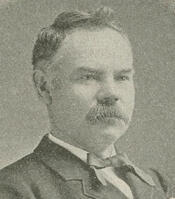
Here you will find contact information for Representative John Curtis Kyle, including email address, phone number, and mailing address.
| Name | John Curtis Kyle |
| Position | Representative |
| State | Mississippi |
| District | 2 |
| Party | Democratic |
| Status | Former Representative |
| Term Start | December 7, 1891 |
| Term End | March 3, 1897 |
| Terms Served | 3 |
| Born | July 17, 1851 |
| Gender | Male |
| Bioguide ID | K000354 |
About Representative John Curtis Kyle
John Curtis Kyle (July 17, 1851 – July 6, 1913) was an American attorney and Democratic politician from Mississippi during the late 19th century. He was most notable for his service as mayor of Sardis, Mississippi, from 1879 to 1881, as a member of the Mississippi State Senate from 1881 to 1885, as a member of the Mississippi Railroad Commission from 1886 to 1890, and as a Representative from Mississippi in the United States Congress from 1891 to 1897. A member of the Democratic Party, he contributed to the legislative process during three terms in the U.S. House of Representatives, participating in the democratic process and representing the interests of his constituents during a significant period in American history.
Kyle was born in Sardis, Panola County, Mississippi, on July 17, 1851, the son of James M. Kyle and Susannah (Curtis) Kyle. He was raised on the family farm and attended local schools in Sardis, combining formal education with agricultural work in his youth. He pursued higher education at Bethel College, which he attended through his junior year before returning home to assist with work on the family farm. Determined to enter the legal profession, he later resumed his studies at Cumberland University Law School in Lebanon, Tennessee, where he earned an LL.B. degree in 1874.
After receiving his law degree, Kyle was admitted to the bar in 1874 and began the practice of law in Batesville, Mississippi. He practiced there for several years, establishing himself as a capable attorney, before returning to his hometown of Sardis, where he continued his legal career. His professional work in these growing north Mississippi communities helped build the reputation that would later support his entry into public office at the municipal and state levels.
Kyle’s political career began in local government when he was chosen as the Democratic mayor of Sardis, serving from 1879 to 1881. His election was notable in that he had not been an active candidate for the office and had not campaigned, reflecting the confidence local citizens placed in his leadership. In 1881, he was elected to the Mississippi State Senate, where he served a four-year term until 1885. He declined to seek a second term in the Senate. In 1886, the state legislature elected him to the Mississippi Railroad Commission, an important regulatory body in an era when railroads were central to the state’s economy. Although he had not actively sought the position, he won the legislative vote over former governor John Marshall Stone. In 1887, Kyle was elected chairman of the Mississippi Democratic Party’s executive committee, and he directed the party’s efforts in that year’s statewide elections, further solidifying his influence within state politics.
In 1890, Kyle was elected as a Democrat to the United States House of Representatives. He was re-elected in 1892 and 1894, serving three consecutive terms from March 4, 1891, to March 3, 1897. During his tenure in Congress, he represented Mississippi during a transformative period marked by debates over monetary policy, economic reform, and the evolving role of the federal government in post-Reconstruction America. He was not a candidate for renomination in the 1896 election, declining to run because he opposed the Democratic Party’s adoption of the Free Silver position in its 1896 platform. His decision reflected both his independence of judgment and the deep divisions within the party during the contentious national campaign of that year.
After leaving Congress in 1897, Kyle returned to Mississippi and resumed the practice of law. In addition to his legal work, he became involved in several banking and business ventures, contributing to the economic life of his community and region. In 1900, he was a candidate for the presidency of the Mississippi Agricultural & Mechanical College (later Mississippi State University). The board of trustees voted 5 to 4 to offer the position to J. C. Hardy, and Kyle lost the post by a single vote. In 1902, he announced his candidacy for governor in the 1903 Mississippi gubernatorial election, but he withdrew from the race when his business and legal commitments prevented him from conducting an active campaign.
Kyle’s personal life was rooted in Sardis. In 1879, he married Sallie G. Heflin of Sardis. The couple had one son, John Curtis Kyle Jr., born in 1882, who died in 1905. Kyle gradually reduced his professional activities and retired from business in 1912. He died in Sardis on July 6, 1913, eleven days before his sixty-second birthday. He was interred in Rosehill Cemetery in Sardis, closing a career that spanned local, state, and national public service.