Representative John Fletcher Lacey
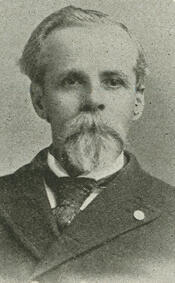
Here you will find contact information for Representative John Fletcher Lacey, including email address, phone number, and mailing address.
| Name | John Fletcher Lacey |
| Position | Representative |
| State | Iowa |
| District | 6 |
| Party | Republican |
| Status | Former Representative |
| Term Start | December 2, 1889 |
| Term End | March 3, 1907 |
| Terms Served | 8 |
| Born | May 30, 1841 |
| Gender | Male |
| Bioguide ID | L000010 |
About Representative John Fletcher Lacey
John Fletcher Lacey (May 30, 1841 – September 29, 1913) was an eight-term Republican United States congressman from Iowa’s 6th congressional district and a leading early advocate of federal conservation policy. Serving as a Representative from Iowa in the United States Congress from 1889 to 1907, he participated actively in the legislative process over eight terms in office and represented the interests of his constituents during a significant period in American history. He is best known as the author of the Lacey Act of 1900, the first federal conservation law, and the Lacey Act of 1907, which further regulated the handling of tribal funds.
Lacey was born in New Martinsville, Virginia (now West Virginia), on May 30, 1841. In 1855 he moved with his parents to Iowa, where the family settled in Oskaloosa. He attended the common schools and pursued classical studies while also engaging in agricultural pursuits. During his youth he learned the trades of bricklaying and plastering, experiences that grounded him in the practical concerns of a developing frontier community and helped shape his later interest in land use and public improvements.
When the American Civil War began in the spring of 1861, Lacey, then twenty years old, enlisted in the Union Army. In May 1861 he joined Company H of the 3rd Iowa Volunteer Infantry Regiment. During his service with the Third Iowa Infantry he was captured at the Battle of Blue Mills, but was soon released on parole. He later served as sergeant major in Company D of the 33rd Iowa Volunteer Infantry Regiment. According to the November 1903 Congressional Directory, he was promoted to lieutenant and reassigned to Company C of that regiment, then promoted to assistant adjutant general on the staff of Brigadier General Samuel A. Rice. After General Rice was killed in battle, Lacey was assigned to duty on the staff of Major General Frederick Steele, where he remained until the end of the war. These staff assignments exposed him to complex administrative and organizational responsibilities that anticipated his later legislative work.
At the close of the Civil War, Lacey turned to the study of law. He was admitted to the bar in 1865 and began practicing law in Oskaloosa, Iowa. His legal career quickly led him into public life. He was elected to the Iowa House of Representatives for a term beginning in 1870, marking his entry into elective office. In 1878 he founded the town of Lacey, Iowa, in connection with routing the Iowa Central Air Line Railroad, reflecting his interest in transportation development and regional growth. He later served on the Oskaloosa City Council from 1880 to 1883 and held one term as city solicitor, building a reputation as a capable local official and attorney.
Lacey’s state and local experience positioned him for national office. In 1888 he was nominated by the Republican Party to challenge Greenback Party incumbent James B. Weaver, who was seeking re-election to a fourth term as representative of Iowa’s 6th congressional district. Lacey unseated Weaver and entered the Fifty-first Congress, serving from March 4, 1889, to March 3, 1891. He was defeated in the Democratic landslide of 1890 by Frederick Edward White, but in 1892 he reclaimed the seat from White. He then served seven consecutive terms in the House of Representatives, from the Fifty-third through the Fifty-ninth Congresses (March 4, 1893 – March 3, 1907). Over this period he served twelve years as chairman of the Committee on Public Lands, from the Fifty-fourth through the Fifty-ninth Congresses, a position from which he exercised wide influence over federal land and conservation policy. In 1906, when running for a ninth term, he was defeated by Democrat Daniel W. Hamilton, ending his congressional career on March 3, 1907.
During his years in Congress, Lacey became one of the most prominent early congressional advocates of conservation and the protection of public lands. He was an enthusiastic defender of Yellowstone National Park and, in 1894, responded to the inability of park administrators to punish poachers and other violators by sponsoring legislation to give the Department of the Interior authority to arrest and prosecute lawbreakers in the park. This measure, formally titled “An Act To protect the birds and animals in Yellowstone National Park, and to punish crimes in said park, and for other purposes,” was enacted in May 1894 and became the cornerstone of future law-enforcement policies in Yellowstone. On April 12, 1902, reflecting his growing national stature in conservation circles, Lacey accepted membership in the Boone and Crockett Club, a wildlife conservation organization founded by Theodore Roosevelt in 1887.
Lacey is most prominently remembered as the namesake and principal author of the Lacey Act of 1900. Introduced by him in the spring of 1900, the bill was signed into law by President William McKinley on May 25, 1900, after passage by both houses of Congress. As the first federal conservation law, it made it a crime to ship illegal game across state lines and to import injurious wildlife species, and it remains one of the foundations of conservation law enforcement. The Act is now codified principally in two statutes. One, 16 U.S.C. §§ 3371–3378, as amended, protects both plants and wildlife by creating civil and criminal penalties for a wide array of violations, most notably prohibiting trade in wildlife, fish, and plants that have been illegally taken, possessed, transported, or sold. The other, 18 U.S.C. § 42, prohibits the importation of injurious wildlife species without a permit. Another major legislative initiative also known as the “Lacey Act,” approved in the lame-duck session after his 1906 defeat and signed into law in his final week in Congress, made provision for the allotment of tribal funds to certain classes of Native Americans. These provisions were designed to complement the Burke Act and the Dawes Act, which had addressed the allotment of reservation lands to individual Indians but not the distribution of communally owned trust funds. After considerable debate, President Theodore Roosevelt signed this measure into law on March 2, 1907.
In addition to these landmark statutes, Lacey played a key role in the broader conservation movement through his work on the Antiquities Act of 1906. Working with anthropologist Edgar Lee Hewett, he helped draft and secure passage of this law, which authorized the president to proclaim national monuments to protect historic landmarks, structures, and objects of scientific and historic interest. The Antiquities Act became pivotal to the preservation of major archaeological sites in the American Southwest and laid important groundwork for the later development of the National Park System. Through these and related efforts, Lacey’s congressional service coincided with, and significantly shaped, the emergence of a national conservation policy.
After leaving Congress in 1907, Lacey returned to Oskaloosa and resumed the practice of law. He continued his professional work there until his death in Oskaloosa on September 29, 1913. His long career as a lawyer, soldier, state legislator, municipal official, and eight-term member of Congress, together with his authorship of foundational conservation and Indian policy statutes, left a lasting imprint on federal law and the management of the nation’s natural and cultural resources.