Representative John Walter Lambeth
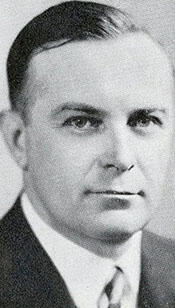
Here you will find contact information for Representative John Walter Lambeth, including email address, phone number, and mailing address.
| Name | John Walter Lambeth |
| Position | Representative |
| State | North Carolina |
| District | 8 |
| Party | Democratic |
| Status | Former Representative |
| Term Start | December 7, 1931 |
| Term End | January 3, 1939 |
| Terms Served | 4 |
| Born | January 10, 1896 |
| Gender | Male |
| Bioguide ID | L000038 |
About Representative John Walter Lambeth
John Walter Lambeth (January 10, 1896 – January 12, 1961) was a Democratic U.S. Representative from North Carolina who served four consecutive terms in the United States Congress from 1931 to 1939. His congressional career spanned the early years of the Great Depression and the implementation of the New Deal, during which he participated in the legislative process and represented the interests of his North Carolina constituents in the House of Representatives.
Lambeth was born in Thomasville, Davidson County, North Carolina, where he attended the local public schools. Raised in a community closely tied to the furniture industry, he grew up in an environment that would later shape his business and political interests. His early life in Thomasville provided him with a familiarity with small-town civic affairs and the economic concerns of working- and middle-class families in the Piedmont region.
Pursuing higher education, Lambeth enrolled at Trinity College in Durham, North Carolina—an institution that would later become Duke University—and graduated in 1916. After completing his undergraduate studies, he undertook further study at Harvard, broadening his academic and intellectual experience beyond his home state. His education at these prominent institutions prepared him for both professional and public service roles, equipping him with training in liberal arts and exposure to national political and economic issues.
With the United States’ entry into World War I, Lambeth joined the United States Army on January 15, 1918. He served in Europe during the remainder of the First World War, participating in the American Expeditionary Forces during the final phases of the conflict. He was discharged from military service with the rank of sergeant on July 26, 1919. His wartime experience, like that of many in his generation, contributed to his sense of public duty and informed his later political outlook.
Following his return from military service, Lambeth entered the furniture manufacturing business in his native Thomasville, working in that industry between 1919 and 1930. During this period he became active in local and state politics. He was elected to the North Carolina State Senate in 1921, marking his first significant public office. In addition to his legislative role in Raleigh, he served as mayor of Thomasville from 1925 to 1929, where he gained experience in municipal governance, local economic development, and public administration at a time when the region’s manufacturing base was expanding.
Lambeth’s growing prominence in Democratic Party politics led to his election as a Democrat to the Seventy-second Congress in 1930. He took office on March 4, 1931, and was subsequently re-elected three times, serving in the Seventy-second, Seventy-third, Seventy-fourth, and Seventy-fifth Congresses. His tenure thus extended through March 3, 1939. Serving during a significant period in American history, he participated in the legislative response to the Great Depression and was part of the Democratic majority that worked with President Franklin D. Roosevelt on New Deal legislation. Throughout his four terms, Lambeth contributed to the work of the House of Representatives and took part in the democratic process on behalf of his district’s constituents. In 1938 he declined to be a candidate for renomination, thereby concluding his congressional service at the end of his fourth term.
After leaving Congress in 1939, Lambeth did not return to elective office, but remained associated with public affairs and business, drawing on his experience in both the furniture industry and government. He maintained ties to his home community of Thomasville even as he spent considerable time in the nation’s capital. Lambeth died in Washington, D.C., on January 12, 1961. His body was returned to North Carolina, and he was interred in the City Cemetery in Thomasville, closing a life that had been closely linked to the civic and political life of his hometown and state.