Senator John Laurance
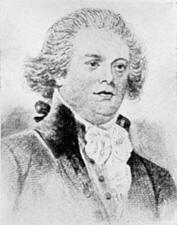
Here you will find contact information for Senator John Laurance, including email address, phone number, and mailing address.
| Name | John Laurance |
| Position | Senator |
| State | New York |
| Party | Federalist |
| Status | Former Representative |
| Term Start | March 4, 1789 |
| Term End | March 3, 1801 |
| Terms Served | 3 |
| Gender | Male |
| Bioguide ID | L000120 |
About Senator John Laurance
John Laurance (sometimes spelled “Lawrence” or “Laurence”) (1750 – November 11, 1810) was an American lawyer, soldier, legislator, and jurist who served as a delegate to the 6th, 7th, and 8th Congresses of the Confederation, a United States Representative and United States Senator from New York, and a United States district judge of the United States District Court for the District of New York. Born in 1750 near Falmouth, Cornwall, England, he immigrated to the Province of New York, British America, in 1767 and settled in New York City. There he pursued academic studies and, in 1772, began reading law under Cadwallader Colden, the lieutenant governor of New York. He was admitted to the bar and entered private practice in New York City, practicing from 1772 until the outbreak of the American Revolution in 1776. In 1775, he married Elizabeth McDougall, daughter of General Alexander McDougall (sometimes spelled MacDougall), thereby aligning himself with one of New York’s leading Patriot families.
With the onset of the American Revolutionary War, Laurance entered military service and served in the Continental Army as a commissioned officer from 1775 to 1782. At the beginning of hostilities in 1775, he was appointed a second lieutenant in the 4th New York Regiment and took part in the Invasion of Quebec that year. In 1776 he received a commission as captain and paymaster of the 1st New York Regiment, serving under his father-in-law, General McDougall. Laurance’s legal training led to his appointment as Judge Advocate General of the Continental Army from 1777 to 1782. In that capacity he prosecuted several major cases, including the 1778 court-martial of General Charles Lee for insubordination and the 1779 court-martial of General Benedict Arnold on charges of corruption. He also served on and acted as recorder for the 1780 board that tried British Major John André for spying in connection with Arnold’s treason, a proceeding that resulted in André’s conviction and execution by hanging. Laurance attained the rank of colonel before resigning his commission in 1782 and was a charter member of the Society of the Cincinnati, reflecting his standing among Revolutionary War officers.
After leaving the army, Laurance resumed private law practice in New York City from 1782 to 1785, where he became a prominent attorney and mentor. Among his legal apprentices was Charles Adams, son of future President John Adams. He also engaged in land speculation and other business ventures, often in association with Alexander Hamilton, another leading New York Federalist. Laurance entered public life in New York State politics as a member of the New York State Assembly, representing Westchester County from 1782 to 1783 and New York County from 1784 to 1785. In 1784 he was appointed a regent of the University of the State of New York and, that same year, became a trustee of Columbia College (now Columbia University), a position he held from 1784 until his death in 1810. He was chosen as a delegate to the 6th, 7th, and 8th Congresses of the Confederation (Continental Congresses), serving from 1785 to 1787, and was elected to the New York State Senate from 1788 to 1790. While serving in the State Senate, he was also a member of New York City’s Board of Aldermen and emerged as an ardent supporter of the adoption of the United States Constitution.
With the establishment of the new federal government, Laurance entered national legislative service. A member of the Federalist Party, he was elected from New York’s 2nd congressional district to the United States House of Representatives in the 1st and 2nd United States Congresses, serving from March 4, 1789, to March 3, 1793. His service in Congress occurred during a formative period in American history, when the institutions and practices of the new federal government were being defined. As a Federalist representative, John Laurance contributed to the legislative process and participated in the early development of national policy, representing the interests of his New York constituents in the House of Representatives. During this period of his life, he suffered personal loss when his first wife, Elizabeth (McDougall) Laurance, died in 1790. In 1791 he married Elizabeth Lawrence Allen (d. 1800), the widow of attorney James Allen and the mother of four children, thus forming a new household while continuing his public career.
Laurance’s legislative experience and Federalist connections led to his appointment to the federal judiciary. On May 5, 1794, President George Washington nominated him to serve as a judge of the United States District Court for the District of New York, filling the vacancy created by the resignation of Judge James Duane. The United States Senate confirmed his nomination on May 6, 1794, and he received his commission the same day. He served on the district court until November 8, 1796, when his judicial service terminated due to his resignation following his election to the United States Senate from New York. His time on the bench placed him among the early cadre of federal judges responsible for interpreting and applying the laws of the new republic.
John Laurance served as a United States Senator from New York from November 9, 1796, until August 1800. He was elected as a Federalist to fill the vacancy caused by the resignation of Senator Rufus King, and he served through a period marked by intense partisan conflict and the quasi-war with France. During his tenure in the Senate, he was recognized for his leadership and, in December 1798, briefly served as President pro tempore of the United States Senate during the 5th United States Congress. In this role he presided over the Senate in the absence of the vice president, further underscoring his prominence among Federalist legislators. Existing accounts sometimes state that he served in the United States Congress from 1789 to 1801, reflecting his combined service in the House of Representatives and the Senate over three consecutive terms in the national legislature. As a member of the Senate, John Laurance participated actively in the democratic process and helped shape federal legislation during a critical era in the consolidation of the federal government, before resigning his seat in August 1800.
Following his departure from Congress, Laurance returned to private law practice in New York City, where he practiced from 1800 until his death in 1810. He continued to reside in New York City, remaining involved in legal and civic affairs and maintaining his long-standing association with Columbia College as a trustee. His second wife, Elizabeth Lawrence Allen Laurance, died in 1800, and he did not remarry. John Laurance died on November 11, 1810, in New York City. He was interred at the First Presbyterian Church in Manhattan. After more than two centuries of relative neglect by historians, the first book-length study of his life and career was published by the American Philosophical Society in 2019, drawing renewed attention to his contributions as a Revolutionary War officer, early federal legislator, and federal judge, and placing him among the notable United States senators born outside the present-day United States.