Senator John Francis Lewis
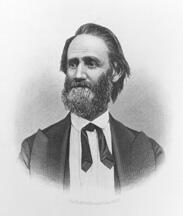
Here you will find contact information for Senator John Francis Lewis, including email address, phone number, and mailing address.
| Name | John Francis Lewis |
| Position | Senator |
| State | Virginia |
| Party | Republican |
| Status | Former Representative |
| Term Start | January 1, 1870 |
| Term End | March 3, 1875 |
| Terms Served | 1 |
| Born | March 1, 1818 |
| Gender | Male |
| Bioguide ID | L000285 |
About Senator John Francis Lewis
John Francis Lewis (March 1, 1818 – September 2, 1895) was an American planter and politician from Rockingham County, Virginia, who became a prominent Unionist during the Civil War era and later a leading Republican in Virginia during Reconstruction. He served as a United States Senator from Virginia from 1869 to 1875, completing one term in the Senate, and twice held the office of lieutenant governor of Virginia in the postwar period. His congressional service occurred during a significant period in American history, and as a member of the Senate he participated in the legislative process and represented the interests of his constituents during the turbulent years of Reconstruction.
Lewis was born on the “Lynnwood” plantation in rural Rockingham County, Virginia, the son of Samuel Hance Lewis and Nancy Cameron Lewis. He attended a private school in his youth and then engaged in farming on his family’s land. Before the Civil War he was a member of the Virginia planter class and, like many of his contemporaries, held enslaved people; in 1850 he owned one 25‑year‑old enslaved mulatto woman, and by 1860 he (or more likely another John Lewis in the same district) was recorded as owning eight enslaved persons in Rockingham County. Despite his position as a slaveholding planter, he would emerge as a steadfast opponent of secession and later as a Republican officeholder in a predominantly Democratic state.
In October 1842, Lewis married Serena Helen Sheffey (1823–1901). The couple raised two sons and four daughters. Their son Daniel Sheffey Lewis (1843–1912) became a newspaperman and for many years served as treasurer of the city of Harrisonburg, eventually becoming one of Virginia’s most prominent Republicans. Another son, John Francis Lewis Jr. (1860–1915), survived his father but later committed suicide after suffering a stroke and learning that he would not recover fully. The family remained closely tied to Rockingham County and the Lynnwood plantation throughout Lewis’s life.
Lewis entered public life as a Whig and represented Rockingham County as a delegate to the Virginia Secession Convention of 1861. At that convention he distinguished himself as a firm Unionist, refusing to sign the ordinance of secession. He was the only member from east of the Allegheny Mountains who declined to endorse Virginia’s withdrawal from the Union. During the Civil War, portions of the Battle of Port Republic in June 1862 were fought on or near his family’s land, underscoring the direct impact of the conflict on his home and livelihood. After the war, in 1865, he ran unsuccessfully for Congress as a Union Party candidate, reflecting his continued alignment with pro‑Union and, increasingly, Republican politics during the early Reconstruction period.
With the reorganization of Virginia’s government under Reconstruction, Lewis emerged as a leading Republican figure in the state. He was elected lieutenant governor of Virginia in 1869 and served from October 5, 1869, until January 1, 1870. His election came as Virginia was preparing for readmission to full representation in the federal government following the Civil War. A member of the Republican Party, he contributed to the legislative and executive processes during this transitional period, helping to implement Reconstruction policies and to reestablish civil government under the new state constitution.
Upon the readmission of Virginia to representation in the United States Congress, Lewis was elected as a Republican to the United States Senate. He took his seat on January 26, 1870, and served until March 4, 1875, representing Virginia for one full term during the Reconstruction period after the Civil War. In the Senate he participated in the democratic process at the national level and represented the interests of his Virginia constituents at a time when the former Confederate states were being reintegrated into the Union. During the Forty-third Congress he served on the Committee on the District of Columbia, which oversaw federal legislation affecting the nation’s capital. By the mid‑1870s the Republican Party had become a minority in Virginia, and Lewis did not seek reelection in 1874; Republicans would not control either house of the state legislature on their own for the remainder of the nineteenth century.
After leaving the Senate, Lewis returned to Virginia and continued in federal service. He was appointed by President Ulysses S. Grant as United States Marshal for the Western District of Virginia in 1875, a post he continued to hold under President Rutherford B. Hayes. He served as U.S. Marshal from 1875 until his resignation in 1882. During these years he remained an important Republican presence in a state increasingly dominated by Democratic and Readjuster coalitions, and his federal appointment reflected the continued confidence of national Republican administrations in his loyalty and administrative ability.
Lewis reentered state politics in the early 1880s. In 1881 he was again elected lieutenant governor of Virginia, this time on a ticket headed by Readjuster Party candidate William E. Cameron. He served as lieutenant governor from 1882 to 1886, presiding over the state senate during a period marked by the Readjuster movement’s efforts to refinance Virginia’s prewar debt and expand public services, including education. His second tenure as lieutenant governor underscored his enduring role in Virginia politics and his willingness to cooperate with allied reform movements. After his term ended in 1886, no Republican again held the office of lieutenant governor of Virginia until John N. Dalton served from 1974 to 1978, highlighting the long eclipse of Republican statewide power that followed the end of Reconstruction and the Readjuster era.
In his later years Lewis retired from active politics and resumed farming at his Lynnwood plantation in Rockingham County. He lived quietly there until his death on September 2, 1895. John Francis Lewis died at Lynnwood and was buried in the family burial ground on the plantation, closing the life of a figure who had bridged Virginia’s antebellum planter society, the upheavals of secession and civil war, and the contentious politics of Reconstruction and its aftermath.