Representative John Wesley Longyear
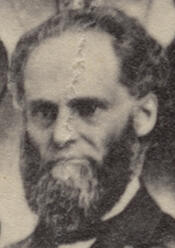
Here you will find contact information for Representative John Wesley Longyear, including email address, phone number, and mailing address.
| Name | John Wesley Longyear |
| Position | Representative |
| State | Michigan |
| District | 3 |
| Party | Republican |
| Status | Former Representative |
| Term Start | December 7, 1863 |
| Term End | March 3, 1867 |
| Terms Served | 2 |
| Born | October 22, 1820 |
| Gender | Male |
| Bioguide ID | L000434 |
About Representative John Wesley Longyear
John Wesley Longyear (October 22, 1820 – March 10, 1875) was a United States Representative from Michigan and a United States district judge of the United States District Court for the Eastern District of Michigan. A member of the Republican Party, he served two terms in the United States Congress from 1863 to 1867 and later held federal judicial office from 1870 until his death in 1875, contributing to the legislative and judicial development of Michigan during and after the Civil War.
Longyear was born on October 22, 1820, in Shandaken, Ulster County, New York. He was the son of Petrus (Peter) Longyear (1784–1845), of Dutch heritage, and Jerusha (Stevens) Longyear, of English heritage. The Longyear family traced its American roots to Jacob Longyear Sr., also known as Jacob Langjaer, an 18th‑century immigrant to New York from Holland. Raised in this mixed Dutch and English lineage in upstate New York, Longyear pursued classical studies at Lima Academy in Lima, New York, an institution that prepared many young men of the period for professional careers. After completing his studies, he taught school for several years in New York, gaining early experience in education and public service.
In 1844, Longyear moved west to Mason, in Ingham County, Michigan, where he continued to teach school while preparing for a career in law. He read law in the traditional manner of the time and was admitted to the Ingham County bar in 1846. He entered private legal practice in Mason from 1846 to 1847, then relocated to Lansing, Michigan, in 1847, where he continued in private practice for more than two decades, until 1870. During these years he established himself as a prominent attorney in the growing capital city, building the professional reputation that would later support his election to Congress and his appointment to the federal bench.
Longyear was elected as a Republican from Michigan’s 3rd congressional district to the United States House of Representatives, serving in the 38th and 39th Congresses from March 4, 1863, to March 3, 1867. His service in Congress occurred during a significant period in American history, encompassing the height of the Civil War and the beginning of Reconstruction. As a member of the House of Representatives, John Wesley Longyear participated in the democratic process, represented the interests of his Michigan constituents, and contributed to the legislative process over his two terms in office. He served as Chairman of the United States House Committee on Expenditures on Public Buildings during both the 38th and 39th Congresses, overseeing matters related to federal building expenditures at a time of expanding national infrastructure. He was not a candidate for renomination in 1866, concluding his congressional career at the end of his second term.
After leaving Congress, Longyear remained active in public affairs. In 1866 he served as a delegate to the Loyalist Convention in Philadelphia, Pennsylvania, a gathering of Unionists that met to support Reconstruction policies and continued loyalty to the federal government in the aftermath of the Civil War. In 1867 he was a delegate to the Michigan state constitutional convention, participating in efforts to revise and modernize the state’s fundamental law. At the same time, he continued his legal practice in Lansing, maintaining his role as a leading member of the Michigan bar.
Longyear’s judicial career began with his nomination by President Ulysses S. Grant on February 7, 1870, to a seat on the United States District Court for the Eastern District of Michigan, vacated by Judge Ross Wilkins. The United States Senate confirmed his nomination on February 18, 1870, and he received his commission the same day. As a United States district judge, he presided over federal trial matters in the Eastern District of Michigan during a period of rapid industrial and commercial growth in the state. In 1871 he moved from Lansing to Detroit, the principal city of the district and the center of much of its federal litigation, and continued to serve on the bench there until his death.
John Wesley Longyear’s service as a federal judge terminated on March 10, 1875, when he died in Detroit, Michigan. He was interred in Mount Hope Cemetery in Lansing, reflecting his long association with the state capital where he had practiced law and launched his political career. Through his work as an educator, attorney, congressman, and federal judge, Longyear played a notable role in Michigan’s legal and political life during the mid‑19th century.