Representative John Emmett Lyle
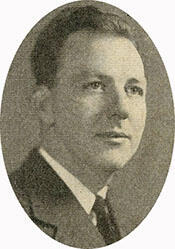
Here you will find contact information for Representative John Emmett Lyle, including email address, phone number, and mailing address.
| Name | John Emmett Lyle |
| Position | Representative |
| State | Texas |
| District | 14 |
| Party | Democratic |
| Status | Former Representative |
| Term Start | January 3, 1945 |
| Term End | January 3, 1955 |
| Terms Served | 5 |
| Born | September 4, 1910 |
| Gender | Male |
| Bioguide ID | L000525 |
About Representative John Emmett Lyle
John Emmett Lyle Jr. (September 4, 1910 – November 11, 2003) was a third-generation Texan and Democratic politician who served as a U.S. Representative from Texas from 1945 to 1955. Born in Boyd, Wise County, Texas, he spent his formative years in the state and graduated from Wichita Falls High School in Wichita Falls, Texas. His early life in Texas helped shape his long-standing connection to the state and its political life.
After high school, Lyle pursued higher education in several Texas institutions. He attended junior college in Wichita Falls and later studied at the University of Texas, where he worked as a night watchman in the Capitol basement to support himself. He subsequently attended Houston Law School at night while continuing to work. Lyle was admitted to the bar in 1934 and entered private law practice in Corpus Christi, Texas, establishing himself professionally before embarking on a full-time political career.
Lyle’s political career began at the state level. He served as a member of the Texas House of Representatives from 1941 to 1944, representing his constituents during the early years of World War II. During this period, he also entered military service. He served in the United States Army from 1942 to 1944 and rose to the rank of captain of artillery. While on active duty in Italy in 1944, he won the Democratic primary for nomination to the United States House of Representatives, demonstrating his political strength and support at home even while serving overseas.
Lyle was elected as a Democrat to the Seventy-ninth and to the four succeeding Congresses, serving five consecutive terms in the U.S. House of Representatives from January 3, 1945, to January 3, 1955. His decade in Congress coincided with a significant period in American history, encompassing the final months of World War II, the beginning of the Cold War, and the early years of the postwar era. As a member of the House of Representatives, John Emmett Lyle participated in the democratic process, contributed to the legislative work of Congress, and represented the interests of his Texas constituents. He enjoyed strong political support from the influential Parr family of Duval County, which was a notable factor in his electoral success. A staunch anti-communist, Lyle became particularly prominent as the chief witness against Leland Olds, who had twice served as Chairman of the Federal Power Commission. Lyle’s testimony was instrumental when Olds was blocked by the Senate from reappointment, largely on the grounds of Olds’s earlier associations viewed as close to the Communist Party. Lyle chose not to be a candidate for renomination to Congress in 1954, thus ending his congressional service in January 1955.
Following his departure from Congress, Lyle returned to private life and business, maintaining his ties to Texas. He served as a director of Falcon Seaboard, an energy-related enterprise, and was also a director of St. Luke’s Episcopal Hospital in Houston, Texas, reflecting his involvement in both corporate and civic affairs. His public service continued later in life at the federal level when he was appointed to the Federal Council on Aging in 1994, indicating ongoing engagement with national policy issues and concern for the welfare of older Americans.
John Emmett Lyle Jr. died on November 11, 2003, in Houston, Texas. He was interred in the Texas State Cemetery in Austin, a resting place reserved for many of the state’s most notable public figures, underscoring his long career in public service and his enduring association with the state of Texas.