Representative John Lynch
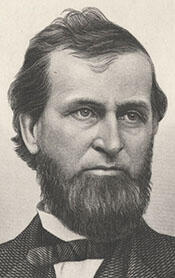
Here you will find contact information for Representative John Lynch, including email address, phone number, and mailing address.
| Name | John Lynch |
| Position | Representative |
| State | Maine |
| District | 1 |
| Party | Republican |
| Status | Former Representative |
| Term Start | December 4, 1865 |
| Term End | March 3, 1873 |
| Terms Served | 4 |
| Born | February 18, 1825 |
| Gender | Male |
| Bioguide ID | L000531 |
About Representative John Lynch
John Lynch, a nineteenth-century American politician and businessman, was born on February 18, 1825, in Portland, Cumberland County, Maine. Raised in a New England commercial center that was rapidly developing in the decades before the Civil War, he came of age in a milieu shaped by maritime trade, small manufacturing, and the emerging debates over slavery and national economic policy. Details of his immediate family background are sparse in the historical record, but his subsequent career in commerce and politics reflects the opportunities and civic expectations of Portland’s growing middle class in the antebellum period.
Lynch received his early education in the common schools of Portland, where he acquired the basic classical and practical training typical of New England public instruction in the first half of the nineteenth century. He did not pursue a formal collegiate course of study, instead entering the world of business at a young age. This path was common among ambitious young men in coastal Maine, where commercial experience and local reputation often served as the principal credentials for later public service. Through his work in trade and manufacturing, Lynch developed the administrative and financial skills that would underpin his later political career.
Before entering national politics, Lynch established himself as a successful businessman in Portland. He engaged in the manufacture of oilcloth and related goods, participating in the region’s growing industrial and commercial sector. His involvement in local economic life led naturally to civic engagement, and he became active in municipal affairs. Lynch served on the Portland City Council, where he gained experience in public administration and local governance. His alignment with the Republican Party, founded in the 1850s on an anti-slavery and pro-Union platform, reflected both his regional political environment and his support for the economic modernization policies that the party championed.
Lynch was elected as a Republican to the United States House of Representatives from Maine and served four consecutive terms during a critical era in American history. He entered Congress on March 4, 1865, at the close of the Civil War, and remained in office until March 3, 1873. During these eight years, he represented his Maine constituents in the Thirty-ninth, Fortieth, Forty-first, and Forty-second Congresses. His service in Congress occurred during the Reconstruction period, when the nation grappled with the reintegration of the former Confederate states, the status and rights of formerly enslaved people, and the redefinition of federal and state authority. As a member of the House of Representatives, Lynch participated in the legislative process on these and other pressing issues, contributing to debates and votes that shaped postwar national policy. He consistently represented the interests of his district within the broader Republican program of Union preservation, economic development, and, in varying degrees, civil rights enforcement in the South.
Within Congress, Lynch’s work reflected the responsibilities of a mid-nineteenth-century representative from a maritime and commercial state. While detailed records of his committee assignments and specific legislative initiatives are limited in surviving summaries, his tenure coincided with major measures concerning Reconstruction, veterans’ affairs, tariffs, currency, and internal improvements. As a Republican from Maine, he would have been aligned with efforts to protect Northern commercial interests, support infrastructure and industrial growth, and maintain the political settlement that secured the results of the Civil War. His repeated reelection by Maine voters indicates a sustained level of confidence in his performance and in his advocacy for their economic and political priorities.
After leaving Congress in March 1873, Lynch returned to private life and resumed his business pursuits. He remained in Portland, where he continued to be identified with the city’s commercial community. Although he no longer held national office, his years in the House of Representatives had placed him among the prominent public figures of Maine in the Reconstruction era. Lynch lived out his later years in the city of his birth, witnessing the continued industrialization of New England and the political realignments of the late nineteenth century. He died in Portland, Maine, on July 21, 1892, closing a life that had spanned from the early republic’s consolidation through the Civil War and Reconstruction to the threshold of the Gilded Age.