Representative John Mattocks
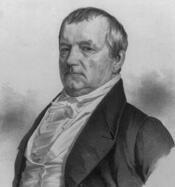
Here you will find contact information for Representative John Mattocks, including email address, phone number, and mailing address.
| Name | John Mattocks |
| Position | Representative |
| State | Vermont |
| District | 5 |
| Party | Whig |
| Status | Former Representative |
| Term Start | December 3, 1821 |
| Term End | March 3, 1843 |
| Terms Served | 3 |
| Born | March 4, 1777 |
| Gender | Male |
| Bioguide ID | M000258 |
About Representative John Mattocks
John Mattocks (March 4, 1777 – August 14, 1847) was an American Whig politician, brigadier general of militia in the War of 1812, U.S. Representative, and the 16th governor of Vermont. He was born in Hartford, Connecticut, on March 4, 1777, and moved with his parents to Tinmouth, Vermont, in 1778. His father, Samuel Mattocks, was a veteran of the American Revolution and later served as Vermont state treasurer from 1784 to 1800, a position that placed the family within the emerging political and civic life of the new state.
Mattocks pursued an academic course in his youth and then studied law in Middlebury, Vermont, and Fairfield, Connecticut. He was admitted to the bar in 1797 and soon commenced the practice of law in Danville, Vermont, before moving to Peacham, Vermont, where he established his long-term residence. In 1805 he built a substantial house in Peacham, which he purchased in 1807; this residence, located in the center of town, later became a local landmark. He married Esther Newell, and the couple had five children: three sons—George, John, and William—and two daughters, both named Esther, who died in infancy.
Mattocks entered public life early in his legal career. He was elected to the Vermont House of Representatives in 1807 and returned to that body in 1815, 1816, 1823, and 1824, participating in the legislative affairs of the state during a formative period in Vermont’s development. During the War of 1812 he served as a brigadier general of militia, reflecting both his standing in the community and the reliance of the young republic on state-based military leadership. His combination of legal expertise, legislative experience, and military service helped establish his reputation as a leading figure in Vermont’s public affairs.
John Mattocks served as a Representative from Vermont in the United States Congress from 1821 to 1843, holding three nonconsecutive terms in the House of Representatives. He was first elected to the Seventeenth Congress and served from March 4, 1821, to March 3, 1823. He returned to Congress as a member of the Nineteenth Congress, serving from March 4, 1825, to March 3, 1827, during which time he was chairman of the U.S. House Committee on Expenditures in the Department of War. A member of the Whig Party, Mattocks contributed to the legislative process during these terms in office, participating in the democratic process and representing the interests of his Vermont constituents at a time of expanding national debate over internal improvements, federal finance, and the balance of power between the states and the federal government. He was again elected as a Whig to the Twenty-seventh Congress, serving from March 4, 1841, to March 3, 1843, thus completing his third term in the national legislature.
Between and after his periods of congressional service, Mattocks continued to hold significant positions in Vermont’s state government and judiciary. He served as a judge of the Vermont Supreme Court in 1833 and 1834, but declined to be a candidate for renomination, returning instead to private life and other public responsibilities. In 1836 he was a delegate to the Vermont constitutional convention, participating in the revision and refinement of the state’s fundamental law. These roles, combined with his legislative and judicial experience, made him one of the more prominent Whig leaders in Vermont in the decades preceding the Civil War.
In 1843 Mattocks was the Whig candidate for governor of Vermont. The principal candidates in that election were John Mattocks for the Whig Party, Daniel Kellogg for the Democratic Party, and Charles K. Williams for the Liberty Party. In the general election Mattocks received 24,465 votes (48.7 percent), Kellogg received 21,982 votes (43.8 percent), and Williams received 3,766 votes (7.5 percent). Because no candidate obtained the majority required by the Vermont Constitution, the selection was made by the Vermont General Assembly, which chose Mattocks as governor. Serving as the 16th governor of Vermont, he held office during a period marked by continuing debates over banking, internal improvements, and the emerging national controversy over slavery. During his gubernatorial term, his son George committed suicide, an event that deeply affected him. Grief-stricken, Mattocks declined to run for another term as governor.
In his later years, Mattocks remained a respected figure in Peacham and in Vermont public life. His house in the center of Peacham, built in 1805 and purchased by him in 1807, continued to stand as a visible reminder of his long association with the town and has been recognized as a local landmark. His family also continued his tradition of public and professional service: his son John became a minister, while his son William entered the legal profession and served as state’s attorney for Caledonia County, Vermont.
John Mattocks died in Peacham, Vermont, on August 14, 1847. He was interred in Peacham Village Cemetery in Caledonia County, Vermont. His career encompassed service as a state legislator, militia general, congressman, state supreme court judge, constitutional convention delegate, and governor, reflecting the broad scope of civic responsibility characteristic of early nineteenth-century American public figures.