Representative John Steven McGroarty
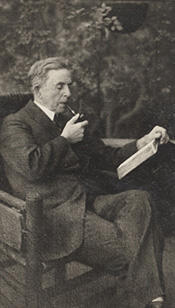
Here you will find contact information for Representative John Steven McGroarty, including email address, phone number, and mailing address.
| Name | John Steven McGroarty |
| Position | Representative |
| State | California |
| District | 11 |
| Party | Democratic |
| Status | Former Representative |
| Term Start | January 3, 1935 |
| Term End | January 3, 1939 |
| Terms Served | 2 |
| Born | August 20, 1862 |
| Gender | Male |
| Bioguide ID | M000462 |
About Representative John Steven McGroarty
John Steven McGroarty (August 20, 1862 – August 7, 1944) was an American poet, journalist, dramatist, Los Angeles Times columnist, and author who also served as a Democratic Representative from California in the United States Congress from 1935 to 1939. Over the course of a varied career that spanned law, mining administration, letters, and public office, he became a prominent interpreter of California’s history and culture and a notable figure in the political life of the New Deal era.
McGroarty was born at Buck Mountain, in Foster Township, Luzerne County, Pennsylvania, near Wilkes-Barre, and was the youngest of twelve children. He attended public schools in the Wilkes-Barre area and continued his education at Harry Hillman Academy in Wilkes-Barre. After completing his schooling, he entered public service in his home county, serving as treasurer of Luzerne County from 1890 to 1893. He subsequently studied law, was admitted to the bar in 1894, and practiced as an attorney in Wilkes-Barre, establishing himself in the legal profession before turning to opportunities in the American West.
In 1896 McGroarty moved to Montana, where he held an executive position with the Anaconda Copper Mining Company in the mining centers of Butte and Anaconda from 1896 to 1901. At the beginning of the twentieth century he relocated again, this time to Los Angeles, California, in 1901, where he embarked on a long career in journalism and letters. In Los Angeles he worked as a journalist and became associated with the Los Angeles Times. In 1909 he edited a Los Angeles Times centenary edition commemorating the birth of Abraham Lincoln, which included an introspective treatment of Black residents in Los Angeles; his broad-minded views on race relations contributed to his reputation as a “beloved figure in black Los Angeles.” He also served for many years as editor of West Coast Magazine, further cementing his role in the region’s literary and journalistic circles.
Alongside his journalism, McGroarty developed a substantial body of literary and historical work focused on California. He authored numerous books and dramas, the best known of which was The Mission Play (1911), a three-hour historical pageant dramatizing the story of the California missions from their founding in 1769 through secularization in 1834 and concluding with their “final ruin” in 1847. The Mission Play opened on April 29, 1912, and became a widely recognized cultural event. McGroarty himself emphasized the originality of his dramatic treatment of the mission story, writing in 1916 that “the story of Junipero Serra and the Missions for dramatic purposes has been lying around since 1833, at least, for anybody to grab. But no one grabbed it until I did so in 1912. Now it is mine.” His historical and literary output also included California: Its History and Romance (1911), Mission Memories (1929), and The California Plutarch (1935), in which he profiled the lives and histories of early Northern and Southern California pioneers and families such as the Crocker, Carrillo, Van Nuys, Stanford, Avila, Estrada, Sepúlveda, Baldwin, and Mulholland families. His work on The Mission Play drew both praise and criticism from contemporaries, including Catholic historian Father Zephyrin Engelhardt and writer Charles F. Lummis, who corresponded with McGroarty about historical accuracy and dramatic representation in the pageant.
McGroarty’s literary reputation culminated in his designation as poet laureate of California by the state legislature in 1933, formal recognition of his status as one of the state’s leading literary figures. By this time he had settled in Tujunga, California, where he built a home known as Chupa Rosa, completed in 1923 in what was then the unincorporated community of Sunland. The area was incorporated into the City of Los Angeles in 1932. The house, located at 7570 McGroarty Terrace, later became Historic Cultural Monument No. 63 of the City of Los Angeles and is now known as the McGroarty Arts Center, preserving his legacy as a patron of the arts and letters in Southern California.
McGroarty entered national politics as a member of the Democratic Party during the New Deal era. He was elected to the United States House of Representatives from California and served in the Seventy-fourth Congress from January 3, 1935, to January 3, 1937, and was reelected to the Seventy-fifth Congress, serving from January 3, 1937, to January 3, 1939. His two terms in Congress coincided with a significant period in American history marked by the Great Depression and the legislative initiatives of President Franklin D. Roosevelt. As a member of the House of Representatives, McGroarty participated in the democratic process and represented the interests of his California constituents while contributing to the broader legislative debates of the time. He played a notable role in introducing the Townsend Bill, a proposal for old-age pensions that formed part of the national discussion on social welfare and influenced the development of old age pension reform. He worked actively on issues related to pensions and social security for the elderly, reflecting his concern with social justice and economic security for older Americans.
During his congressional service, McGroarty also took an interest in conservation and public lands. In 1937 he introduced a successful bill that enabled the federal government to purchase a large timber holding from the Yosemite Lumber Company, thereby bringing the land within the boundaries of Yosemite National Park and expanding the protected area of one of the nation’s most famous national parks. Although generally aligned with the New Deal, McGroarty was not an uncritical supporter of the Roosevelt administration. He opposed President Roosevelt’s controversial proposal to expand the United States Supreme Court, taking a stand that later drew attention in discussions of congressional independence. His forthright personality and sometimes caustic wit were illustrated in a 1934 letter to a constituent, in which he sharply rebuked a complaint about reforestation of the Sierra Madre mountains; this letter was later quoted by President John F. Kennedy in Profiles in Courage (1956) as an example of a legislator’s candor.
In 1938 McGroarty chose not to seek reelection to his House seat and instead ran for California Secretary of State. He was defeated in the Democratic primary by the incumbent Republican officeholder, Frank C. Jordan, ending his brief but eventful career in elective office. After leaving Congress, McGroarty returned to his earlier profession of journalism in Tujunga, California, resuming his role as a commentator and man of letters. He continued to live at Chupa Rosa, maintaining his engagement with California’s cultural and civic life.
John Steven McGroarty died at St. Vincent’s Hospital in Los Angeles, California, on August 7, 1944, at the age of 81. He was interred at Calvary Cemetery in Los Angeles. His home in Tujunga, preserved as the McGroarty Arts Center, and his extensive body of historical and literary work, including The Mission Play and his writings on California’s past and its people, remain enduring elements of his legacy as both a cultural figure and a former Representative from California.