Senator John McKinley
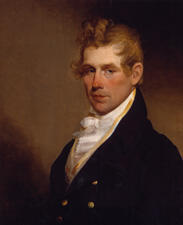
Here you will find contact information for Senator John McKinley, including email address, phone number, and mailing address.
| Name | John McKinley |
| Position | Senator |
| State | Alabama |
| Party | Democratic |
| Status | Former Representative |
| Term Start | January 1, 1826 |
| Term End | December 31, 1837 |
| Terms Served | 3 |
| Born | May 1, 1780 |
| Gender | Male |
| Bioguide ID | M000519 |
About Senator John McKinley
John McKinley (May 1, 1780 – July 19, 1852) was a United States Senator from the state of Alabama, a member of the Democratic (Jacksonian) Party, and an associate justice of the Supreme Court of the United States. His service in Congress, including three terms in the United States Senate between 1825 and 1837, occurred during a significant period in American history, and he participated actively in the legislative process while representing the interests of his Alabama constituents.
McKinley was born in Culpeper County, Virginia, on May 1, 1780, to Andrew McKinley and Mary (Logan) McKinley, the sister of Kentucky pioneer Benjamin Logan. In 1783 his family moved to Kentucky, where he grew up on the early American frontier. He read law in Kentucky and was admitted to the bar in 1800, beginning his legal practice in Frankfort and Louisville. During the War of 1812 he was actively involved in military affairs and wrote to President James Madison expressing his desire to serve and requesting a major’s commission, but he did not receive the commission he sought.
In 1818 McKinley moved to Alabama, reflecting both his legal ambitions and his interest in western land development. He became a partner with John Coffee, James Jackson, and others in the Cypress Land Company and engaged extensively in land speculation. After relocating, he established a legal practice in Huntsville, Alabama. McKinley soon entered public life in his new state and was elected to the Alabama House of Representatives in August 1820. In 1821 he moved his family from Huntsville to Florence, which rendered him ineligible for re-election to that body under state residency requirements. In 1821 he was appointed to the original board of trustees for the University of Alabama, where he helped plan the campus design and curriculum, and he later became a founding member of the First Presbyterian Church of Florence, Alabama, being elected an elder there in 1826.
McKinley’s early efforts to enter the United States Senate met with mixed success. When failing health forced Senator John Williams Walker to resign in 1822, McKinley emerged as a favored candidate in the special election to fill the vacancy but lost to William Kelly by a single vote. Nonetheless, he remained a prominent figure in Alabama politics. On November 27, 1826, he was elected as a Jacksonian to the United States Senate to finish the unexpired term of Senator Henry H. Chambers, who had died in office. He served in the Senate during a formative era of Jacksonian democracy and national expansion. When he sought re-election in 1830, however, he was defeated by Gabriel Moore. During the 1830s McKinley continued to alternate between state and federal office. He was twice elected again to the Alabama House of Representatives, in 1831 and 1836, and in between those terms he served one term in the United States House of Representatives during the 23rd Congress (1833–1835), where he was a strong champion of President Andrew Jackson’s political agenda. In the 1836 presidential election he served as a Presidential Elector, casting his vote for Martin Van Buren.
McKinley’s most sustained period of congressional service came with his return to the United States Senate. In 1836 he was again elected to the Senate from Alabama, this time easily defeating his earlier rival Gabriel Moore. Over the course of his three terms in the Senate between 1825 and 1837, he contributed to the legislative process as a committed Jacksonian Democrat, participating in debates over issues such as federal power, economic policy, and the interests of the expanding southwestern states. His final Senate term was cut short when he resigned in April 1837 to accept appointment to the Supreme Court of the United States, thus concluding his direct role in the legislative branch.
McKinley’s judicial career was shaped by the expansion of the federal judiciary in the late 1830s. In March 1837, Congress enacted the Eighth and Ninth Circuits Act, which increased the number of seats on the Supreme Court from seven to nine. This gave President Andrew Jackson the opportunity, on March 3, 1837—his last full day in office—to nominate two new associate justices. The Senate of the 25th Congress confirmed both nominees, but one of them, William Smith, declined to serve, leaving a vacancy. President Martin Van Buren then offered McKinley a recess appointment to the vacant seat on April 22, 1837, and formally nominated him on September 18, 1837. The United States Senate confirmed McKinley by voice vote on September 25, 1837. As an associate justice, he was assigned to the newly created Ninth Circuit, which encompassed Alabama, Mississippi, Louisiana, and Arkansas, requiring extensive circuit riding in the Old Southwest. During his fourteen years on the Court, McKinley wrote twenty-two opinions, several of them dissents, often reflecting his commitment to preserving states’ rights. Among his noteworthy opinions were those in Bank of Augusta v. Earle (1839), Groves v. Slaughter (1841), Pollard v. Hagan (1845), and the Passenger Cases (1849).
In his personal life, McKinley married twice. In 1814 he married Juliana Bryan, with whom he had three children: Elizabeth, Andrew, and Mary. Juliana Bryan McKinley died in 1822. In 1824 he married Elizabeth Armistead, who survived him by many decades, dying in 1891; they had no children together. Like many prominent southern politicians and landowners of his era, McKinley was a slaveholder; the 1850 census recorded that he owned twelve enslaved persons. After his appointment to the Supreme Court, he moved his family to Louisville, Kentucky, from which he traveled to fulfill his circuit duties in the South and Southwest.
John McKinley died in Louisville on July 19, 1852, at the age of seventy-two. He was buried in Cave Hill Cemetery in that city. His public career left a lasting imprint on both Alabama and the federal judiciary. The community of McKinley, Alabama, was named in his honor, and during World War II the Liberty ship SS John McKinley also bore his name, commemorating his service as a United States Senator and associate justice of the Supreme Court of the United States.