Representative John A. McMahon
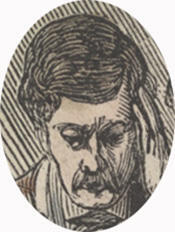
Here you will find contact information for Representative John A. McMahon, including email address, phone number, and mailing address.
| Name | John A. McMahon |
| Position | Representative |
| State | Ohio |
| District | 3 |
| Party | Democratic |
| Status | Former Representative |
| Term Start | December 6, 1875 |
| Term End | March 3, 1881 |
| Terms Served | 3 |
| Born | February 19, 1833 |
| Gender | Male |
| Bioguide ID | M000561 |
About Representative John A. McMahon
John A. McMahon (February 19, 1833 – March 8, 1923) was a three-term United States Representative from Ohio, serving in the House of Representatives from 1875 to 1881. A member of the Democratic Party, he represented his Ohio constituents during a significant period in American history in the post–Civil War and Reconstruction era. He was the nephew of Clement L. Vallandigham, a prominent Ohio Democrat and former United States Representative, under whose guidance he began his legal career.
McMahon was born in Frederick County, Maryland, on February 19, 1833. He pursued his early education in Catholic institutions and graduated from St. Xavier College in Cincinnati, Ohio, in 1849. Following his graduation, he remained at St. Xavier for an additional year as a teacher. In 1852 he settled in Dayton, Ohio, which would remain his home for the rest of his life. There he read law in the office of his uncle, Clement Vallandigham, and was admitted to the bar in 1854, commencing practice in partnership with Vallandigham.
McMahon’s early legal career developed rapidly in Dayton. After practicing with his uncle, he formed a new partnership in 1861 with George W. Houk, another prominent Dayton lawyer. This professional association endured for nineteen years and helped establish McMahon as a leading member of the Ohio bar. His legal work and family connections placed him within the mainstream of Democratic politics in Ohio during a period marked by the Civil War, Reconstruction, and intense partisan conflict.
McMahon entered national politics as a Democrat and was elected to the Forty-fourth, Forty-fifth, and Forty-sixth Congresses, serving from March 4, 1875, to March 3, 1881. During his three terms in the United States House of Representatives, he contributed to the legislative process and participated in debates over the major political and economic issues of the day. His service in Congress occurred during a transitional era as the nation grappled with the end of Reconstruction, questions of federal authority, and the adjustment to a peacetime economy. While in the House, he was appointed by the House of Representatives as one of the managers to conduct the impeachment proceedings against Secretary of War William W. Belknap, a high-profile case arising from allegations of corruption in the administration of President Ulysses S. Grant. McMahon sought another term in 1880 but was unsuccessful in his bid for re-election, concluding his congressional service on March 3, 1881.
After leaving Congress, McMahon returned to his law practice in Dayton, resuming the work that had first brought him public prominence. He remained active in the legal profession and in Democratic politics at the state level. In 1886 he was elected president of the Ohio State Bar Association, reflecting the esteem in which he was held by his professional peers. He also aspired to higher office and was a candidate for the United States Senate in 1889, though he was not successful in that effort. Nonetheless, his continued engagement in legal and political affairs underscored his ongoing influence in Ohio public life.
In his personal life, McMahon married Mollie R. Sprigg of Cumberland, Maryland, on January 23, 1861. The couple had two children, a son, J. Sprigg McMahon, and a daughter, Louise McMahon. Dayton remained the center of his family, professional, and political activities for more than seventy years, and he was regarded as a longstanding figure in the civic life of the city.
John A. McMahon died in Dayton, Ohio, on March 8, 1923. He was interred in Woodland Cemetery in Dayton, a resting place for many of the city’s notable citizens. His career as a lawyer, party leader, and three-term Democratic Representative from Ohio left a record of service that spanned from the antebellum era through the early decades of the twentieth century.