Representative John McMillan
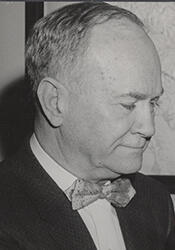
Here you will find contact information for Representative John McMillan, including email address, phone number, and mailing address.
| Name | John McMillan |
| Position | Representative |
| State | South Carolina |
| District | 6 |
| Party | Democratic |
| Status | Former Representative |
| Term Start | January 3, 1939 |
| Term End | January 3, 1973 |
| Terms Served | 17 |
| Born | April 12, 1898 |
| Gender | Male |
| Bioguide ID | M000568 |
About Representative John McMillan
John Lanneau “Johnny Mac” McMillan (April 12, 1898 – September 3, 1979) was a United States Representative from South Carolina who served in Congress from 1939 to 1973. A member of the Democratic Party, he represented his state in the U.S. House of Representatives for 17 consecutive terms, becoming the longest-serving congressman in South Carolina’s history. Over the course of his lengthy tenure, he played a central role in the governance of the District of Columbia and participated in major legislative debates during a transformative period in American political and social life.
McMillan was born on a farm near Mullins, Marion County, South Carolina, where he spent his early years in a rural agricultural setting. He attended the local public schools and graduated from Mullins High School. Seeking higher education beyond his home state, he studied at the University of North Carolina. He later pursued legal training at the University of South Carolina Law School and continued his legal studies at the National Law School in Washington, D.C., preparing for a career that would combine law and public service.
Elected as a Democrat to the Seventy-sixth Congress and to the sixteen succeeding Congresses, McMillan served in the U.S. House of Representatives from January 3, 1939, to January 3, 1973. His service in Congress spanned the era of the New Deal, World War II, the early Cold War, the civil rights movement, and the Vietnam War. Throughout these decades, he contributed to the legislative process and participated in the democratic governance of the nation, representing the interests of his South Carolina constituents while also exerting significant influence over the administration of the nation’s capital.
McMillan’s most prominent role in Congress was as chairman of the House Committee on the District of Columbia, a position he held for multiple, lengthy periods: from 1945 to 1947, from 1949 to 1953, and from 1955 to 1973. In this capacity, he was primarily responsible for overseeing local matters in Washington, D.C., at a time when the District lacked home rule and Congress exercised ultimate authority over its affairs under the Constitution. McMillan consistently opposed full home rule for the District, frequently declining to bring home rule bills to a vote in his committee even when such measures had passed the Senate. The only home rule bill to reach the House floor during most of his tenure did so in 1965, when House leadership, at the urging of the Johnson administration, bypassed his committee. McMillan opposed that bill, arguing that Washington was “the only city created for a federal purpose,” and the measure ultimately failed, though its consideration signaled a shift in attitudes toward self-government for the District.
Despite his general opposition to broad home rule, McMillan was not entirely resistant to expanding local participation in certain aspects of District governance. In 1967, he sponsored legislation granting the District of Columbia an elected school board, providing residents with a measure of direct control over public education. His tenure as chairman coincided with Washington’s transformation into a majority-Black city, and many Black residents and leaders criticized him as indifferent or hostile to their concerns. Tensions were highlighted in late 1967 when Walter Washington, the newly appointed Mayor-Commissioner of the District of Columbia, submitted his first budget to Congress and McMillan responded by having a truckload of watermelons delivered to Washington’s office, an incident widely viewed as racially offensive.
McMillan’s congressional record also reflected the broader resistance among many Southern Democrats to federal civil rights initiatives. In 1956 he was a signatory to the Southern Manifesto, a document issued by a group of Southern members of Congress opposing the Supreme Court’s decision in Brown v. Board of Education and the desegregation of public schools. At the same time, his long service and seniority brought him recognition within Congress. He was selected to represent the United States Congress at meetings of the Interparliamentary Union in London in 1960 and in Tokyo in 1961, reflecting his stature as a veteran legislator and committee chairman.
After more than three decades in the House, McMillan’s congressional career came to an end when he was defeated in the 1972 Democratic primary by State Representative John Jenrette, a considerably more liberal Democrat whose campaign benefited from changing political attitudes in South Carolina and increased Black political participation. McMillan attributed his defeat to Black voters, charging that “The colored people were bought out.” His loss marked the close of an era in which conservative Southern Democrats held dominant positions in key House committees. Although he left office in January 1973, his record for length of service in the House from South Carolina has not been surpassed; only Strom Thurmond and Ernest Hollings served longer at the federal level from the state when Senate service is included.
In his later years, McMillan resided in Florence, South Carolina. He lived there in retirement until his death on September 3, 1979. He was interred in the McMillan family cemetery near his birthplace in Mullins, South Carolina, closing the life of a figure who had been deeply rooted in his home state while exerting substantial influence over the governance of the nation’s capital for nearly three decades.