Representative John McQueen
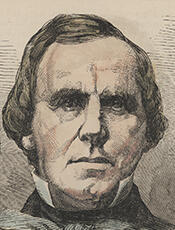
Here you will find contact information for Representative John McQueen, including email address, phone number, and mailing address.
| Name | John McQueen |
| Position | Representative |
| State | South Carolina |
| District | 1 |
| Party | Democratic |
| Status | Former Representative |
| Term Start | December 6, 1847 |
| Term End | March 3, 1861 |
| Terms Served | 7 |
| Born | February 9, 1804 |
| Gender | Male |
| Bioguide ID | M000595 |
About Representative John McQueen
John McQueen (February 9, 1804 – August 30, 1867) was an American lawyer and politician who served as a U.S. Representative from South Carolina and later as a member of the Confederate States Congress during the American Civil War. A member of the Democratic Party, he represented South Carolina in the United States House of Representatives for seven terms between 1847 and 1861, contributing to the legislative process during a period of mounting sectional tension that culminated in secession and war.
McQueen was born in Queensdale in Robeson County, North Carolina, near the present-day town of Maxton. He completed preparatory studies under private tutors before attending the University of North Carolina at Chapel Hill, from which he was graduated. After university he pursued the study of law, preparing for a professional career at the bar. In 1828 he was admitted to the bar and soon thereafter moved to Bennettsville, South Carolina, where he commenced the practice of law and established himself within the legal and political life of the region.
Alongside his legal work, McQueen was active in military and civic affairs in South Carolina. He served in the state militia from 1833 to 1837, a period that helped solidify his standing among local leaders and citizens. Seeking to extend his influence to the national level, he became a candidate for Congress and ran unsuccessfully in 1844 for election to the Twenty-ninth United States Congress. Despite this initial defeat, he remained engaged in Democratic Party politics and continued to build support among his constituents.
McQueen entered national office a few years later. He was elected as a Democrat to the Thirtieth and Thirty-first Congresses to fill the vacancies caused by the death of Representative Alexander D. Sims. He was subsequently reelected to the Thirty-second and to the four succeeding Congresses, serving continuously from February 12, 1849, until his retirement from the U.S. House of Representatives on December 21, 1860. Over the course of these seven terms in Congress, he represented South Carolina during a significant period in American history, participating in debates over slavery, states’ rights, territorial expansion, and the growing sectional crisis. As a member of the House of Representatives, he took part in the democratic process and sought to represent the interests and views of his South Carolina constituents.
An ardent supporter of slavery and southern states’ rights, McQueen became a vocal advocate of secession as the national conflict over slavery intensified. After South Carolina’s withdrawal from the Union and the formation of the Confederate States of America, he was elected as a representative from South Carolina to the First Confederate Congress. In this capacity he continued to press for the preservation of the slaveholding social order and the sovereignty of the Confederate states. His views were clearly expressed in a December 1860 letter to civic leaders in Richmond, Virginia, in which he denounced what he described as “the dominion of a people, who have chosen their leader upon the single idea that the African is equal to the Anglo-Saxon,” and declared that South Carolinians hoped soon to greet Virginians “in a Southern Confederacy, where white men shall rule our destinies.” He also addressed the Texas Secession Convention on February 1, 1861, further articulating his support for the Confederate cause and the separation of the slaveholding states from the Union.
In his personal life, McQueen married into a prominent southern family. On December 31, 1851, he wed Sarah Elizabeth Pickens in Cahaba, Alabama. Born on September 29, 1831, she was the granddaughter of American Revolutionary War General Andrew Pickens, linking McQueen by marriage to one of the notable military families of the early Republic. Sarah Elizabeth Pickens McQueen survived her husband by several decades, dying on September 22, 1909, in Asheville, North Carolina.
John McQueen spent his later years in South Carolina following the collapse of the Confederacy and the end of the Civil War. He died at Society Hill, South Carolina, on August 30, 1867. He was interred in the Episcopal Cemetery in Society Hill, South Carolina, closing the life of a figure whose career spanned the antebellum Union, the secession crisis, and the Confederate experiment in southern nationhood.