Representative John Jones McRae
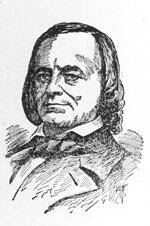
Here you will find contact information for Representative John Jones McRae, including email address, phone number, and mailing address.
| Name | John Jones McRae |
| Position | Representative |
| State | Mississippi |
| District | 5 |
| Party | Democratic |
| Status | Former Representative |
| Term Start | December 1, 1851 |
| Term End | March 3, 1861 |
| Terms Served | 3 |
| Born | January 10, 1815 |
| Gender | Male |
| Bioguide ID | M000596 |
About Representative John Jones McRae
John Jones McRae (January 10, 1815 – May 31, 1868) was an American politician from Mississippi who served in the Mississippi House of Representatives, the United States Senate, the United States House of Representatives, and as governor of Mississippi. A member of the Democratic Party, he played a prominent role in state and national politics in the decades leading up to and during the American Civil War.
McRae was born on January 10, 1815, in Sneedsboro, North Carolina. In 1817, when he was still a small child, he moved with his parents to Winchester, Mississippi, then a developing frontier community. As a young man, he became involved in local affairs and regional development. In 1834, he founded the town of Enterprise in Clarke County, Mississippi, reflecting his early interest in economic growth and transportation. He sought to improve navigation on the Chickasawhay River and, in 1842, undertook a steamboat journey from Lake Pontchartrain in Louisiana to Enterprise, an effort that underscored his commitment to opening the region to broader commercial opportunities.
McRae’s formal political career began in the Mississippi House of Representatives, where he served from 1847 to 1851. During his tenure in the state legislature, he was involved in important initiatives for Mississippi’s institutional development, including efforts to establish the University of Mississippi. His work in the state house helped to raise his profile within the Democratic Party and prepared him for higher office at both the state and national levels.
In 1851, McRae advanced to the national stage when he represented Mississippi in the United States Senate. He served in the Senate in 1851 and 1852, participating in federal legislative debates during a period of mounting sectional tension in the United States. After his brief service in the Senate, he returned to Mississippi politics and was elected the 21st governor of Mississippi, serving from 1854 to 1857. As governor, he led the state during a time of growing national division over slavery and states’ rights, and his administration reflected the prevailing Democratic and Southern perspectives of the era.
Following his gubernatorial term, McRae continued his national legislative career in the United States Congress. He served as a Representative from Mississippi in the U.S. House of Representatives from 1851 to 1861, completing three terms in office. During the 35th and 36th Congresses, he contributed to the legislative process and represented the interests of his Mississippi constituents in Washington. His service in Congress occurred during a significant and turbulent period in American history, as debates over the expansion of slavery, secession, and the balance of power between North and South intensified.
With the outbreak of the American Civil War and the secession of Mississippi from the Union, McRae aligned with the Confederacy. He went on to serve in the Confederate Congress, continuing his long involvement in legislative affairs under the new Confederate government. His role in the Confederate legislature extended his political career into the wartime period and reflected his state’s and party’s stance during the conflict.
In his later years, McRae traveled to British Honduras (now Belize), where his brother, Colin J. McRae, lived in exile following the Civil War. John Jones McRae died there on May 31, 1868, while on a visit. His career, spanning state and national offices in both the United States and the Confederacy, marked him as a significant Mississippi political figure in the mid-nineteenth century.