Senator John Melcher
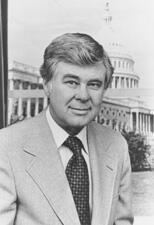
Here you will find contact information for Senator John Melcher, including email address, phone number, and mailing address.
| Name | John Melcher |
| Position | Senator |
| State | Montana |
| Party | Democratic |
| Status | Former Representative |
| Term Start | January 3, 1969 |
| Term End | January 3, 1989 |
| Terms Served | 10 |
| Born | September 6, 1924 |
| Gender | Male |
| Bioguide ID | M000635 |
About Senator John Melcher
John David Melcher (September 6, 1924 – April 12, 2018) was an American politician of the Democratic Party who represented Montana for four terms as a member of the United States House of Representatives from June 24, 1969, to January 3, 1977, and as a United States Senator for two terms from 1977 until 1989. Over the course of six terms in Congress—four in the House and two in the Senate—he participated actively in the legislative process during a significant period in American history, representing the interests of his Montana constituents and contributing to national debates on energy, the environment, agriculture, and animal welfare.
Melcher was born in Sioux City, Iowa, where his paternal grandparents, immigrants from Germany, had settled. He attended the University of Minnesota before the outbreak of World War II interrupted his studies. During the war he served in the United States Army in Europe and participated in the D-Day invasion of Normandy with the 76th Infantry Division. He was wounded in action in Germany and received the Purple Heart, the Combat Infantryman’s Badge, and the Bronze Star for his service. In 1945 he married Ruth Klein, with whom he had six children, establishing a family life that would run parallel to his later professional and political careers.
Following his military service, Melcher resumed his education and graduated from Iowa State University in 1950 with training in veterinary medicine. Soon afterward he moved to Forsyth, Montana, where he established a veterinary clinic that served ranchers and farmers in the surrounding region. His work as a veterinarian in rural Montana gave him firsthand experience with agricultural and land-use issues that would later shape his legislative priorities, particularly in the areas of public lands, livestock, and natural resource management.
Melcher’s entry into public service began at the local level in Forsyth. He served on the Forsyth City Council and was subsequently elected mayor of Forsyth in 1955, serving three terms in that office. Building on his local government experience, he won election to the Montana House of Representatives in 1960 as the representative for Rosebud County. In 1962 he advanced to the Montana Senate, where he continued to develop a reputation as a Democrat attentive to rural concerns, infrastructure needs, and the economic challenges facing small communities in the state.
Melcher entered national politics when he was elected to the United States House of Representatives in a special election on June 24, 1969, to fill the vacancy created by the resignation of Republican Representative James F. Battin, who had accepted an appointment to the federal bench. Melcher was re-elected to the three succeeding Congresses, serving in the House from June 24, 1969, to January 3, 1977. During his four House terms, he represented Montana at a time of shifting national priorities, including the Vietnam War, the energy crisis, and the emergence of modern environmental policy. He developed generally liberal views on environmental issues while maintaining positions that were more conservative on some social questions, including being pro-life and supporting prayer in public schools.
In 1976 Melcher was elected to the United States Senate to succeed retiring Democratic Majority Leader Mike Mansfield, one of Montana’s most prominent political figures. He took office in January 1977 and was re-elected in 1982, defeating Republican challenger Larry R. Williams. During the 1982 campaign he was targeted by the National Conservative Political Action Committee (NCPAC), which ran attack advertisements portraying him as “too liberal for Montana.” His campaign’s response became a noted example of political advertising, featuring a briefcase-carrying “out-of-stater” bringing money into the race and a group of cows commenting disapprovingly on outside interference in Montana politics. In the Senate, Melcher focused on issues central to his state, including agriculture, energy development, public lands, and environmental protection. He co-sponsored the Surface Mining Control and Reclamation Act of 1977, landmark legislation regulating coal strip mining and establishing standards for land reclamation, reflecting both his concern for the environment and the importance of coal to Montana’s economy.
Melcher’s Senate tenure also included significant work on animal welfare, informed by his professional background as a veterinarian. In 1984 he authored an amendment to the Animal Welfare Act requiring that the psychological well-being of primates be protected in research settings, a measure that strengthened federal standards for laboratory animals. This legislation drew praise from primatologist Jane Goodall, and in 1987 Melcher presented her with the Schweitzer Medal of the Animal Welfare Institute in recognition of her contributions to animal welfare. His voting record and public statements reflected a blend of environmental advocacy and attention to rural livelihoods, positioning him as a Democrat who sought to balance conservation with resource-based economic development.
Melcher’s bid for a third Senate term in 1988 was unsuccessful. He was defeated by Republican Conrad Burns in a closely watched race that took place against the backdrop of national debates over federal land management and environmental regulation. Melcher later attributed his loss in part to insufficient time spent campaigning. A wilderness management bill he had co-sponsored was vetoed by President Ronald Reagan only days before the 1988 election, an event that became intertwined with the political narrative of the race. He remained active in politics and public affairs and sought to return to the Senate in 1994, entering the Democratic primary for a rematch against Burns. However, he lost the primary to Jack Mudd, who was subsequently defeated by Burns in the general election by a margin of 62 percent to 38 percent.
After leaving the Senate in 1989, Melcher continued to engage with public policy, particularly in fields related to his professional expertise. He worked as a lobbyist for several organizations, including the American Veterinary Medical Association, where he advocated on issues affecting veterinary practice, animal health, and agricultural policy. His post-congressional activities also included participation in public forums and interviews, such as the John Melcher Interviews Oral History Project at the University of Montana Archives, and appearances on C-SPAN that documented his perspectives on legislative history and contemporary political issues.
John Melcher died on April 12, 2018, in Missoula, Montana, at the age of 93. His long career in public service—from local government in Forsyth to nearly two decades in the United States Congress—reflected a consistent focus on the needs of rural communities, the stewardship of land and natural resources, and the welfare of animals, shaped by his experiences as a World War II veteran, veterinarian, and Montana legislator.