Senator John Milledge
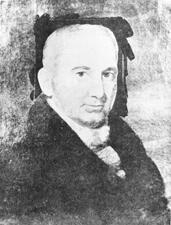
Here you will find contact information for Senator John Milledge, including email address, phone number, and mailing address.
| Name | John Milledge |
| Position | Senator |
| State | Georgia |
| Party | Republican |
| Status | Former Representative |
| Term Start | November 22, 1792 |
| Term End | November 14, 1809 |
| Terms Served | 6 |
| Gender | Male |
| Bioguide ID | M000712 |
About Senator John Milledge
John Milledge (1757 – February 9, 1818) was an American politician and lawyer who served the state of Georgia and the young United States in multiple capacities, including as United States Representative, 26th Governor of Georgia, and United States Senator. A member of the Republican Party, later known as the Democratic-Republican Party, he served as a Senator from Georgia in the United States Congress from 1792 to 1809 and contributed to the legislative process during six terms in office. Milledge was a founder of Athens, Georgia, and played a central role in the establishment of the University of Georgia. From January to May 1809, he served briefly as President pro tempore of the United States Senate.
Milledge was born in Savannah, Georgia, the grandson of an original settler of the colony. He was privately tutored and studied law, eventually being admitted to the bar and opening a law practice in Savannah. Like many prominent Southern planters and officeholders of his era, he owned slaves. His early adulthood coincided with the outbreak of the American Revolution, and he quickly aligned himself with the patriot cause. In 1775, at the onset of the war, he joined a group of revolutionaries who seized the royal governor of Georgia, Sir James Wright, as a prisoner and participated in a raid on Savannah’s royal armory to secure gunpowder for the colonial forces.
Milledge’s Revolutionary War service was marked by both danger and persistence. After British forces captured Savannah, he escaped to South Carolina, where he was nearly hanged by American patriots who suspected him of being a spy before his loyalty was established. He took part in the Siege of Savannah in 1779 in an effort to expel British troops from the city. In 1778, he served as an aide to Georgia Governor John Houstoun in an unsuccessful campaign against British positions in East Florida. By 1781, Milledge had risen to the rank of colonel in the Georgia militia and helped in the recapture of Augusta from British control, further solidifying his standing as a committed patriot and emerging public figure in postwar Georgia.
Milledge’s political career began during the Revolutionary period. In 1779 he was elected to the patriot general assembly of Georgia, and in the years following independence he served as attorney general of Georgia and as a member of the Georgia General Assembly. In the state legislature he became known for his strong opposition to the Yazoo Land Acts, which involved controversial and corrupt land sales in western territories claimed by Georgia. His growing reputation led to national office. In 1792, after the United States House of Representatives declared the seat of Anthony Wayne vacant due to disputes over Wayne’s residency, Milledge was elected to the Second Congress to fill the vacancy and served from November 22, 1792, to March 3, 1793. He later returned to the House as a representative from Georgia in the Fourth and Fifth Congresses, serving from March 4, 1795, to March 3, 1799.
Milledge again entered the U.S. House of Representatives in 1801, this time explicitly as a Democratic-Republican, and served from March 4, 1801, until his resignation in May 1802 upon being elected Governor of Georgia. During his House service he was appointed to a commission charged with selecting a site for the state’s new University of Georgia, which had been incorporated on January 27, 1785. On July 25, 1801, he personally purchased land on the Oconee River for the institution and named the surrounding settlement Athens, in honor of the ancient Greek city associated with Plato’s Academy. This act cemented his role as a founder of both Athens, Georgia, and the University of Georgia, institutions that would become central to the state’s educational and civic life.
As the 26th Governor of Georgia, Milledge served from 1802 to 1806 and undertook significant reforms in land policy and state defense. To address corruption and speculation associated with the distribution of former Creek lands to settlers, he established Georgia’s first land lottery system, which was intended to make land allocation more orderly and equitable. He also reorganized the state militia to improve Georgia’s defensive capabilities and oversaw the construction of a road from Georgia to Tennessee that passed through Cherokee lands, reflecting the state’s expansionist pressures on Native American territories. In recognition of his prominence, the city of Milledgeville, Georgia—later the state capital from 1804 to 1868—was named in his honor in 1803.
In 1806, Milledge was elected as a Democratic-Republican to the United States Senate to fill the vacancy caused by the death of Senator James Jackson. As a senator from June 19, 1806, until his resignation on November 14, 1809, he was a loyal and enthusiastic supporter of President Thomas Jefferson’s policies. During the Tenth Congress he was chosen President pro tempore of the Senate, serving in that leadership role from January to May 1809. His service in Congress, encompassing his earlier House terms and his Senate tenure, occurred during a formative period in American history, as the nation navigated partisan divisions, territorial expansion, and complex foreign relations. On questions arising from the Napoleonic Wars, Milledge was notably outspokenly pro-British. He remained very hostile to the French Revolution and argued that a close relationship with the United Kingdom was in the best interest of the United States, stating that he saw “no value” in attempting to maintain relations with revolutionary France.
After resigning from the Senate in 1809, Milledge retired from national politics and returned to private life at his plantation near Augusta, Georgia. There he lived out his remaining years as a prominent planter and elder statesman. He died at his plantation near Augusta on February 9, 1818, and was buried in Summerville Cemetery in that city. His legacy endures in numerous Georgia place names and institutions: Milledge Avenue in downtown Athens, Milledge Avenue in the Grant Park neighborhood of Atlanta, and Milledge Road in Augusta all bear his name, as does John Milledge Academy in Milledgeville. At the University of Georgia, John Milledge Hall—constructed around 1921 as a male dormitory and later repurposed—now houses the Office for Student Success and Achievement and the Regents’ Center for Learning Disorders, reflecting the enduring association of his name with education in the state.