Representative John Jones Milligan
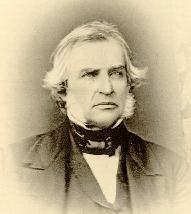
Here you will find contact information for Representative John Jones Milligan, including email address, phone number, and mailing address.
| Name | John Jones Milligan |
| Position | Representative |
| State | Delaware |
| District | At-Large |
| Party | Whig |
| Status | Former Representative |
| Term Start | December 5, 1831 |
| Term End | March 3, 1839 |
| Terms Served | 4 |
| Born | December 10, 1795 |
| Gender | Male |
| Bioguide ID | M000767 |
About Representative John Jones Milligan
John Jones Milligan (December 10, 1795 – April 20, 1875) was an American lawyer, jurist, and politician from Wilmington, in New Castle County, Delaware. Born in the closing years of the eighteenth century, he came of age in a period of rapid political and social change in the new republic. Although detailed records of his early family life are sparse, Milligan’s later reputation as a “fine classical scholar,” noted by contemporaries, suggests that he received a strong early education in the liberal arts, likely in the schools available to the professional and mercantile classes of Wilmington and its environs.
Milligan pursued the study of law and entered the legal profession in Delaware, establishing himself in Wilmington. By the 1820s he had become recognized in the state’s legal and political circles. His training as a lawyer, combined with his evident skill as an orator, prepared him for public life. Edmund Canby, a contemporary whose diaries provide a valuable glimpse of Milligan’s abilities, described him as “a beautiful speaker, his manner is fine, gestures good, matter well arranged, distinct and clear—certainly one of the most delightful speakers I have ever heard,” further remarking that Milligan “has many happy hits and some beautiful classical allusions” and was “a fine classical scholar.” This reputation for eloquence and learning helped to propel him into elective office.
Milligan’s national career began with his election to the United States House of Representatives as an Anti-Jacksonian in 1830, at a time when Delaware held its congressional elections on the first Tuesday of October. He took his seat on March 4, 1831, at the start of the 22nd Congress, in accordance with the federal practice by which U.S. Representatives assumed office on March 4 for two-year terms. During his tenure, the state’s election date was adjusted, and beginning in 1832 Delaware’s congressional elections were held on the first Tuesday after November 1. As the Second Party System took shape in the early 1830s, Milligan aligned with the newly organized Whig Party, becoming one of its prominent Delaware adherents. He served four consecutive terms, from March 4, 1831, until March 3, 1839, representing Delaware’s at-large district during a period marked by intense national debates over banking policy, internal improvements, and the scope of federal power. As a member of the Whig Party representing Delaware, he contributed to the legislative process during these four terms in office, participating in the democratic process and representing the interests of his constituents in a time of significant political realignment.
Throughout his eight years in the House of Representatives, Milligan was part of the Anti-Jacksonian and then Whig opposition to the policies of President Andrew Jackson and his Democratic successors. His service coincided with the controversies surrounding the Second Bank of the United States, tariff policy, and the expansion of federal authority, issues on which Whigs generally favored a stronger role for Congress and support for commercial and internal improvement measures. While specific committee assignments and floor speeches are not extensively documented in surviving summaries, his recognized gifts as an orator and his legal training would have made him a valuable participant in debate and committee work. After four terms, he sought reelection but was defeated in his bid for a fifth term in Congress, ending his continuous service in the national legislature in March 1839.
Following his departure from Congress, Milligan transitioned from legislative to judicial service. On September 19, 1839, he was appointed Associate Judge of the Delaware Superior Court, one of the principal judicial offices in the state. In this capacity he applied his legal expertise to the adjudication of civil and criminal matters during a quarter-century of significant change in Delaware’s economy and society. Milligan served on the Superior Court bench for nearly twenty-five years, from September 19, 1839, until September 16, 1864, when he retired. His long tenure spanned the antebellum period, the sectional crisis, and most of the Civil War, placing him at the center of Delaware’s legal system during an era in which questions of property, commerce, and personal status were frequently contested in the courts.
In retirement, Milligan left active public life and resided for a time in Philadelphia, Pennsylvania. He died there on April 20, 1875, at his retirement home. His body was returned to Delaware, and he was buried in the Wilmington and Brandywine Cemetery in Wilmington, a resting place for many of the state’s leading nineteenth-century figures. Remembered by contemporaries for his classical learning, his “beautiful” and “delightful” public speaking, and his long record of service as both a legislator and a judge, John Jones Milligan occupied a significant place in Delaware’s political and judicial history in the formative decades of the United States.