Representative John Joseph Moakley
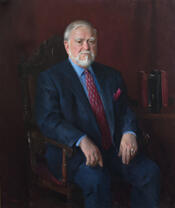
Here you will find contact information for Representative John Joseph Moakley, including email address, phone number, and mailing address.
| Name | John Joseph Moakley |
| Position | Representative |
| State | Massachusetts |
| District | 9 |
| Party | Democratic |
| Status | Former Representative |
| Term Start | January 3, 1973 |
| Term End | May 28, 2001 |
| Terms Served | 15 |
| Born | April 27, 1927 |
| Gender | Male |
| Bioguide ID | M000834 |
About Representative John Joseph Moakley
John Joseph Moakley (April 27, 1927 – May 28, 2001) was an American politician and attorney who served as the United States representative for Massachusetts’s 9th congressional district from January 3, 1973, until his death in 2001. A member of the Democratic Party for nearly all of his public career, he served 15 full terms in the House of Representatives and was a prominent figure in Massachusetts and national politics during a period of significant change in American public life. He was the last Democratic chairman of the U.S. House Committee on Rules before Republicans took control of the chamber in 1995, and he is the namesake of Joe Moakley Park and the John Joseph Moakley United States Courthouse in Boston.
Moakley was born in South Boston, Massachusetts, on April 27, 1927, and grew up in the Old Harbor public housing project, an experience that shaped his lifelong identification with working-class Boston. During World War II, he lied about his age in order to enlist in the United States Navy and served in the Pacific theater from 1943 to 1946. After his military service, he pursued higher education, attending the University of Miami in Coral Gables, Florida, from 1950 to 1951. He then returned to Boston and enrolled at Suffolk University Law School, where he earned his LL.B. degree in 1956, preparing for a career in law and public service.
Following his graduation from law school, Moakley entered private legal practice. In 1958, he partnered with his Suffolk classmate Daniel W. Healy to open a law office at 149A Dorchester Street in South Boston. The partnership endured into the late 1970s, even as Moakley’s responsibilities in public office expanded. He was active in civic and community organizations, including membership in the Portuguese American Civic Club in Taunton, Massachusetts, reflecting his engagement with diverse constituencies across the state.
Moakley’s political career began in the Massachusetts General Court. He served in the Massachusetts House of Representatives from 1953 to 1963, participating in the 1953–1954 and 1955–1956 legislative sessions and continuing through the early 1960s. He then served in the Massachusetts Senate from 1964 to 1970. During this period he built a reputation as a reliable Democratic legislator and party loyalist. He was a delegate to the 1968 Democratic National Convention, underscoring his growing prominence within the party. After the retirement of longtime Congressman and Speaker of the House John W. McCormack, Moakley sought to succeed him in the Ninth District, but he lost the Democratic nomination to Boston School Committee chair Louise Day Hicks, whose opposition to school desegregation drew significant support. Moakley subsequently served on the Boston City Council from 1971 to 1973, maintaining his visibility in local politics.
In 1972, Moakley mounted a rematch against Louise Day Hicks, this time running as an independent candidate for Congress. He defeated Hicks by 3,448 votes in the general election for Massachusetts’s 9th congressional district. On January 2, 1973, one day before the start of the new Congress, he switched his party affiliation back to the Democratic Party, and he was sworn in as a Democratic member of the House of Representatives on January 3, 1973. Over the next 28 years, Moakley was reelected 14 times, serving continuously until his death in 2001. He rarely faced serious electoral challenges; he encountered Republican opponents only six times, and in other cycles he either ran unopposed or faced only minor-party opposition. Throughout his tenure, he contributed to the legislative process and represented the interests of his Massachusetts constituents during fifteen full terms in office.
Within the House, Moakley rose to positions of considerable influence. He chaired the Committee on Rules from the 101st Congress through the 103rd Congress, serving as the last Democratic chairman before the Republican takeover of the House in 1995. He was a leading opponent of the legislative veto, which had become an increasingly popular mechanism in the 1970s. Moakley held in committee a controversial bill sponsored by Representative Elliott Levitas that would have established the legislative veto as a general feature of federal legislation. His position was later vindicated when the Supreme Court, in INS v. Chadha (1983), held that the legislative veto violated the Constitution’s bicameralism and presentment requirements. Beyond procedural issues, Moakley was deeply involved in foreign policy oversight. He led a special congressional panel, widely known as the Moakley Commission, that investigated the 1989 murders of six Jesuit priests and two women in El Salvador. The commission’s report implicated high-ranking Salvadoran military officials, and its findings contributed to the decision by the United States to end military aid to El Salvador. In this work, Moakley developed a close relationship with Salvadoran activist Leonel Gómez Vides and became known for his strong opposition to U.S. support for repressive regimes in Central America.
Moakley’s influence extended to education and technology initiatives in his home state. His efforts helped secure a $10 million grant for Bridgewater State College (now Bridgewater State University) in Bridgewater, Massachusetts. The grant funded the construction of a campus fiber-optic network and a regional telecommunications facility, significantly enhancing the technological capacity of educators in the region. The John Joseph Moakley Center for Technological Applications at Bridgewater was established as a result of this support, providing training in the use of technology for students, teachers, and members of the workforce. The three-story center includes a large computer laboratory, a television studio, an auditorium, and multiple classrooms, reflecting Moakley’s commitment to modernizing education and workforce development. For his “unrelenting commitment to ending the war in El Salvador and throughout Central America” and for the compassionate care he provided to his Massachusetts constituents for nearly three decades, he was posthumously awarded the Peace Abbey Courage of Conscience Award in 2002.
In his later years, Moakley continued to be honored in Boston and beyond. In 1996, after the death of his wife Evelyn from cancer, he declined a proposal to name a new Boston bridge after himself but agreed that it be named the Evelyn Moakley Bridge in her honor. The bridge stands adjacent to the federal courthouse on Boston’s waterfront, which was subsequently named the John Joseph Moakley United States Courthouse shortly before his death. Joe Moakley Park in South Boston also bears his name, commemorating his long association with the neighborhood where he was born and raised. His congressional seat, once held by John W. McCormack, was succeeded upon his death by fellow Democrat Stephen Lynch.
In early 2001, facing a serious illness, Moakley announced that he would not seek reelection to a 16th term in 2002 because of his battle with myelodysplastic syndrome, a form of blood cancer. He died on May 28, 2001, in Bethesda, Maryland, while still in office, and he was interred at Blue Hill Cemetery in Braintree, Massachusetts. In 2002, Congress enacted the Hematological Cancer Research Investment and Education Act, which established the Joe Moakley Research Excellence Program to expand and coordinate federal research on blood cancers. His life and career are documented in the John Joseph Moakley Archive and Institute at Suffolk University, including his congressional papers and an extensive oral history project, preserving the record of a South Boston native who rose from public housing and wartime service to become one of Massachusetts’s longest-serving and most influential members of the United States House of Representatives.